Preheat oven to 350 F. Line an 8×8-inch baking pan with aluminum foil; set aside.: The moment you set your oven to 350 F , you will notice a faint mechanical hum and the warmth beginning to build in the kitchen, which signals the start of the baking ritual. This steady, moderate temperature is chosen so the crust gets a light bake without the custard overbrowning later on. A preheated oven ensures even heat distribution, producing a consistent golden crust. One common mistake is not allowing the oven to reach the full temperature before baking, leading to underbaked or uneven crust; always wait for the oven indicator or thermometer confirmation.
To a large mixing bowl, add the flour, butter, sugar, salt, and using two forks or a pastry cutter, cut the butter into the dry ingredients until the mixture resembles coarse crumbs.: As you work the cold butter into the flour , you will see pieces shrinking into small, pea sized bits and feel the texture transform into coarse crumbs; this visual cue is important because those butter pockets melt during baking and create the desired tender, slightly flaky crust. Mixing with two forks gives you tactile feedback, while a pastry cutter speeds the job; avoid overworking the mixture because melted or over broken butter can lead to a greasy, dense base. A common pitfall is letting the butter warm up, which prevents the crumbly texture from forming.
Turn mixture out into prepared pan and hard-pack with a spatula to form an even, smooth, crust layer.: Pressing the crumb mixture into the foil lined pan produces a compact, uniform surface that will hold the custard and strawberry filling. You should hear a firm, gentle scraping sound as the spatula evens the layer and see a smooth matte surface when it is compacted. This packing step helps prevent cracks and ensures the bars slice cleanly. If the crust is packed unevenly, you might get thin spots that overbake, so aim for consistent pressure across the pan.
Bake for 10 minutes. Remove pan from oven and set on a wire rack to cool. While crust bakes, dice the strawberries.: As the crust bakes, subtle aromas of butter and toasted flour begin to develop, and you will observe the color shifting to a pale golden tone. This brief initial bake stabilizes the crust so it does not become soggy when the filling is added. Pulling it too soon can leave it fragile and prone to collapsing under the custard, while overbaking makes it overly firm. Keep a close eye on the color change during this short bake.
After crust has cooled for about 5 minutes, evenly top with strawberries; set aside.: Cooling the crust on a wire rack allows air to circulate under the pan, preventing steam from softening the base. The sound of settling air is subtle, but you will notice the crust firming. Dicing the strawberry while the crust cools ensures the fruit is fresh and evenly sized for even distribution. A common mistake is cutting the fruit too large, which can create pockets of excess juice and cause the custard to set unevenly.
To a large mixing bowl (the same one used for the crust is fine, just wipe it out with a paper towel), add the eggs, sugar, cream, vanilla, and whisk vigorously for about 1 minute to combine.: The slight warmth left in the crust helps the strawberry adhere without making them lose too much juice, and evenly distributing the fruit creates consistent flavor in each bar. Look for a neat, even layer of ruby colored pieces that glisten slightly from their own juices. If you pile the fruit unevenly, some sections may sink or create soggy areas, so take time to spread them evenly.
Add the flour and stir to combine; don’t overmix.: As you whisk the eggs , granulated sugar , and heavy whipping cream , the mixture will lighten in color and develop a slightly foamy surface, signaling proper incorporation. The vigorous motion traps tiny air bubbles that contribute to a silky custard texture. Using the same bowl is economical and reduces dishes, but ensure no large flour clumps remain from the crust. Over or under whisking can affect texture, so aim for a smooth, homogenous liquid.
Evenly pour filling mixture over the strawberries.: When you add the second portion of flour to the custard base, it helps thicken and stabilize the mixture so the filling sets without feeling cakey. Stir until fully integrated and the batter looks smooth, with no visible streaks of dry flour . Overmixing can develop gluten and make the custard tougher, while undermixing leaves flour pockets that will bake unevenly; stop as soon as it is uniform.
Bake for about 40 to 45 minutes or until top is lightly golden brown and custard is set. Tip – In the last 10 to 15 minutes of baking, if the top is already looking fairly browned, tent the pan with a sheet of foil (loosely drape a sheet of foil over the pan) to prevent additional browning.: Pouring slowly across the surface will help the custard flow gently between the fruit pieces, creating an even layer without displacing the strawberry too much. You should see the filling settle and slightly submerge the fruit while still allowing the vibrant red to peek through. If you pour in one spot aggressively, the fruit can shift, causing an uneven texture, so rotate the pan as needed for a uniform pour.
Allow bars to cool uncovered on a wire rack for about 1 hour. Cover and refrigerate for 4 hours (or overnight), or until chilled.: During this longer bake, the kitchen fills with the rich scent of baked custard, and small, gentle bubbles may appear at the edges. The custard is ready when it is set but still yields a faint jiggle in the center like a gently wobbling pudding. If the top begins to brown too quickly, tent the pan with foil in the last 10 to 15 minutes to prevent overcoloring, which can lead to a flavor that is too toasty and dry. Undercooking will leave the center loose, so allow full time for a firm set.
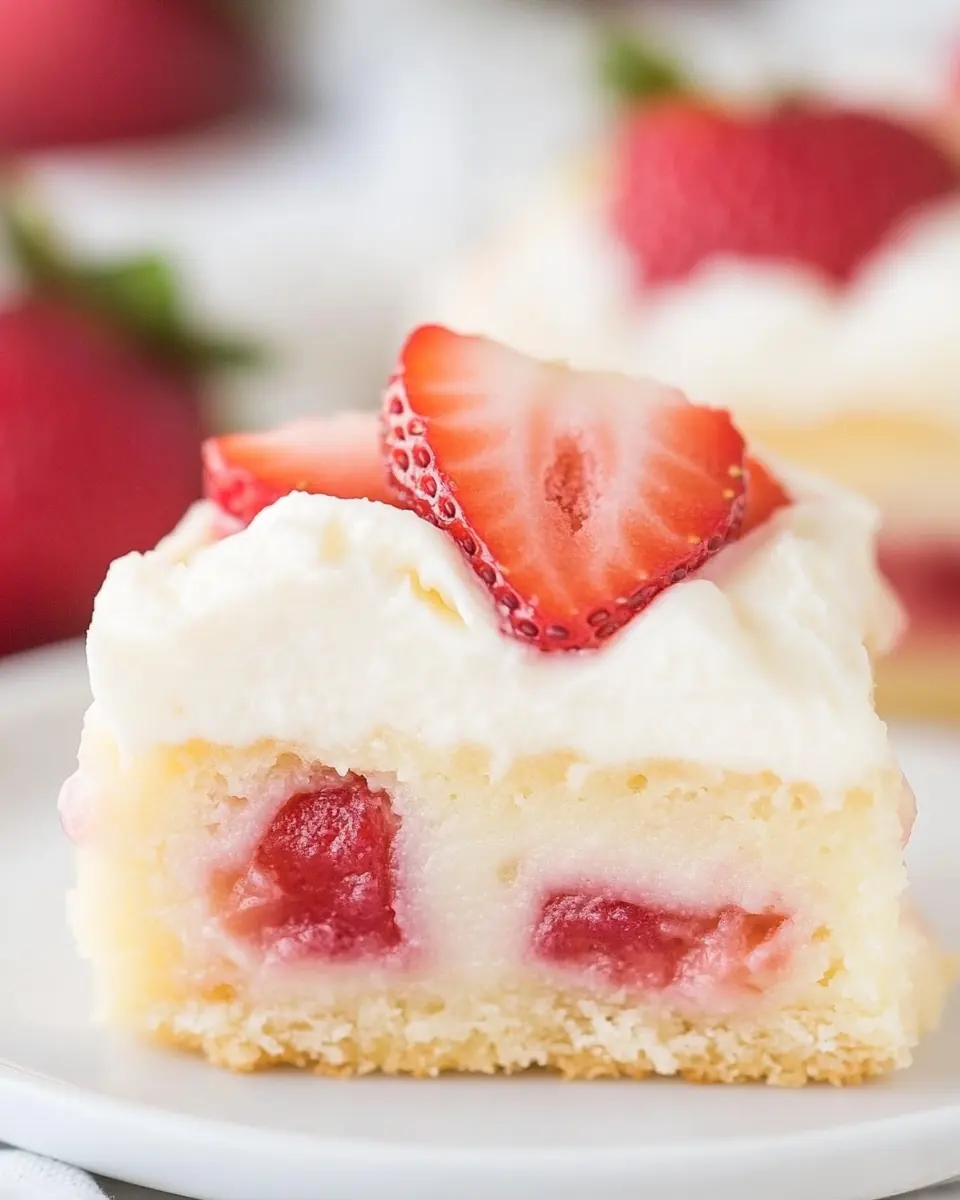
Evenly spread the whipped topping over the top and garnish with strawberry slices. Serve immediately.: Cooling first at room temperature helps the residual heat dissipate gradually, preventing condensation from making the top soggy. The texture transforms as the custard chills and firms, turning from warm and soft to sliceable and creamy. Refrigerating thoroughly is essential, because serving them too early will result in runny pieces that do not hold shape. Avoid skipping the chill stage for best results.
Evenly spread the whipped topping over the top and garnish with strawberry slices: Applying the whipped topping just before serving keeps it airy and fresh, and arranging the reserved strawberry slices adds visual appeal and a final burst of freshness. Use gentle spreading motions to avoid digging into the custard below. A common misstep is adding the topping too early, which can lead to weeping and loss of texture; wait until ready to serve.