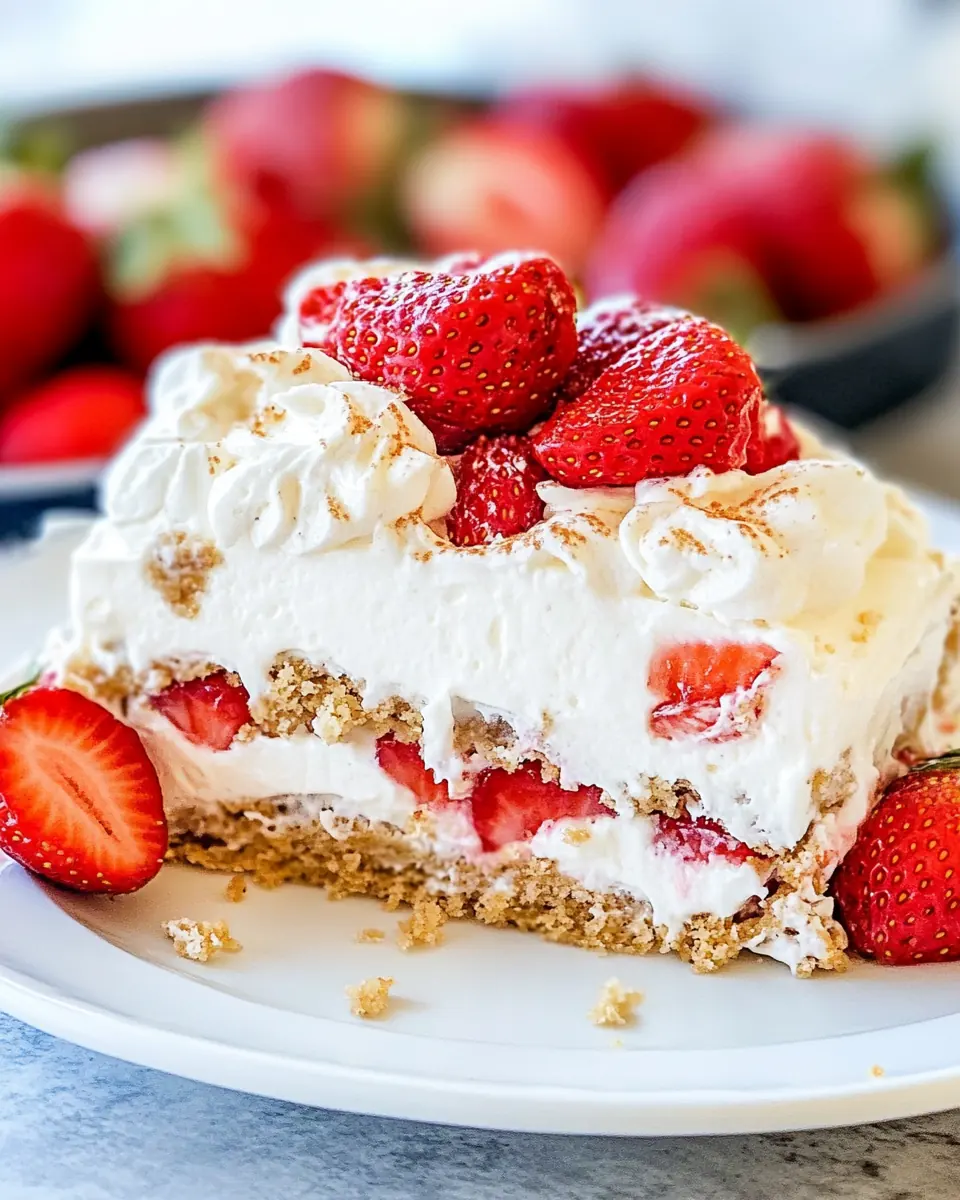
Beat cream cheese with hand mixer until smooth. Mix in powdered sugar and vanilla until smooth. Slowly mix in heavy whipping cream and beat until mixture is fluffy but stands up on its own.: The room temperature cream cheese should be soft and silky when you begin, and as you beat it you will notice the texture shift from slightly lumpy to glossy and uniform. You should not hear any scraping sounds from the mixer, which indicates the block has softened properly. The aroma will be faintly tangy and dairy forward, and the mixture should spread easily on a spoon. Why this matters, the smooth base ensures a lump free filling and prevents graininess when you later combine with the whipped component. Troubleshooting tip, if there are stubborn lumps, pause and press them through a fine mesh sieve or briefly microwave the block for five to ten seconds then rebeat, but be careful not to melt it.
Hull and slice about 1 1/2 pounds of the strawberries.: As you add the powdered sugar and vanilla extract , the mixture will thicken slightly and develop a fragrant sweetness, with the vanilla brightening the dairy notes. The powdered sugar dissolves into the warm cream cheese, leaving a glossy finish that clings lightly to the mixer beaters. This step matters because even dissolution prevents a gritty mouthfeel in the final filling. A common mistake is adding the sugar too quickly, which can puff powdered sugar dust into the air and create clumps, so sift if you notice any clinging bits.
In a 9×9-inch pan, place a layer of Nilla Wafers, then a layer of strawberries and a thin layer of the cream cheese mixture (1/3 of the mixture). Repeat the layers until you’re out of all three.: When you start folding in cold heavy whipping cream , you will first notice a softening of the dense cream cheese, followed by air incorporation that turns the mix into a light, billowy filling. The sound changes to a quieter, more even whir as volume increases, and the visual cue is ribbon like trails forming when the beaters lift. This texture is essential for stability and an airy mouthfeel in the final cake. Avoid overbeating as the cream can become stiff and separate, causing a curdled appearance; stop when soft peaks hold their shape.
Cover and chill at least 4 hours.: Hulling the strawberries removes the green tops and any tough bits, revealing the sweet interior that will layer well with the wafers. As you slice, notice the berry juices that glisten and the bright red color that signals ripeness. The slices should be uniform to ensure even layers and consistent moisture distribution. A pitfall to avoid is slicing overly thin, which releases too much juice and can make the layers soggy; medium thickness is best.
Before serving: top with about 4 ounces (half a normal size container of whipped topping or make some fresh whipped cream (1/2 cup heavy whipping cream + 1 tablespoon powdered sugar until stiff peaks form). Slice remaining strawberries and place on top.: As you build the first layer, arrange the Nilla Wafers in a single, slightly overlapping sheet so they create a flat base. The first smear of filling should be thin, about one third of the total, enough to hold the next wafer layer without seeping through. When you add the sliced strawberries , press lightly so they nestle into the cream yet do not burst. The aroma will start to combine, with sweet wafer notes meeting the fruity perfume of strawberries . Why this is important, alternating thin layers gives structure and prevents the cake from becoming mushy in the middle. A common error is piling too much filling early, which prevents proper set and can lead to sliding layers.
Will keep in refrigerator up to 2 days. Store covered.: Continue constructing even layers of Nilla Wafers , sliced strawberries , and the cream filling, observing how the wafers gradually soften to a tender cake like texture as moisture migrates. Each repetition deepens the flavor, and visually you should see neat, distinct bands of color and texture. This repetition matters because it creates consistent portions and ensures every slice has the ideal balance of components. Avoid the temptation to rush, as rushed layering can cause uneven settling and a wobbly cake.
Cover and chill at least 4 hours: Chilling is when the magic happens, as flavors meld and the wafers absorb moisture to become cake like. You will notice the filling firming and the layers holding together when you press the parchment gently. The cold tightens flavors slightly, making the sweetness of the strawberries pop against the creamy base. This rest is crucial for slicing clean pieces; skipping it will yield loose layers and a sloppy presentation. Keep the pan covered to prevent fridge odors from transferring to the cake.
Before serving top with about 4 ounces sliced strawberries and additional whipped cream: Right before you plate, slice remaining strawberries and arrange them attractively on top, finishing with about four ounces of extra whipped topping or a dollop of cool whip. The fresh fruit on top adds immediate brightness and a slightly firmer texture contrast to the chilled interior. The final look should be glossy and inviting, with cream peaks and ruby fruit. Avoid preparing this garnish too far ahead, as it can weep and detract from the presentation.
Will keep in refrigerator up to 2 days: When stored covered, the Strawberry Icebox Cake retains its texture and flavor for up to two days, though the wafers will continue to soften over time. The best sensory experience is within the first day, when the wafers are tender but not fully saturated. If you need to store it longer, keep it tightly wrapped to prevent drying on the edges. One common mistake is leaving it uncovered, which causes the top to form an unappealing film and absorb other fridge aromas.