Place all of the ingredients in the body of a blender; pulse until smooth, adding a little more orange juice or water to thin, if needed.: You will notice a quick change in aroma as the blender breaks down the frozen mango and strawberries , a sweet bright scent that signals the fruit is releasing its juices. As the blades engage expect a soft whir followed by a deeper hum when the mix becomes fluid. Visually, watch for a uniform color and no large ice or fruit chunks, which means the texture is right. The reason this pulsing technique matters is it prevents the blender from overheating and helps incorporate air for a lighter mouthfeel. If your blender stalls, stop and shake the container to redistribute solids, then continue. A common misstep here is blending at full speed from the start, which can create hot motor warnings or uneven blends.
Place all of the ingredients in the body of a blender; pulse until smooth, adding a little more orange juice to thin, if needed.: After the initial blend you may find the smoothie thicker than you want. Adding more orange juice will loosen the mixture while reinforcing citrus brightness. When you pour a small stream of juice in, listen for the blend to shift to an evener sound and watch the consistency turn from dense and doughlike to fluid and glossy. This matters because a pourable texture affects how the smoothie feels on the palate. Avoid pouring in a large amount at once, which can make the drink watery; instead add in spoonfuls or tablespoon increments and test the thickness by tilting the blender jar.
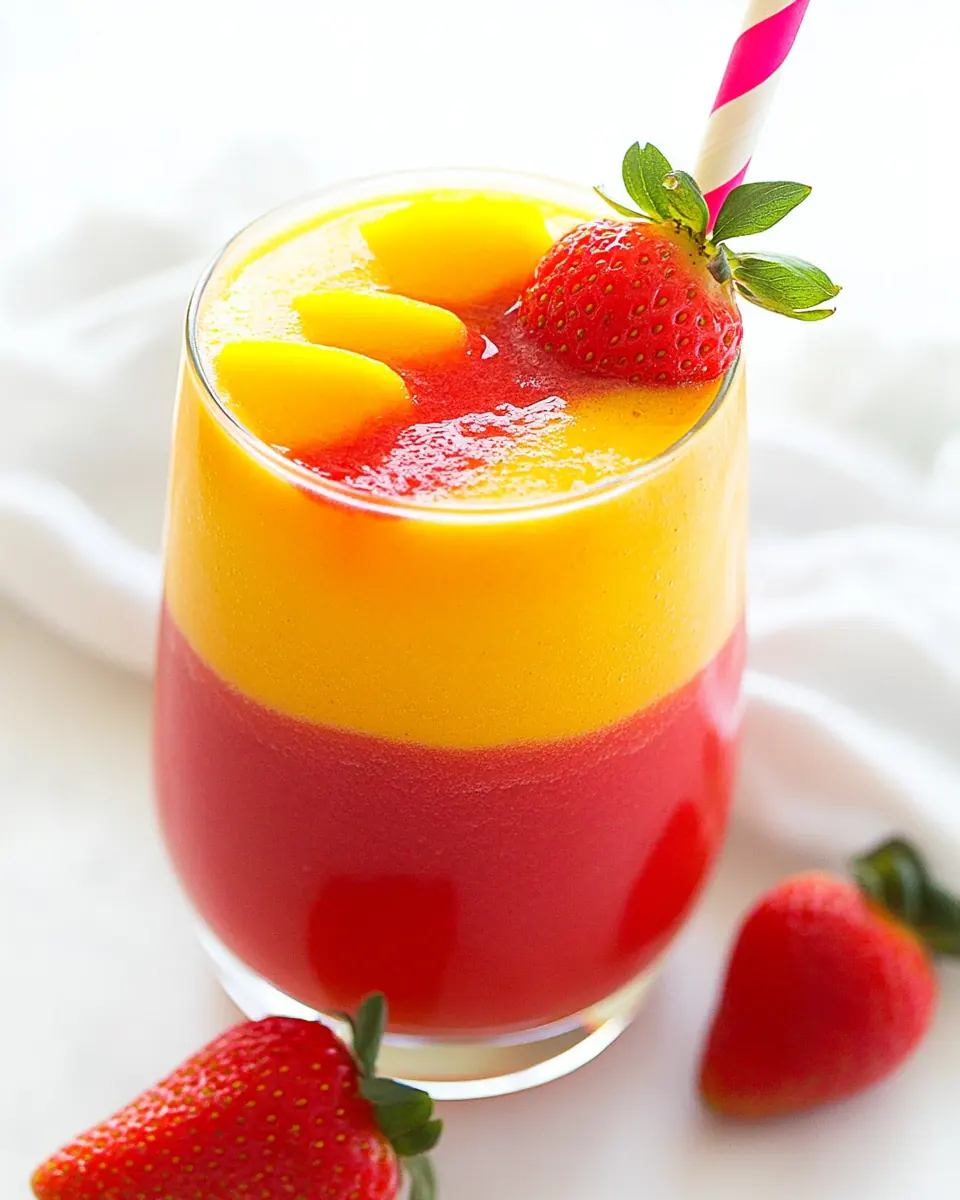
Fill each glass half way with the mango mix then fill the rest of the glass with the strawberry mix; add straws and serve at once!: For a layered presentation fill glasses half way with the mango portion then top with the strawberry blend to create a visual layer. As you spoon or pour, notice the way the two colors sit and slowly merge, making a gradient from golden to pink. Serve immediately so the texture stays light and the flavors are freshest. The timing here matters because separation can occur if left too long, giving a watery top and denser bottom. One mistake is waiting to add straws or lids, which can let air and heat change the drink slightly before serving.