Preheat oven to 350 F. Line an 8-inch square pan with aluminum foil and spray with cooking spray; set aside. Lining the pan helps with cleanup and is recommended.: As the oven warms you should feel a gentle wave of heat and perhaps a faint hum from the fan if it cycles. Preparing an 8 inch pan lined with foil and sprayed makes removing the finished bars easy, and lining also protects the pan from sticky juices. I like to press the foil into corners so the crust presses evenly. A common slip here is not securing the foil, which can shift when you press the crust, leading to uneven thickness. The reason this matters is even heat and an even pan surface help the crust bake uniformly, preventing underbaked spots and ensuring the bars slice cleanly.
In a large, microwave-safe bowl melt the butter, about 1 minute on high power.: When the butter melts it should smell rich and slightly nutty as milk solids warm, and you will see a glossy pool of liquid. Melting in a microwave is quick and convenient, but stir it after heating to distribute heat evenly and avoid hot spots. Let it cool for a moment so it does not cook the dry ingredients when added. A common mistake is using scalding hot butter, which can turn the topping greasy; lukewarm is ideal. This step is crucial because evenly melted butter ensures the oat and flour pieces bind for a cohesive crust and crumble.
Add the flour, oats, sugars, optional salt, and stir to combine. Mixture will be dry and sandy with some larger, well-formed crumble pieces.: As you stir, listen for a slight scraping sound and watch the mix come together into a sandy texture with pea sized clumps. That granular texture is a good sign that the fat has coated the dry ingredients properly. If the mixture seems oily or overly wet, you likely used butter that was too hot; add a teaspoon of flour to absorb excess. Mixing thoroughly prevents pockets of dry flour or overly wet bits, which affects the final crumble structure and browning.
Set 1 heaping cup mixture aside to be sprinkled on later as crumble topping.: Reserving a heaping cup gives you a generous topping that will bake to a pale golden finish. When you scoop out the cup, notice the slightly cohesive clumps you can form by pressing; those clumps will yield pleasing larger crumble pieces after baking. If you accidentally reserve too little, the topping will be sparse and the bars may lack the signature crunch. This reserved portion is important because it creates textural contrast and a rustic, bakery style appearance on top.
Transfer remaining mixture to prepared pan, and using a spatula or your fingers, hard-pack the mixture to create an even, smooth, flat crust; set aside.: Pressing the crust firmly creates a dense base that supports the strawberry filling without becoming crumbly. I use the back of a measuring cup or a spatula for even pressure, and I press until the surface is compact and smooth. You should hear a slight compacting sound and see a uniform surface. If you press too lightly, the crust may fall apart when sliced; too firmly and it can become dense. Firm packing ensures the crust bakes evenly and provides a satisfying bite beneath the fruit.
In a large mixing bowl (same one used for crust and crumble is okay), add all ingredients and toss to combine. If sugar hasn’t dissolved fully that’s okay because it liquifies while baking.: As you combine strawberries , granulated sugar , lemon juice , and cornstarch , the scent shifts to bright berry with a hint of citrus, and you can see the juices begin to glisten. Toss gently so the fruit retains some shape, but ensure the cornstarch is evenly distributed; clumps will form sticky pockets if not mixed. If the filling seems very wet, let it rest briefly so the sugar draws out some juice, but avoid letting it sit too long which can make the fruit mushy. This step sets up the filling to thicken properly during baking, giving you a glossy, thick layer rather than a syrupy puddle.
Evenly distribute strawberry mixture over the crust.: As you spread the fruit, you should hear a faint sliding sound and see the bright red juices spread toward the edges. Use a gentle hand to avoid disturbing the compacted crust; a spoon or offset spatula works well to spread the fruit into an even layer. If you heap the fruit, the bars may take longer to bake and become overly wet in the center. The goal is an even coverage so each square gets a balanced fruit to oat ratio, which makes for the best eating experience.
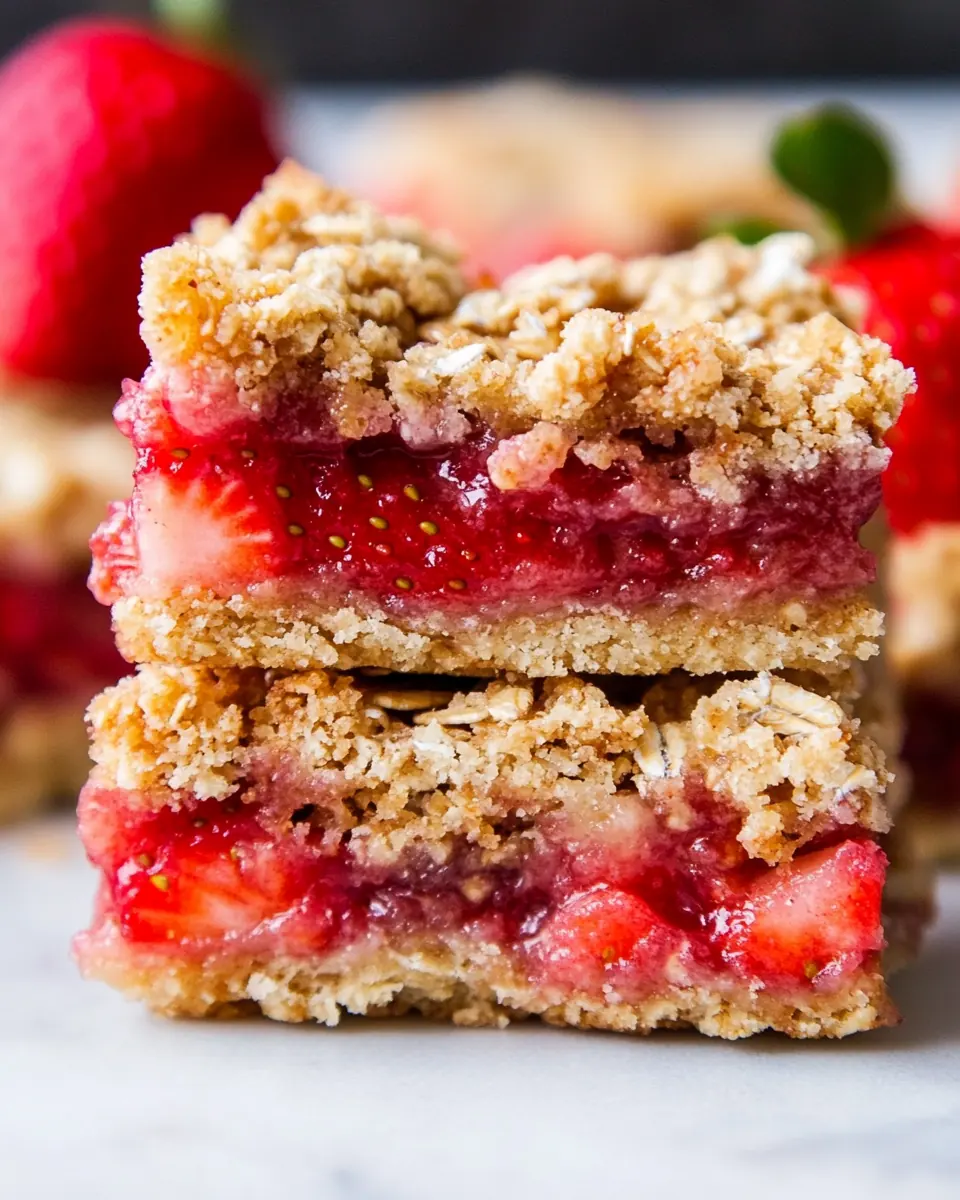
Evenly sprinkle with the reserved heaping 1 cup crumble topping mixture. Before sprinkling, I squeeze the mixture in my palm to encourage bigger crumble pieces to form.: When you squeeze some of the reserved topping, you will notice larger clumps form that create a pleasing rustic look when baked. Sprinkling by hand allows you to control distribution, aiming for gaps so the fruit peeks through. The topping should appear irregular, not a uniform sheet, so some areas will brown more than others. A frequent misstep is sifting the topping too finely, which yields a more uniform surface and less texture. Those clumps are what create that bakery style crumble experience.
Bake for about 50 minutes, or until edges are set and center has just set. Crumble topping should appear set and very pale golden and the strawberry filling mixture will be bubbling along the edges. Bars may take longer than 50 to 55 minutes if the strawberries are very juicy. Watch your bars, not the clock, when evaluating doneness.: In the oven the aroma will shift to warm oats and sweet strawberries, and you should see the edges pull away slightly from the foil. The bubbling along the edges is a key visual cue that the filling is cooking and the cornstarch is activating. The topping should be very pale golden; if it browns too much early, tent loosely with foil. Overbaking dries the filling and underbaking leaves it runny, so use the bubbling and pale golden top as your guide. If the center seems jiggly when you gently nudge the pan, it needs more time. Trust the sensory signs here for the best texture.
Place pan on a wire rack and allow bars to cool for at least 1 hour before slicing and serving. If you try to slice bars before they’ve cooled completely, they’ll be extremely messy and could fall apart.: As the pan cools, the filling will finish setting and the bars will firm up for clean slices. You should notice the filling thicken and the steam dissipate, leaving behind a tender but sliceable center. Cutting too soon yields gooey, fragile pieces that can fall apart, so patience pays off. I usually wait until the bars reach near room temperature for easiest slicing. A simple tip is to chill briefly if you want perfectly neat squares faster, but avoid freezing, which can change texture. Cooling is the final step that ensures the structure and presentation are both successful.