Make the crust: preheat the oven to 400°F. In the bowl of a food processor fitted with a steel blade, place the shortbread cookies, sugar, and nutmeg. Blend until you have fine crumbs.: preheat the oven to 400°F. In the bowl of a food processor fitted with a steel blade, place the shortbread cookies, sugar, and nutmeg. Blend until you have fine crumbs. : The smell of warm shortbread emerging as you pulse the cookies is immediately comforting, a toasty buttery perfume that sets the tone for the whole pie. As the crumbs turn uniform, you should notice a sandy texture, fine but with a slight body so the crumbs will pack well. This step matters because a consistent crumb size allows the melted butter to coat evenly, preventing pockets of dryness or overly dense patches in your crust. Listen for the processor motor to change pitch as the pieces reduce, and stop occasionally to scrape down the bowl so everything processes evenly. A common mistake here is overprocessing into powder, which can make the crust too compact and heavy rather than crisp and flaky.
Transfer the crumbs to a mixing bowl, then pour the melted butter over the top. With a fork, stir to evenly moisten.: When the warm butter hits the crumbs, you will see them darken slightly and take on a glossy sheen as they absorb the fat, which smells rich and inviting. Use a fork to toss and press so each crumb is coated but not saturated, aiming for a texture that holds together when pinched between fingers. This matters because the right butter distribution ensures the crust bakes into a firm, sliceable shell instead of crumbling. If the butter is too hot, it can melt too fast and make the crumbs greasy; if too cool, they won't bind. Avoid adding extra butter to compensate for packing issues, instead press firmly when shaping the crust.
Press the crumbs evenly around the bottom and up the sides of a standard 9-inch pie dish (I find the back of a measuring cup the easiest way to do this).: The tactile feedback here is crucial, you will feel resistance as you press and the crumbs will compact into a smooth, even surface. Pressing evenly prevents thin spots that might burn and ensures the filling rests on a uniform base. The back of a measuring cup makes a consistent, flat press, creating clean edges and an attractive rim. Watch the wall thickness; if you press too thinly on the sides the filling may seep through, while pressing too thickly at the base will produce an overly bready mouthfeel. A frequent misstep is leaving the crust uneven, which affects bake time and presentation.
Bake the crust for 8 to 10 minutes, until golden brown and set. Place it on a wire rack and let cool completely.: As the crust bakes, the kitchen fills with the warm aroma of toasted butter and nutmeg, and visually you will see the surface deepen to a light golden brown. The brief baking time firms the crumbs so they will support the filling without becoming soggy. Cooling on a wire rack allows air to circulate under the dish so steam escapes, preventing condensation that would soften the bottom. The reason this step is essential is that an unbaked crust can collapse under the filling and become mushy; a properly baked crust stays crisp. Avoid overbaking, which will make the crust bitter, and do not try to fill while the crust is still hot, as the heat can speed up the filling setting before it is evenly distributed.
Meanwhile, make the filling: Place 1 1/2 cups of the sliced strawberries in a medium saucepan and mash them until they are just a little bit chunky (do not puree). Add the honey and water. In a small, separate bowl, mix sugar and cornstarch, then add all at once to the berries.: Place 1 1/2 cups of the sliced strawberries in a medium saucepan and mash them until they are just a little bit chunky (do not puree). Add the honey and water. In a small, separate bowl, mix sugar and cornstarch, then add all at once to the berries. : You want the mashed berries to release juices but still show little bits of flesh, offering both body and light texture. The aroma of heated strawberries and honey will bloom, smelling floral and fruity, which tells you the flavor is concentrating. Mixing the sugar with cornstarch first prevents lumps, and adding them together lets the starch hydrate evenly in the liquid. The why behind this technique is texture control, the partially mashed berries deliver a pleasant contrast to the reserved whole pieces. A common error is overmashing into a puree, which sacrifices the chunkiness that makes the filling interesting.
Bring the strawberry mixture to a boil over medium-high heat, stirring constantly. Boil and stir until the mixture thickens, about 1 to 2 minutes.: The moment the mixture reaches a boil you will notice it go from watery to glossy, bubbling actively as the starch activates and the sugars concentrate. Stirring constantly prevents scorching on the pan bottom and ensures a smooth, lump free gel forms. The visual cue is a thicker consistency that coats the back of a spoon and a sheen that reflects light, indicating the correct set. This brief boil is crucial because undercooking will leave the filling runny, while overcooking can make it overly firm and dull the fresh berry flavor. One mistake to avoid is turning the heat too high, which can cause rapid scorching and a cooked flavor instead of bright strawberry notes.
Remove from the heat and stir in the vanilla. Add the food coloring a few drops at a time, until you reach a nice strawberry hue (mashing the berries dulls their color, and the food coloring makes for a more appealing finished product).: Off the heat, the vanilla lifts the aroma, giving a warm floral counterpoint to the fruit, while gentle stirring coats the mixture evenly. Adding food coloring is optional, but when used sparingly it restores that fresh red tone that sometimes mashes out during cooking. The sensory cue here is aroma brightening and color deepening, signaling that the flavor is balanced. A common pitfall is adding too much coloring, which will look artificial and can distract from the natural berry flavors.
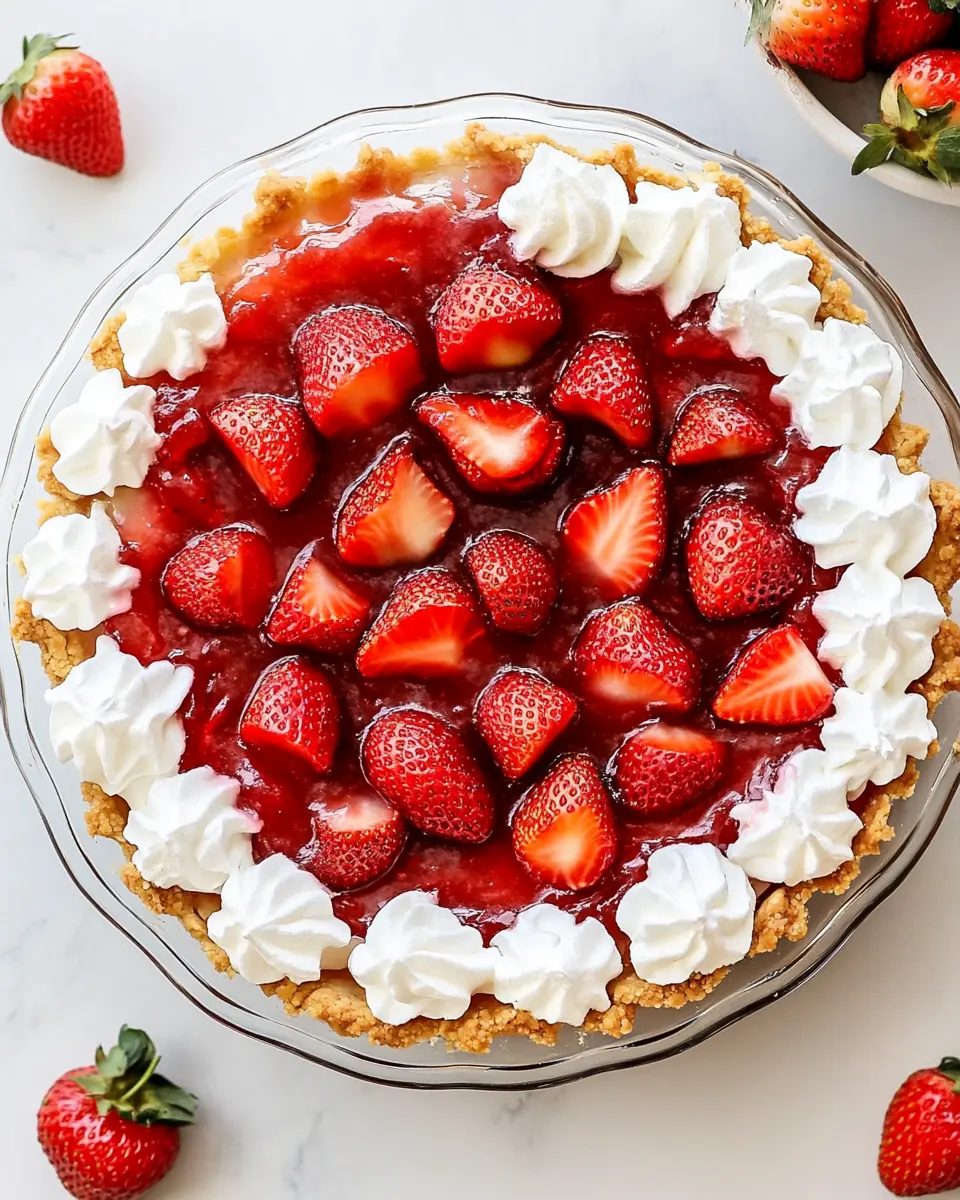
Fold in the remaining strawberries. If desired, add a bit more red food coloring. Immediately pour into the cooled crust. If you like for presentation purposes, use your fingers to gently turn the berries so that their bright red outsides (versus the lighter insides) face outward. Let the pie cool at room temperature for 10 minutes. Transfer to the refrigerator and let chill for at least 4 hours or overnight.: As you fold in the reserved berries, you will notice bright bursts of color and a contrast in texture between jammy base and intact fruits. The visual arrangement matters, so turning berries outwards creates a polished top that glints under light. Pouring while the filling is still warm helps it settle into crevices, but chilling is necessary to allow the cornstarch to finish setting and the flavors to marry. After chilling, the filling will slice cleanly and feel pleasantly cool on the tongue. Avoid skipping the chill time, as serving too soon will yield a runny pie that fails to hold shape.
Up to 4 hours before serving, prepare the whipped cream: In a large mixing bowl or the bowl of a standing mixer fitted with the whisk attachment, beat the cream in the bowl of an electric mixer fitted with a whisk attachment over medium speed. When it starts to thicken, add the powdered sugar and vanilla, increase the mixer speed to high, and continue to beat until soft peaks form. (Do not overbeat or the cream will separate.) To serve, spread the whipped cream over the chilled pie, slice, and serve, or allow guests to add whipped cream to individual servings.: In a large mixing bowl or the bowl of a standing mixer fitted with the whisk attachment, beat the cream in the bowl of an electric mixer fitted with a whisk attachment over medium speed. When it starts to thicken, add the powdered sugar and vanilla, increase the mixer speed to high, and continue to beat until soft peaks form. (Do not overbeat or the cream will separate.) To serve, spread the whipped cream over the chilled pie, slice, and serve, or allow guests to add whipped cream to individual servings. : The sound changes as the cream aerates, from liquid slosh to a thicker, heavier rhythm and then to soft peaks that hold shape but still yield with a gentle pull. The sugar dissolves into the cream, and the vanilla perfumes it with a warm, sweet aroma. Whipping until soft peaks gives a cloud like texture that complements the dense filling, and stopping at the right moment prevents the cream from breaking into butter. If your bowl or whisk is warm, chill them briefly first, because a warm surface can slow or prevent proper aeration. Spread the cream carefully so you do not tear the chilled surface of the filling, and refrigerate briefly if the kitchen is hot before serving.