In a large bowl, sift the flour with a pinch of salt. Make a well in the center and add the egg. Start mixing the egg with the flour using a fork. Combine the milk and water, and slowly add it to the flour, mixing everything together.: The first sensory cue here is the fine, soft dusting of all purpose flour in the bowl and the faint saline scent from the salt . Sifting aerates the all purpose flour , so the finished dough feels lighter and rolls more smoothly. You will notice a dry, slightly powdery feel under your fingers when the sift is complete. A common mistake is skipping sifting which can lead to lumps that make the dough uneven. If lumps appear, press the dry flour through a sieve or re sift gently. This step matters because evenly aerated all purpose flour absorbs liquid uniformly, preventing spots of dryness that make rolling difficult.
Transfer the dough to a countertop and knead it. Note: The dough will be very stiff, but that's ok – you don’t need to worry about that. Knead for 5–10 minutes until it smooths off.: When you make a well, the bowl looks like a miniature volcano of flour, and the raw egg sits bright and glossy in the center. The visual of the golden yolk contrasting with the pale all purpose flour is satisfying. This method helps start an even incorporation, as the egg can be gradually mixed into surrounding flour with a fork. A frequent pitfall is adding all liquid at once, which can create a sticky mess; control the flow to keep the dough manageable. Doing this step ensures the egg is well distributed so the dough binds evenly and develops structure for shaping.
Then, form the dough into a ball, wrap it tightly in plastic wrap, and let it sit for 1 hour at room temperature. Let the dough rest for an hour, as it will change texture and become softer and more pliable.: You will hear a gentle scraping as the fork drags flour into the egg , and the mixture changes from glossy to crumbly. This tactile transition indicates the beginning of dough formation. Work slowly so that the egg blends evenly, using the fork to draw in dry all purpose flour from the sides. A common error is over mixing which can make the dough tight; stop as soon as the major dry streaks are combined. Proper mixing sets the stage for a cohesive dough that will knead into a smooth wrapper rather than a gummy or overly dense one.
Wash and dry the strawberries. If desired, you can cut them, but it’s quicker and easier to use whole strawberries or halved ones.: As the clear water and pale milk meet the dry mixture, the texture softens and you will notice the dough take shape under the fork. Adding the liquid gradually prevents lumps and weak spots, and the mixture should go from crumbly to slightly tacky. You may sense a faint milky aroma as the milk blends, and the bowl will show no dry patches when you pause. A mistake to watch is pouring all the liquid in too quickly, which can create a sticky, unworkable dough. The reason for this careful addition is to allow precise hydration so the dough remains elastic enough to roll thin without tearing.
Cut off a small portion of dough, keeping the rest wrapped to prevent drying. Lightly flour the surface and roll out the dough thinly. Cut out circles using a glass or cutter, and wrap the remaining dough in plastic wrap. Tip: Use flour sparingly, only dusting the rolling pin and surface lightly.: Moving the dough onto the surface gives you full control to work it with your hands, feeling it shift from coarse to smooth beneath your palms. Kneading develops gluten, which provides the slight chew we want in the wrapper. Expect some resistance, and keep a sprinkle of all purpose flour nearby to prevent sticking, but avoid adding too much. A common mistake is aggressive or very long kneading which makes the dough tight and less tender. When the dough smooths off and springs back lightly, you know the gluten network is ready for resting, which makes rolling easier later.
Flatten each circle slightly in your hand, place a few strawberry pieces in the center, and sprinkle with sugar. Fold the edges of the dough together and pinch them tightly to form a crescent or dumpling shape. Repeat with the rest of the dough.: The dough will relax during this rest and the surface feels slightly tacky when you unwrap it. Resting allows the gluten to unwind, which makes rolling simpler and prevents elastic snapback. You might notice a mild yeasty or wheaty scent after an hour, and the dough will be noticeably more pliable. A mistake is skipping this rest, which results in tearing while rolling. Trusting this pause improves texture and prevents frustration when forming thin circles.
Place the prepared pierogi on a floured board, making sure they don’t touch each other to prevent sticking.: Clean strawberries smell sweet and fragrant, and drying them thoroughly prevents extra moisture from making the filling soggy. Gently pat each berry with a towel and, if the berries are very ripe, consider halving them so they sit well in the dough. A common mistake is leaving them wet, which can lead to a watery filling and difficult sealing. Dry fruit holds sugar better, and that concentrated flavor makes the finished pierogi more satisfying.
Optional: You can freeze some of them and enjoy them later. If you want to freeze them, place the board in the freezer for 2–3 hours, then transfer the pierogi to a bag for storage.: The exposed dough will feel cool and slightly tacky; keeping the remainder wrapped maintains its moisture. Lightly flour your surface, roll the small portion thinly, and cut circles with a glass or cutter. The sound of the rolling pin and the sight of even circles is rewarding. Over flouring the surface is a common misstep, which can dry the edges and make sealing tricky. Keeping unused dough wrapped ensures consistent texture across all pieces.
To cook the pierogi, bring a large pot of salted water to a boil. Once boiling, reduce the heat to a simmer and gently drop the pierogi into the water. Once they float to the surface, cook for an additional 2–3 minutes. Remove with a slotted spoon.: You will sense a contrast between the cool dough and the warm fruit, and the sugar will glint as it touches the berries. Light pressure forms a small well to hold the filling without causing leakage. A common error is overfilling, which makes sealing impossible; aim for a modest amount so the dough closes cleanly. This careful portioning ensures each pierogi cooks uniformly and the filling stays contained.
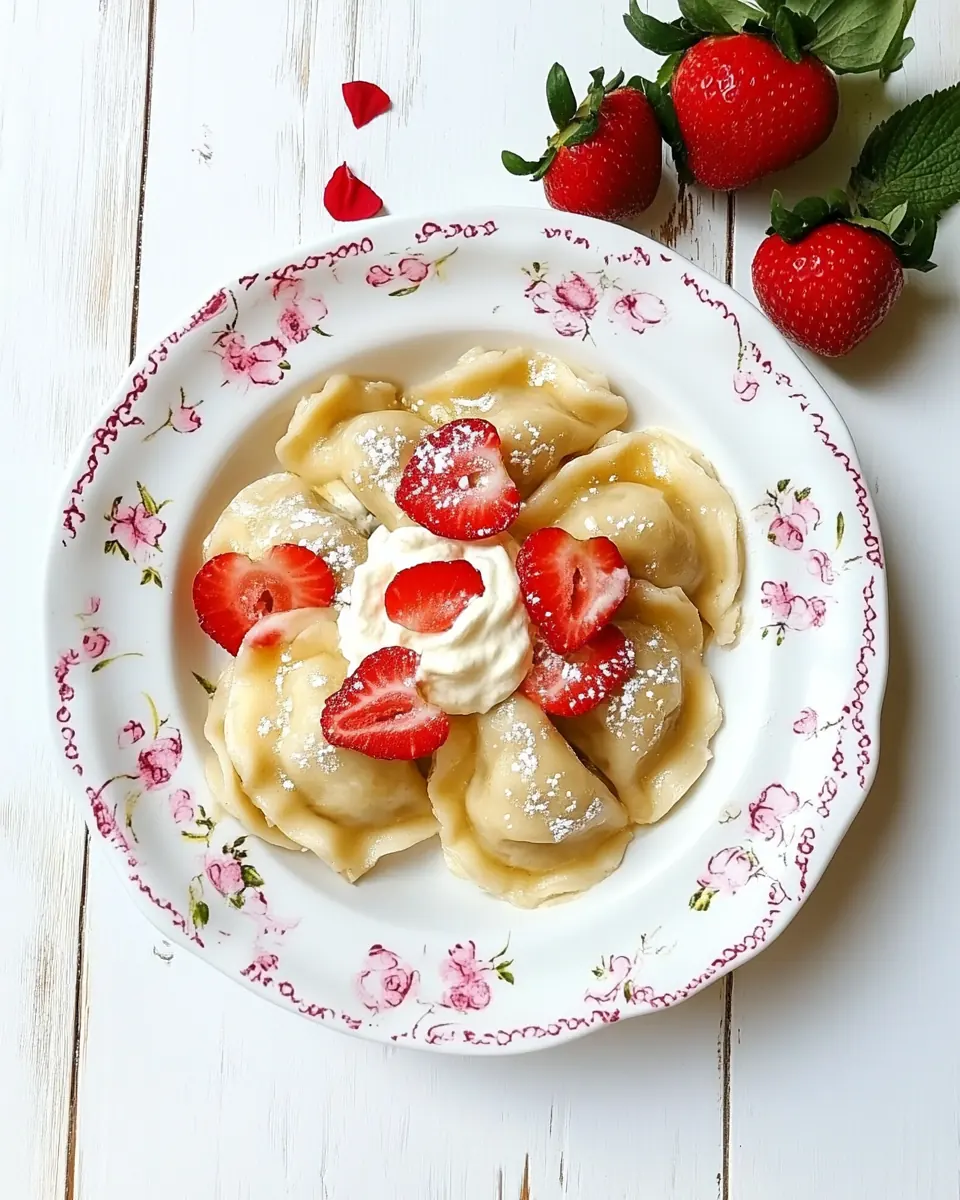
Sprinkle the cooked pierogi with sugar and serve with fresh sour cream. Serve warm, though they’re also delicious cold!: Pinching creates a seal that should feel firm under your fingertips, and the edges will show a slight ridge where the dough joins. The visual of a tight seam is satisfying and indicates they will hold during cooking. If you notice gaps, re pinch to secure, as leaks lead to a messy pot and lost filling. Proper sealing is crucial because it keeps the juicy strawberries inside, producing a neat, flavorful result.
Place the prepared pierogi on a floured board, making sure they don’t touch each other to prevent sticking: The board will show a soft halo of flour beneath each dumpling, and keeping space between items prevents them from fusing together. A light dusting helps when transferring to boiling water later. A common mistake is crowding, which makes removal difficult and can tear the wrappers. Laying them apart preserves shape and makes cooking smoother.
Optional: You can freeze some of them and enjoy them later : When freezing, you will feel the cold firm the dough, and after a couple of hours they hold shape well in a bag. Flash freezing on the tray prevents sticking together and allows easy storage. Many people err by packing them warm which causes condensation and freezer clumping. Freezing is a great way to have ready to cook pierogi on hand for a quick, special treat.
To cook the pierogi, bring a large pot of salted water to a boil: The sound of a rolling boil and the scent of salt in the steam are cues that the water is ready. Reduce to a simmer before adding the dumplings so they are not battered by violent bubbles. When they float, you will see them bob to the surface and the dough will look plumper and slightly translucent. A common mistake is overcrowding the pot which cools the water and leads to uneven cooking. Proper simmering ensures even heat and a tender cooked wrapper.
Once boiling, reduce the heat to a simmer and gently drop the pierogi into the water: The quiet plop as they enter the water is satisfying, and settling them gently prevents tearing. Listen for a faint quieting of the water as you add them. After they float allow them to cook for an additional 2 to 3 minutes so the dough finishes through and the filling warms. A frequent error is stirring them vigorously, which can break the wrappers, so use a slotted spoon to guide them gently.
Once they float to the surface, cook for an additional 2–3 minutes: Visually the pierogi will look fuller and the dough slightly translucent when fully cooked. Soft bubbling and the faint scent of warmed strawberries indicate readiness. Overcooking makes the wrapper mushy, a common mistake, so keep an eye on timing. These final minutes ensure the center is warm and the texture is tender without becoming soggy.
Remove with a slotted spoon: Lifting each pierogi with a slotted spoon lets excess water drain away, and you will see a slight sheen on the surface from the brief boil. Place them on a serving plate or tray, spacing them so steam can escape. A common error is piling them which traps steam and softens the outer layer. Draining properly preserves the ideal bite and appearance.
Sprinkle the cooked pierogi with sugar and serve with fresh sour cream: The final touch is the glitter of sugar on the warm surface and a dollop of cool sour cream that balances sweetness with tang. The contrasting temperatures and textures create a memorable mouthful. If you skip the sour cream you miss a traditional counterpoint; offering it on the side lets guests choose their favorite balance.
Serve warm, though they’re also delicious cold: Warm pierogi are soft and fragrant, while chilled ones gain a firmer texture and concentrated fruit flavor. Either way they are portable and enjoyable, making them ideal for many occasions. A common oversight is serving them too long after cooking without storing, which can dry out the dough. Serve within a comfortable window for the best experience.