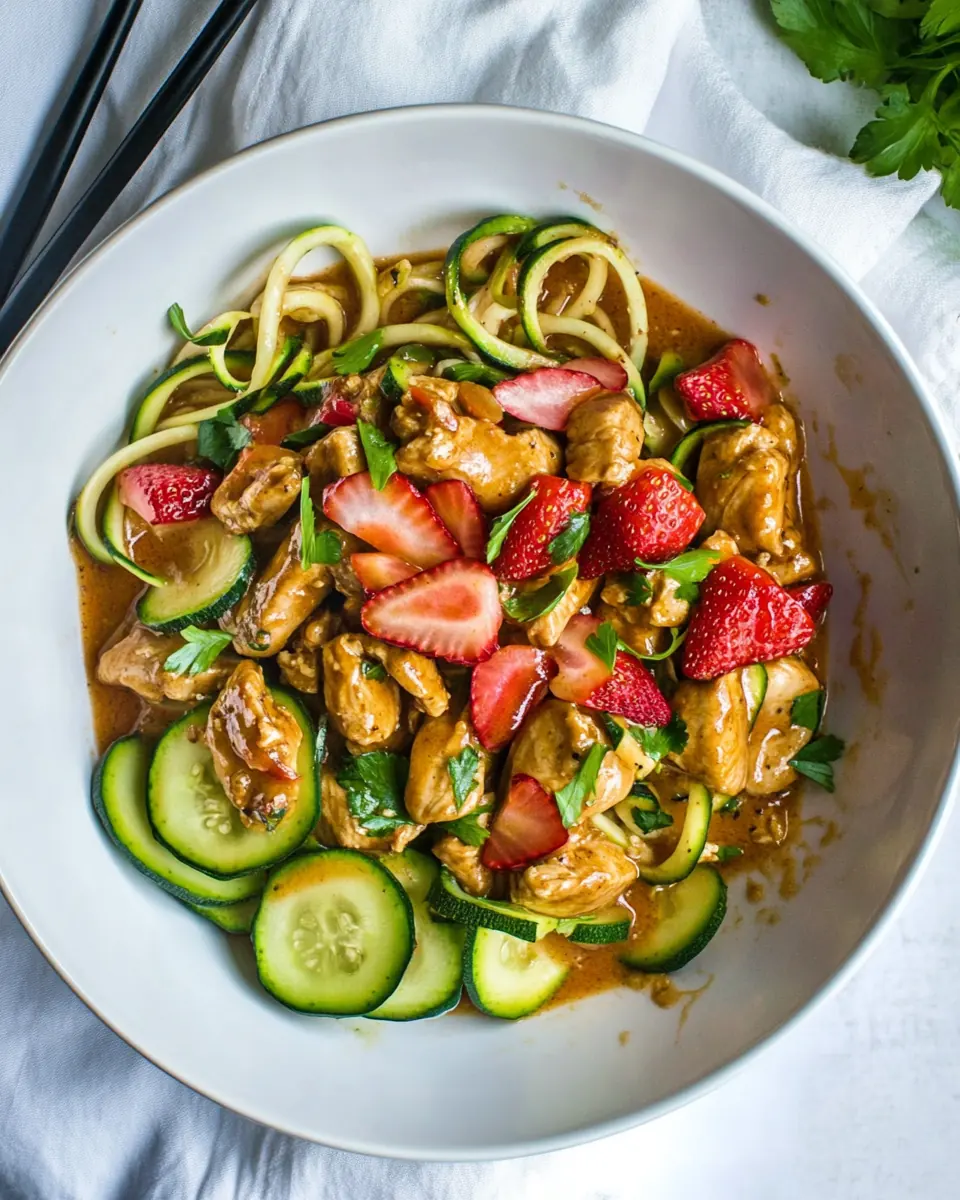
Using the 3-millimeter blade of your spiralizer, spiralize the zucchini. Place the zoodles into a strainer set over a large bowl. Add a pinch of salt and stir around, letting them sit in the colander to release some moisture.: The zoodles will sigh as they relinquish water, a subtle wet sound and a faint vegetal scent that signals they are ready. Pressing them in a strainer concentrates their texture so they stay springy when plated. This step matters because excess water can dilute the sauce and make the dish soggy. If you skip the sitting time, expect a looser, watery result that will prevent the sauce from clinging properly.
In a large pan, heat the olive oil over medium heat. Add in the rhubarb and ginger and cook until the rhubarb softens and begins to brown, about 2-3 minutes. Then, add in the chicken and cook until the outside is golden brown, about 4-5 minutes.: As the oil warms you will smell the ginger bloom, sharp and warm, then the rhubarb will soften and release a bright tart steam; those caramelized edges add depth. When you add the chicken you should hear a steady sizzle and witness the surface turn opaque and golden, which locks in juices. This searing is crucial for texture and flavor layering. Overcrowding the pan will steam the ingredients instead of browning them, so work in batches if needed.
Add in 1/2 cup of the orange juice, reserving the rest for later, along with the honey and lime zest and juice. Season with a pinch of salt.: A lively citrus steam will rise as the orange juice hits the hot pan, and the honey will dissolve into a glossy sheen that coats the pieces. The lime zest releases essential oils that perfume the sauce, creating a complex aroma. Salting here helps unify the sweet and tart elements. A common pitfall is adding too much liquid at once, which can cool the pan and slow reduction, so ensure the pan is hot enough to return to a simmer quickly.
Turn the heat up to high and boil for 1 minute. Then, reduce the heat to medium and simmer until the sauce thickens, about 4-5 minutes, stirring frequently.: The sauce should bubble vigorously at first, then settle into a steady shimmer as it reduces and becomes syrupy. You will see the sauce cling to the spoon and hear a lighter, slicker sizzle in the pan. This reduction concentrates flavors so the sweetness is balanced by acidity. Stirring keeps the mixture from scorching. If you let it boil unattended it can burn or reduce too far, making the sauce sticky and overly sweet.
Press out the water from the zucchini noodles and place them onto a paper towel. Cover with another paper towel and press out as much water as you can. Divide between two plates.: When you press the zoodles, you will notice moisture bead on the paper towel and the zucchini will go from floppy to pleasantly springy. This tactile check is essential so the noodles absorb sauce without becoming limp. The visual cue is a drier, matte finish on the zoodles. If you skip this pressing, the final dish will be watery and dilute the concentrated flavors of the sauce.
Pour 1 teaspoon of orange juice and half of the mint (1 teaspoon per plate) over each of the piles of zucchini noodles and then divide the chicken and sauce on top of each pile. Divide the strawberries and toasted almonds on top.: The small pour of reserved orange juice brightens the base and the mint freshness lifts each bite, while the sliced strawberries add juicy contrast and the toasted almonds provide a satisfying crunch. Layering these elements builds a balanced mouthfeel that keeps the dish interesting. Add the almonds at the end to maintain their crisp texture, otherwise they will soften in the sauce.
Mix it all up and enjoy.: As you toss the plate together the aromas mingle, and the textures fuse into a cohesive bite where sweet, tart, and savory play together. The final visual should be a glossy sauce clinging to the chicken and pockets of bright fruit and crunchy nuts visible across the zoodles. A common mistake is stirring too vigorously which can bruise the strawberries and wilt the mint, so fold gently to keep contrasts intact.