Preheat oven to 350°F.: As the oven warms, notice the faint scent of heating metal and the steady, even warmth that will brown the topping and set the filling. This temperature allows the filling to bubble and thicken slowly while the cobbler topping turns golden, which prevents the topping from burning before the filling is cooked through. A common mistake is not preheating, which can lead to uneven baking and a soggy crust.
In a large bowl, stir together rhubarb, strawberries, lemon juice. Add sugar and stir to combine. Then sprinkle cornstarch over the top and stir to combine again.: At this stage the fruit will begin releasing juices, and you should smell a fresh, slightly tart aroma from the rhubarb mixing with the sweet scent of strawberries . The sugar helps draw moisture out, while the cornstarch will start to cling to those juices, which is crucial for a glossy, thick filling after baking. A common error is adding cornstarch too early or not mixing it through, which can leave unthickened pockets or lumps in the filling.
Transfer filling mixture, along with any accumulated juices, to a 9" x 13" baking dish. Spread into an even layer. Set aside.: Spreading the filling evenly ensures consistent bubbling and even heat distribution. Visually you should see a layer of mixed fruit and juices that glistens and holds together when scooped. If the filling is uneven, some parts may overcook or undercook, so take a moment to level it with a spatula for uniform results.
In a large bowl, whisk flour, 1 cup of the sugar, baking powder, and salt. Add cold, cubed butter and use a rigid pastry cutter to cut the butter into the dry ingredients until you have pea-sized crumbs.: The sound here is important, a light clacking as the pastry cutter breaks down the butter into pea sized pieces. Those visible butter bits are critical because they melt in the oven, creating flaky pockets in the topping. If the butter becomes too warm, you lose that flakiness, so work quickly and keep the butter cold to avoid greasy or dense topping texture, which is a frequent pitfall.
Add hot water to a liquid measuring cup, then add the vanilla to the measuring cup. Drizzle this over the cobbler mixture. Then use a wooden spoon to very quickly fold it together. It's important to not overmix or press this into a smooth dough – you want to have some of the dry flour mixture still showing through, so it looks a bit shaggy and you can still see lumps of butter. It should be moist and "clumpy".: The hot water will bring the dough together, and the aroma of vanilla lifts the topping. The texture goal is a shaggy, clumpy batter with visible butter pieces, which bakes into a tender, rustic topping. Overmixing smooths out those pockets, yielding a heavier, less flaky result. Avoid compacting the dough, because that can make the topping dense and chewy instead of fluffy and crisp.
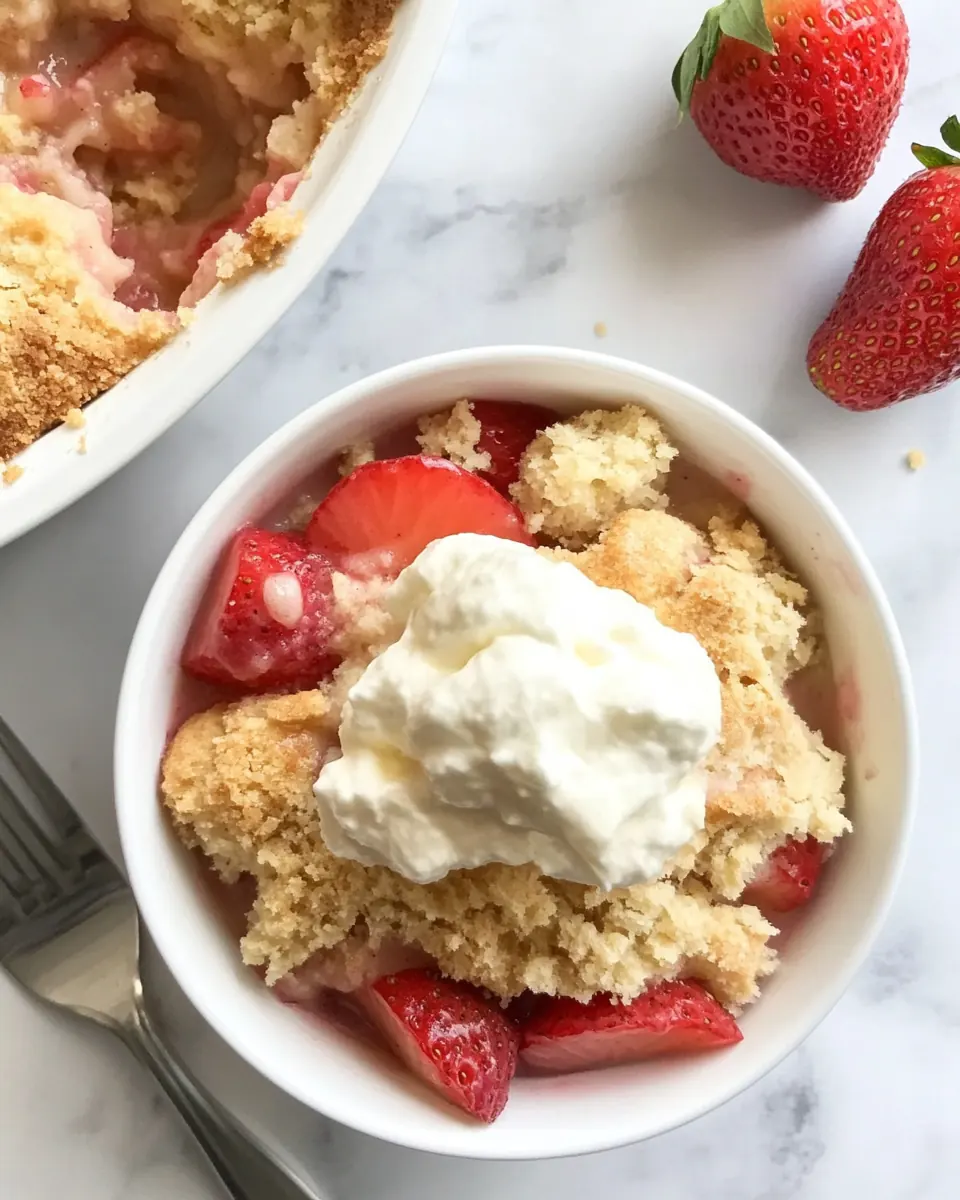
Dollop the cobbler topping over the strawberry rhubarb filling in an even layer, leaving 1" of strawberry rhubarb filling exposed around the edge. Do not press or spread the cobbler topping – the top should have a rough appearance.: Using large spoonfuls or dollops creates islands of topping that bake into golden mounds, showing bits of fruit between them. The exposed edge allows the filling to bubble out and caramelize slightly, which adds flavor. Pressing the topping will create a uniform crust rather than the intended rustic lumps, so resist smoothing it out to preserve texture contrast.
Sprinkle remaining tablespoon of sugar evenly over the cobbler topping.: This final sugar adds a slight crunch and helps the topping take on a beautiful sheen as it bakes. The granules will caramelize into tiny crystals that catch the light and add a pleasant textural note. Too much sugar here can overwhelm the topping, so stick to the modest sprinkle given to avoid an overly sweet crust.
Bake for 60-65 minutes, or until the filling is thickened and bubbling at the edges and the cobbler topping is golden. Remove from oven to a cooling rack and let rest for at least 15 minutes before serving. Enjoy with scoops of vanilla ice cream.: As it bakes you will see the filling bubble and the topping turn a deep golden brown, releasing a rich sweet fruit aroma. The bubbling at the edges signals the cornstarch has activated and the filling is thickening, while the topping should be evenly bronzed. Letting it rest allows the filling to settle and thicken further, making it easier to serve. Cutting into it too soon can result in a runny serving, which is an easy mistake to make when you are eager to taste it.