Wash the strawberries. Cut the leaves off, then cut them into quarters.: The berries should smell sweet and look bright; rinsing removes grit and field dust so the filling is clean tasting. As you quarter them, notice the juice that begins to appear at the cut surfaces, an early sign of the fruit releasing sugars. Avoid leaving the strawberry soaking in water, which can dilute flavor. A common mistake is hurrying this step, leaving stems behind which affect texture and presentation.
Wash the rhubarb and cut them into 0.5-inch (less than 1 cm) slices.: The rhubarb should be crisp when you slice it, with a fresh, vegetal scent. Uniform half inch slices ensure even cooking; thicker pieces may stay fibrous. If the stalks are stringy, pare off the outer fiber before slicing. One error to avoid is mixing very large and very small pieces, which leads to uneven doneness in the filling.
Preheat oven to 350 F (180 degrees).: You should feel a steady warmth when you open the oven after preheating, and the internal temperature should read consistent with an oven thermometer. A fully preheated oven guarantees the topping starts to brown as the fruit heats, creating that pleasing contrast. Not preheating can cause an undercooked top and an overcooked filling, so resist the temptation to skip this.
Add half of the rolled oats and all other ingredients to the food processor (almond or oat flour, coconut sugar, dairy-free butter (should be fridge cold, not room temperature)). Mix until they get to a breadcrumb-like texture.: You will hear a change in the processor as large clumps break down into coarse crumbs, and you will see tiny butter flecks against golden oats. The cold butter is essential to this texture, and the breadcrumb stage is the sweet spot that gives a crisp yet tender topping. Overprocessing is the usual pitfall here, which yields a pasty, dense topping rather than flaky crumbs.
Add the remaining rolled oats and only pulse to combine. We want the oats to remain more or less intact.: Pulsing keeps the oats distinct, contributing chew and visual grain to the topping. The sound of a few short pulses should be rhythmic, not continuous; you will see whole oat flakes folded into the mixture. If you run the processor too long, you will lose that chunkiness and the topping will bake into a uniform crust rather than crisp clusters. Avoid that by using quick, intentional pulses.
Scatter the fruit pieces in a shallow oven-safe dish and sprinkle them with coconut sugar, cornstarch, and cinnamon. Stir with a spatula until combined.: The fruit should glisten as the sugar and starch coat each piece, and the cornstarch will start to look slightly pasty as it adheres. This coating ensures a thickened, glossy filling once baked. Mix gently so you do not mash the berries, a common misstep that turns the fruit into an indistinct sauce instead of distinct pieces.
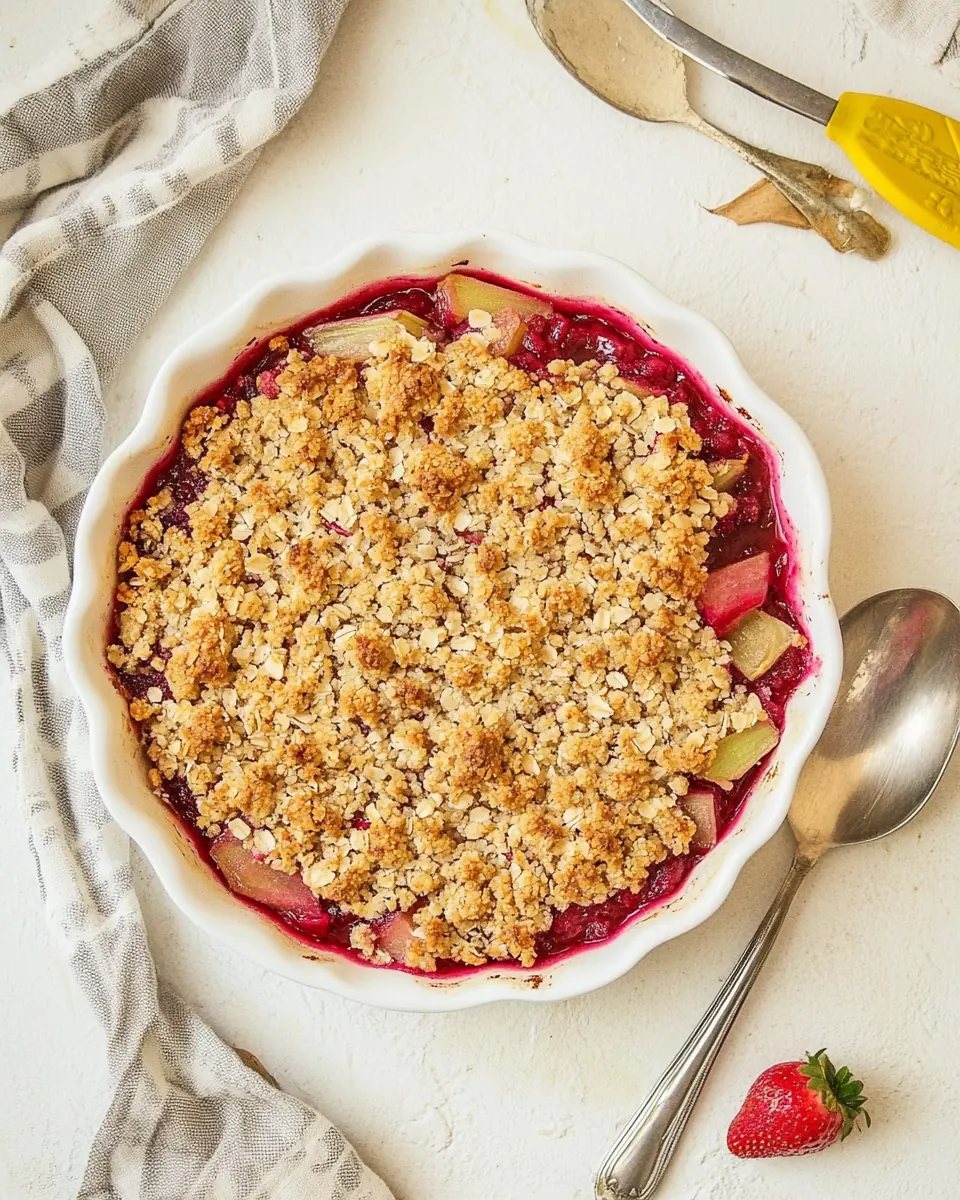
Scatter the crisp topping evenly over the fruit using your fingers.: The tactile part is satisfying; feel for even coverage, creating small clusters that will toast into crunchy pockets. Make sure edges get topping too, since the bubbling juices caramelize there beautifully. Overcrowding the top in one spot can lead to uneven browning, so distribute by hand to avoid that problem.
Bake for 20 minutes or until the crisp topping turns golden brown. Serve it warm with vanilla ice cream that melts all over it. Enjoy!: You should see bubbling along the dish edges and the topping should be a warm, nutty color; the aroma will shift from raw oats to toasty oat notes. If the topping browns too fast before the juices bubble, tent the dish with foil and continue baking until the filling is set. A common error is relying only on time; use visual cues to judge doneness.
Serve it warm with vanilla ice cream that melts all over it.: The contrast between hot and cold is part of the charm, and you will hear a soft hiss as the melting ice cream hits the hot fruit. If you want a cleaner slice, let it rest for a short time; if you prefer indulgence, serve immediately. Watch out for serving it piping hot without letting it settle a bit, as it can be too runny to plate neatly.