Preheat the oven to 400°F. Line a large baking sheet with parchment paper or a Silpat baking mat and set aside.: You will notice the oven warming with a clean dry heat smell that signals readiness, and lining the sheet prevents sticking and promotes even browning. Preheating is essential because scones rely on an immediate burst of heat to create lift and flaky layers. A common mistake is to skip full preheating, which can result in heavier scones. If your oven runs hot, rotate the pan midway to ensure even color.
Whisk together the egg, buttermilk, lemon juice, and vanilla in a medium bowl. Add the ricotta cheese and whisk until combined. There will still be a few lumps. Set aside.: The mixture will look slightly frothy and smell bright from the lemon juice and warm from the vanilla extract ; lumps in the ricotta cheese are fine because they melt into pockets that keep the scone moist. This wet blend should feel cool to the touch, which helps the cold butter remain solid when mixed into the dry ingredients. One trap is overwhisking, which can thin the mixture too much and affect texture.
In a small bowl, combine the sugar and lemon zest. Rub together with your fingers until fragrant. In another large bowl, whisk together the flour, baking powder, baking soda, salt, and lemon sugar mixture. Add the butter pieces to the flour mixture and toss with a fork just until the butter is coated with flour. Using a pastry cutter, fork, or your hands, cut the butter into the flour until you have a mixture of pea-sized or slightly larger clumps of butter and flour.: Rubbing the lemon zest into the granulated sugar releases aromatic citrus oils that perfume the dry mix; you will smell the citrus right away. The flour mixture should have a sandy texture with visible flecks of cold butter , signaling that those pockets will steam in the oven to create a flaky interior. Avoid warming the butter with your hands; if it softens, chill the bowl briefly before proceeding.
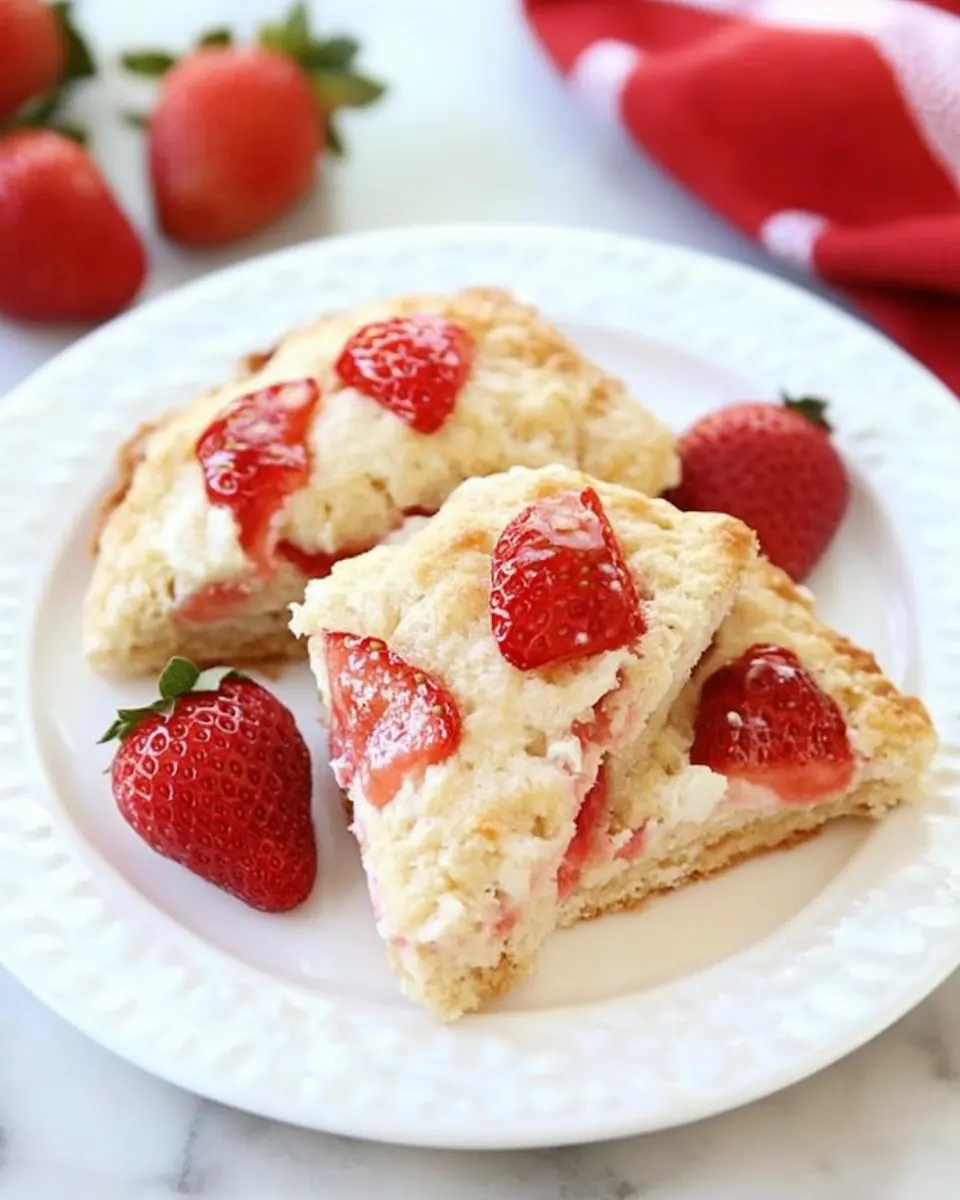
Pour the liquid ingredients over the dry ingredients and stir with a spatula until just combined. Don’t overmix the dough. Gently fold in the strawberries. Turn out the dough onto a well floured space and gently and shortly knead the dough. If the dough is too sticky, you can add a little bit of flour as you knead. Pat the dough down into a disk, about 1/2 inch thick. Cut the dough into 8 wedges or cut into rounds with a biscuit or cookie cutter.: As you mix, the batter will transform from dry crumbs to a cohesive, slightly tacky dough; stop when streaks of flour disappear to avoid a tough result. Folding in the chopped strawberries should be gentle to keep the fruit from bleeding too much juice into the dough, which would make it soggy. When you press the dough into a disk, it should hold its shape and feel cool; overworking will develop gluten and make the scones dense. A frequent error is adding too much flour while kneading; add only a dusting to control stickiness.
Transfer the scones to the prepared baking sheet and brush with milk or heavy cream. Sprinkle scones with turbinado sugar. Bake for about 15-20 mins, or until the scones are golden brown. Let cool on a wire rack and serve.: Brushing the tops with milk or heavy cream creates Maillard reaction for a golden color and helps the coarse turbinado sugar stick and glisten. You should hear a faint crackle as the edges set and see the tops take on an even golden hue; that visual cue marks readiness. Cooling briefly on a wire rack lets steam escape so the bottoms do not become soggy. A common slip is baking too long for a deep brown color which dries the interior; watch the scones in the final minutes.
Note - the dough is sticky due to the ricotta cheese. You might have to add more flour when kneading. Just try to be gentle and not overwork the dough.: The tackiness from the ricotta cheese gives a tender result, and the dough should remain slightly adhesive rather than dry and crumbly; if you add flour, do so sparingly to preserve moisture. You will feel the difference when shaping the disk, it should be pliable and cool. Overhandling to fix stickiness will tighten the crumb and reduce tenderness. If you find your hands getting warm, chill the dough briefly before cutting.