Preheat the oven to 375°F. Line a 15 x 10 x 1-inch jelly roll pan with parchment paper and spray with nonstick spray. Set it aside.: As you warm the oven, you will notice the faint dry heat that signals steady baking conditions, which is key for a quick, even bake. A properly preheated oven leads to a sponge that sets quickly and does not overbake, keeping it pliable for rolling. Common mistake to avoid, do not place the pan in a cold oven, or the cake may spread and dry out.
In a medium-sized mixing bowl, whisk together the flour, baking powder, and salt. Set it aside.: The flour will have a faint, nutty aroma once sifted and combined, and the tiny salt crystals help lift flavor. Mixing dry ingredients first ensures uniform leavening and prevents pockets of baking powder, which could cause uneven rise. Avoid overmixing later with wet ingredients, since that can develop gluten and toughen the crumb.
Using a stand mixer, or a medium-sized mixing bowl and a handheld mixer on high, beat the eggs for 5 minutes until the eggs are a light yellow frothy texture.: As the eggs spin and swell, you will watch them change from syrupy to thick and foamy, almost ribbon like when the beaters lift. This aeration creates the sponge's lift, so patience here matters. A common error is underbeating, which yields a dense cake, or overbeating, which can break down the foam.
Add the sugar, strawberry flavoring, red food coloring, and vegetable oil, then continue beating until well incorporated.: At this stage the batter will turn glossy and smooth, and the color will shift to a pale or bright pink depending on the dye. The oil adds a sheen and tenderness, while sugar helps stabilize the foam. Mixing until uniform is important, but stop once there are no streaks, otherwise you will deflate the air you've worked to create.
Fold the flour mixture into the wet ingredients.: Folding should be gentle and deliberate, with a spatula scraping the bowl while lifting and turning, so that you keep as much trapped air as possible. The batter should finish smooth with no visible flour pockets, yet still airy. Avoid stirring vigorously, which will knock out the volume and make the cake dense.
Evenly pour and spread the cake batter into the prepared pan. Bake for 10 to 12 minutes.: When the batter goes into the pan it will spread like a soft blanket and once in the oven you will hear a subtle quiet as it sets. The cake is done when the top springs back slightly if you touch it, and a toothpick comes out clean. Overbaking is the most common problem here and will cause dryness and cracking during rolling.
Remove the cake from the oven. Using a sharp knife, carefully run the tip along the sides not covered by parchment paper.: The hot cake will release steam, and running a knife loosens any edges stuck to the pan. This prevents tearing when you flip it out. Be cautious with hot pans to avoid burns; using a thin metal spatula can help if you are nervous.
Heavily dust the top of a tea towel with powdered sugar.: The fine, snowy texture of the powdered sugar creates a nonstick barrier, and the slight sweetness also seasons the cake surface. The towel will smell faintly sweet and remain cool to the touch, which helps the cake retain moisture while cooling. Do not use a towel that has fabric softener, as it can impart off flavors.
Immediately place the powdered tea towel powdered side down on top of the cake.: This immediate contact steams the cake briefly, making it pliable for rolling and reducing the chance of cracks. You will feel the warmth transfer through the towel as the cake molds to it. Rushing this transfer can cause sticking or uneven rolling, so move steadily and confidently.
Lay the cutting board on top of the tea towel. The cake pan will still be hot, so you will need to be very careful to protect your hands. Quickly flip the cake over so that the cake is lying on top of the dusted towel.: When flipped, the cake will release with a soft sigh and the underside should look even and smooth. This inversion is critical for removing the parchment paper cleanly. Use oven mitts and a firm, balanced motion to prevent dropping or bending the pan.
Carefully and slowly, peel the parchment paper off the cake and heavily dust the top of the cake with powdered sugar.: As the parchment lifts away, you may see steam rise a little, and the cake surface will glisten faintly. Dusting again ensures the outer layer will not stick during rolling. A common misstep is tearing the sponge when the parchment sticks, so peel at a low angle and go slowly.
Flip one end of the tea towel over one of the short ends of the cake. Carefully begin to roll one end towards the other. Once rolled, set it aside to cool completely.: Rolling while warm trains the cake to hold its spiral shape. You will feel slight resistance as the cake forms the roll, and the towel cushions it. Do not force the roll tight; a gentle, even tension prevents cracking. If it resists harshly, unroll and dust more powdered sugar before trying again.
Using a medium-sized mixing bowl and a handheld mixer set on medium-high, beat the cream cheese, granulated sugar, and vanilla extract for 1 to 1 1/2 minutes, or until smooth.: The cream cheese will soften into a silky paste, and the sugar will dissolve, leaving a glossy, slightly tangy mixture. Properly softened cream cheese prevents lumps, so let it reach room temperature first. Overbeating can incorporate extra air and make the filling unstable, so stop when smooth.
Fold in the whipped topping. Set it aside.: Gently incorporating the whipped topping produces a fluffy, stabilized filling that is lighter than straight cream cheese. The mixture should look cloudlike, with a creamy sheen. Avoid vigorous mixing which would deflate the volume and make the filling heavy.
Once the cake completely cools, slowly unroll the cake. If there are a few small cracks, it will be okay.: As you unroll, the sponge will release a faint sweet aroma and feel cool to the touch. Small fissures are normal and will be concealed by the filling, so do not panic if you see them. However, if the cake seems overly dry, you may have overbaked it and should proceed gently to avoid larger tears.
Using a silicone spatula or an offset spatula, spread the filling over the top of the cake, avoiding the edges.: The filling should feel silky and spread easily, leaving a smooth ribbon across the cake. Leaving a bit of space at the edges prevents the filling from leaking out during the re-roll. A common mistake is piling filling too close to the edge, which leads to squeeze out and an uneven roll.
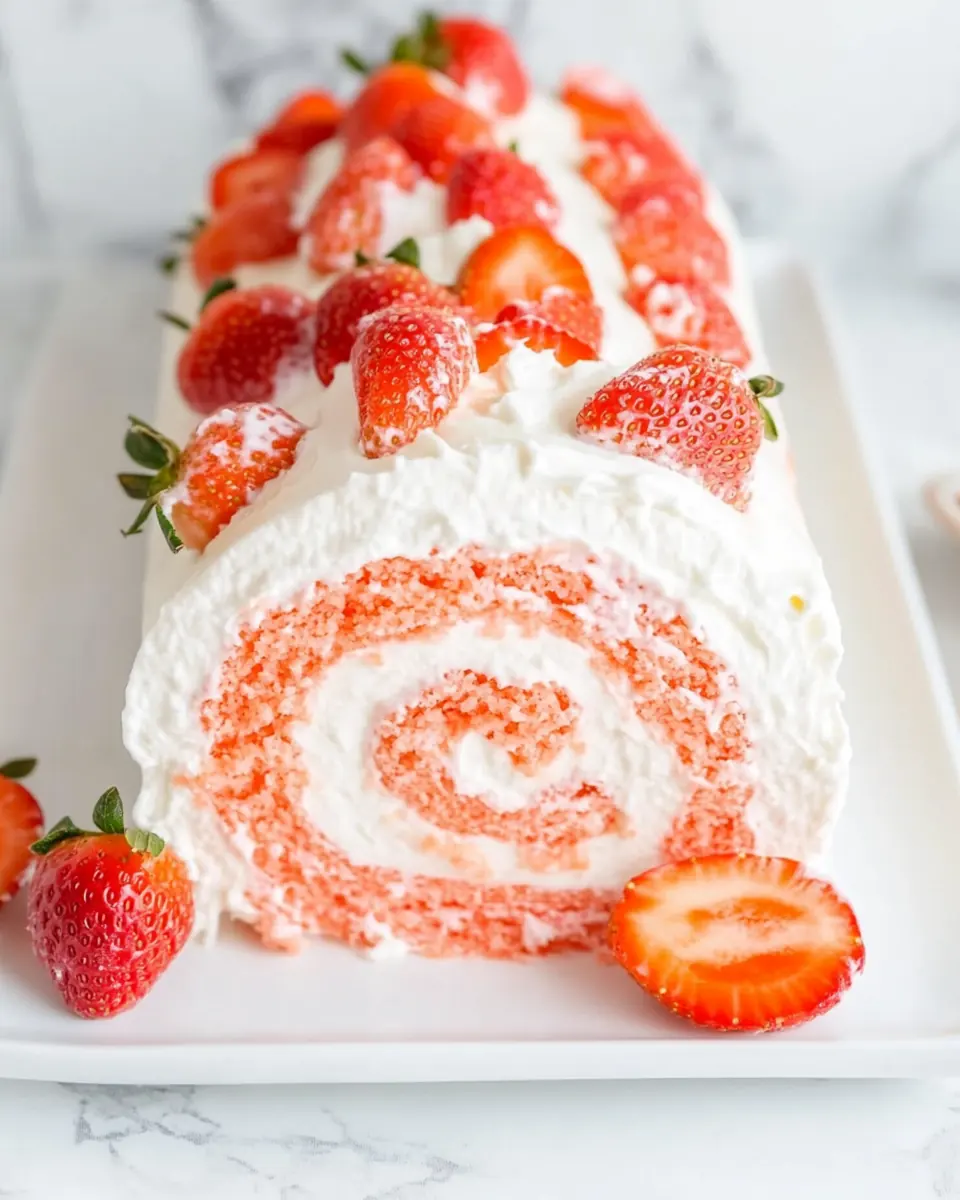
Slowly, with gentle even pressure, carefully roll the cake back into a 'roll'. Tightly wrap the cake roll in plastic wrap to ensure it holds its shape. Allow the cake to chill in the refrigerator for at least 1 hour to overnight. When you are ready to serve, carefully remove the plastic wrap encasing the cake roll.: Rolling slowly helps the filling stay inside and the sponge keep its shape. After chilling, the roll firms and slices cleanly, giving neat rounds. Do not skip chilling, as warm filling will ooze and the cake will lose shape.
Fill either a decorator's bag or a quart-sized Ziploc with a corner snipped off, with the 1 1/2 cups of whipped topping.: Piping creates a neat decorative ridge and adds a cool, creamy contrast. The tool will feel slightly springy as you apply pressure, and the topping should hold its shape. If the topping is too warm, it will droop, so keep it cold until piping.
You can pipe the whipped topping down the length of the top of the cake roll. Hold the tip of the bag 1/2 inch above the cake and pipe the whipped topping. Place the halved strawberries on top of the whipped topping.: Piping adds texture and a professional finish, while the fresh strawberry halves add color and a burst of fruit. Place berries gently to avoid slicing into the topping. Overcrowding the top can make it hard to slice neatly later.
Slice 1/2-inch wide servings.: As you cut, use a sharp serrated or long knife to avoid compressing the roll, and wipe the blade between cuts for clean rounds. Each slice should display a pretty spiral of cake and filling, with a strawberry accent on top. Pressing too hard during slicing will flatten the roll, so let the knife do the work with a gentle sawing motion.