Preheat oven to 375 degrees. Line a baking sheet with parchment paper and set aside.: The warm, preheated oven is crucial because it ensures immediate lift when the cookies go in, giving you that tender, shortcake like interior. As the oven reaches 375 degrees , you should notice the smell of dry warmth in the air, which cues you that the environment is ready to transform dough into baked cookies. Rushing this step or putting cookies into a cold oven can result in flat, dense results because the leavening won't activate properly. A common mistake is not allowing the oven to fully reach temperature; use an oven thermometer if your oven runs hot or cool to get accurate heat. Line a baking sheet with parchment so cookies slide off easily once baked, and set it on the counter so you're prepared to bake as soon as you portion the dough.
Combine strawberries, lemon juice, and 2 tablespoons granulated sugar. Whisk together flour, baking powder, salt, and remaining 7 tablespoons granulated sugar in a large bowl. Cut in the butter with a pastry cutter, or rub in with your fingers, until mixture resembles coarse crumbs. Stir in cream until dough starts to come together, then stir in strawberry mixture.: When you mix the diced strawberries with the lemon juice and granulated sugar , you will start to smell sharp citrus and sweet berry juices as the sugar pulls moisture from the fruit. This maceration softens the berries and creates a lightly syrupy coating that disperses flavor through the cookies. The visual cue is glossy, slightly softened strawberries that glisten in their own juices. Avoid letting them sit too long, as they can break down and release too much liquid, which may make the dough soggy. If you notice excessive liquid, gently drain a bit before folding into the dough to preserve texture.
Using a 1 1/2-inch ice cream scoop or a tablespoon, drop cookie dough onto prepared baking sheet, spacing evenly apart. Sprinkle cookies with turbinado sugar, and bake until golden brown, about 22 to 25 minutes. Transfer to a wire rack, and let cool.: As you whisk the dry all purpose flour , baking powder , salt , and the rest of the granulated sugar , you are creating an even distribution of leavening and seasoning so every bite rises and tastes balanced. The scent at this stage is neutral, slightly bready from the flour; the texture should be light and airy. Thorough whisking prevents pockets of baking powder that could cause uneven rise or metallic flavors. A frequent error is measuring flour too compactly, which leads to dry dough; spoon flour into your measuring cup and level it off for accuracy.
Note: Cookies are best served immediately, but can be stored in an airtight container at room temperature for up to 1 day.: Using a pastry cutter or your fingertips to incorporate the cold butter creates pea sized bits coated in flour, which is the desired look. The mixture should feel cool and sandy with visible small lumps of butter, not a uniform paste. When baked these bits melt and form layers inside the cookie, contributing to a tender, flaky crumb. If your kitchen is warm, the butter can soften too much, so work quickly or chill the bowl briefly if needed. Overworking the mixture until it becomes uniform will produce a denser cookie, so aim for that coarse crumb texture.
Stir in cream until dough starts to come together then stir in strawberry mixture: Adding the heavy cream binds the dry ingredients while maintaining tenderness, and you should watch the dough transform from crumbly to cohesive. The right moment to stop stirring is when clumps form and the dough holds together when pressed lightly, avoiding excess mixing which can activate gluten and make cookies tough. Once the dough begins to hold, gently fold in the macerated strawberries so their juices mix but do not completely liquefy the dough. The sensory cue is a slightly tacky dough with visible bits of fruit; if it looks wet and glossy near the fruit, you likely added too much moisture or overmixed. A common mistake is stirring until the dough is smooth; keep it gently mixed for tender results.
Using a 1 1/2 inch scoop or tablespoon drop cookie dough onto prepared baking sheet spacing evenly apart: Portioning the dough with a scoop or spoon gives uniform cookies that bake at the same rate; a 1 1/2 inch scoop produces perfectly sized rounds. As you drop each mound onto the parchment, you should see a rounded top and a slightly rough surface indicating a tender interior. Space them evenly so hot air circulates and edges brown without merging. If you crowd the pan, cookies will bake into each other and lose their distinct shape. A practical tip is to leave at least 2 inches between cookies for even baking and browning.
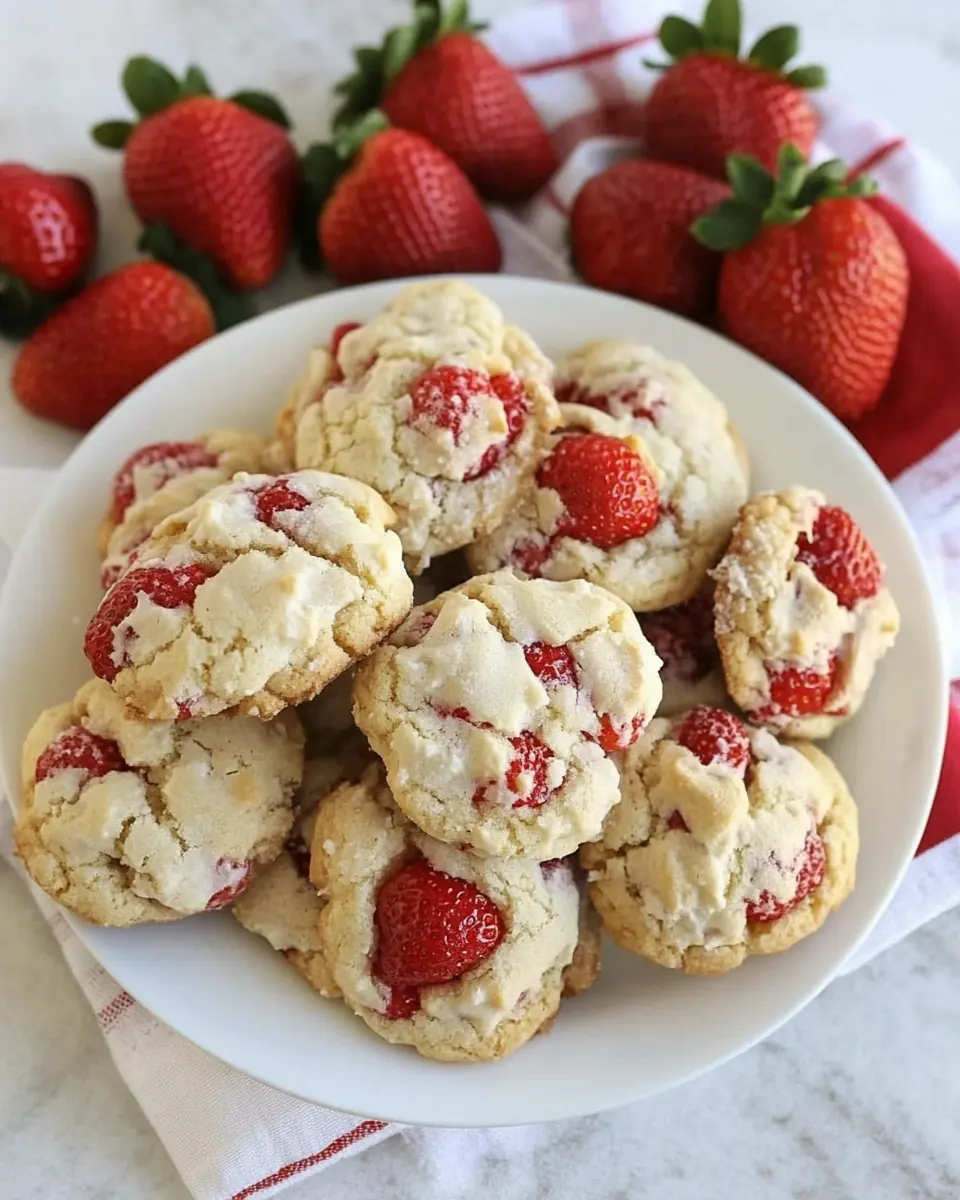
Sprinkle cookies with turbinado sugar and bake until golden brown about 22 to 25 minutes: The sprinkle of turbinado sugar will glint on top and caramelize into a gentle crunch as the cookies bake. During baking you will notice a sweet berry aroma and a light golden color forming on the tops and edges. That golden brown hue signifies the Maillard reaction adding depth to the flavor, while the interiors remain soft. Resist the urge to remove them too early; underbaked cookies can be doughy, but overbaking will dry them out. A common oversight is relying solely on time, rather than visual cues; look for set edges and a lightly browned top before pulling them out.
Transfer to a wire rack and let cool: Moving the cookies to a wire rack allows air to circulate and prevents the bottoms from steaming and becoming soggy, which preserves their crisp edge and tender center. You will feel the warmth subside in minutes, and the texture will set as they cool. If stored while still warm in an airtight container, residual heat creates condensation that softens the surface, so always cool completely first. A frequent mistake is stacking them too soon; give them time to firm up so they keep their intended texture.
Store in an airtight container at room temperature for up to 1 day: These cookies are at their best the same day, because the fresh strawberries can release moisture over time. At room temperature in an airtight container they will remain tender, but they will gradually lose their crisp topping. If you need to store longer, consider separating layers with parchment to prevent sticking and keep the container in a cool spot. Be mindful that extended storage may soften the texture and mute the bright fruit notes.