Preheat oven to 450°F: The moment you smell the warm kitchen when the oven comes up to temperature you will know it is ready. A hot oven encourages rapid steam formation from the melting butter , which creates lift and flaky layers. Make sure your rack is centered so the biscuits brown evenly. A common mistake is preheating too low, which can lead to pale, dense biscuits.
Whisk together flour, sugar, salt, baking powder and cream of tartar (if using) in a large bowl.: The aroma here is faintly bready and clean, and you want the dry components fully combined for uniform rise. Whisking distributes the baking powder and salt so you do not get pockets of metallic or overly salty bites. Over mixing at this phase is not an issue, but failing to combine leaves uneven texture.
Use a pastry cutter to cut really cold butter into flour mixture. Don't go too crazy here – you want to see small, pea-sized pieces of butter throughout the dough.: As you work, you will hear a soft rubbing sound as the butter is incorporated and see pea sized bits throughout the pale flour . Those little flecks are essential, they melt and steam, producing flaky layers. Avoid overworking or warming the butter , since that makes the dough greasy and reduces lift.
Stir in the milk (or buttermilk) and mix just until the ingredients are combined. The dough will be sticky but don't keep working it. You should be able to see the butter pieces in the dough.: The dough will feel sticky, and you may notice a faint sheen from the butter . The goal is gentle incorporation so the butter pieces remain distinct. If you keep handling the dough, the gluten will tighten, making tougher biscuits, which is the mistake I see most often at this step.
Turn the dough out onto a generously floured surface. Sprinkle some flour on top of dough so it won't stick to your fingers and pat into a rectangle about one inch thick. Fold in half and then pat out again. Repeat a few more times. If the dough is super sticky just sprinkle on some additional flour. Pat the dough out to 3/4 – 1 inch thickness.: The surface will feel cool and the dough slightly tacky, but dusting with flour prevents sticking. Folding the dough and patting again builds layers, and each fold should be gentle. If you skip the folding you lose flakiness, and if you add too much flour the texture becomes heavy.
Cut with a biscuit cutter or glass or even cut into squares or rectangles if you prefer. I usually end up with about nine.: As you press through the dough you want clean edges, not a twisting motion, so the rise is even. The sound is a soft thud and the edges should pop free easily when lifted. Twisting the cutter seals the edges and can stop the rise, which is a common misstep.
Place the biscuits on a lightly greased baking sheet or parchment lined baking sheet. Brush top of biscuits with heavy cream and sprinkle sanding sugar or coarse sugar on top.: The brush stroke leaves a glossy sheen and the coarse sugar sparkles, promising a tender top. This is when presentation begins, so try to be even with the cream. If you skip the cream the tops will be paler and less inviting.
Bake for 10 to 15 minutes or until golden brown on top. Remove and let cool while preparing strawberries and whipped cream.: You will hear a faint crackle as steam escapes and see edges turn golden, that is your cue. The smell becomes warm and comforting, signaling the butter has melted into pockets. Leaving them in too long dries them out, while underbaking leaves a doughy center, so watch the color closely.
Place sliced or chopped strawberries in a large bowl. Sprinkle granulated sugar on top and stir gently to combine. You want to coat the pieces of strawberry.: The fruit will immediately begin to smell brighter and sweeter as the granulated sugar draws out juices. Stirring should be gentle so pieces keep shape and do not turn to mush. Using too much force here breaks down the strawberries into an unappealing puree, which removes texture.
Let sit for about 20 to 30 minutes, stirring once or twice. You'll know they're ready when the sugar has completely dissolved and there's a nice syrup developing in the bottom of the bowl.: During this rest the syrup forms and the berries become glossy and tender, releasing a fragrant aroma. Taste after the rest to adjust sweetness, since some berries are naturally sweeter than others. The main pitfall is impatience; skipping this step leaves dry, under flavored fruit.
Chill the mixing bowl and whisk attachment in the freezer for 5 to 10 minutes.: A cold bowl helps the heavy cream whip faster and reach stable peaks. You will feel the bowl go noticeably colder to the touch, which speeds aeration as you beat. Not chilling the tools means longer whipping times and a higher chance of over whipping.
Pour heavy whipping cream into mixing bowl and beat on medium to medium high speed with the whisk attachment until the cream gets bubbly and starts to thicken.: You will hear a soft, fast hum as air is incorporated and see the cream transform from glossy liquid to soft foam. This aeration creates the lightness that balances the dense biscuit. Whipping too slowly delays structure, while too fast risks splashing, so aim for steady speed.
Add the powdered sugar and vanilla extract. Continue beating on medium-high speed until soft peaks form, being careful not to over beat.: The whipped cream will become pillowy and when you lift the whisk a soft peak should hold its shape for a moment before melting back in. Vanilla adds warmth and rounds flavors. Over beating turns the cream grainy and eventually into butter, which is the error to avoid here.
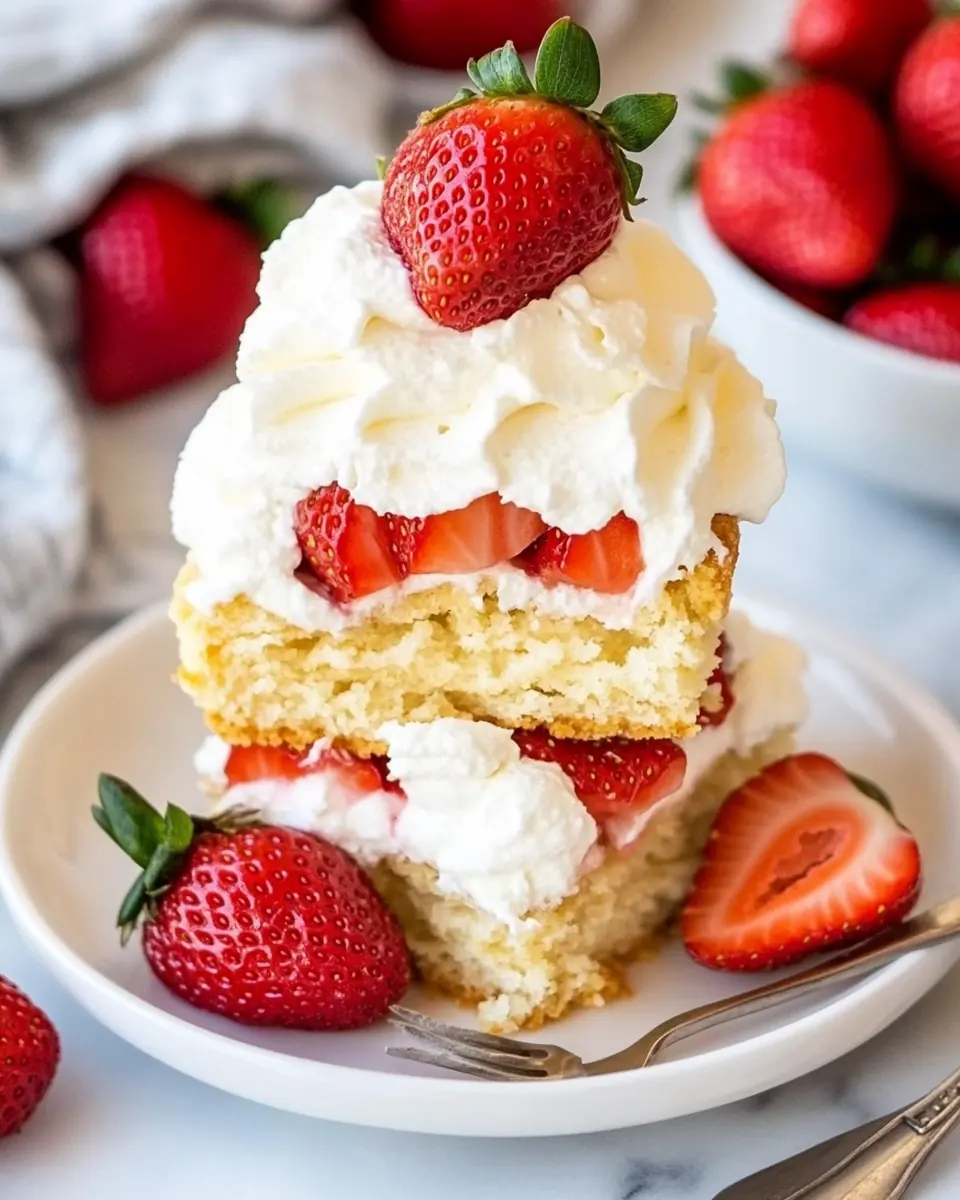
Use a serrated knife to split the biscuit in two. Place a generous scoop of macerated strawberries directly onto the bottom half, about 1/4 cup or so. Top with whipped cream, a few more strawberries and finally the top half of the biscuit.: The exposed biscuit interior will look tender and slightly steamy if still warm. Spoon on the syrupy strawberries so they sink into the crumb and add moisture. Cutting with a serrated knife prevents squashing, while a blunt tool will compress the biscuit.
We like to add another dollop of whipped cream and a few strawberries to the very top of the shortcake. For extra sweetness, spoon the strawberry syrup that has developed from the macerated strawberries right on top of the strawberry shortcake. Enjoy immediately.: The contrast of textures is immediate, with soft cream against tender biscuit and juicy strawberries . Add another dollop and a few berries on top for show. Assemble just before serving because the syrup will soften the biscuit over time, so delay assembly if you need them to hold shape for a short while.