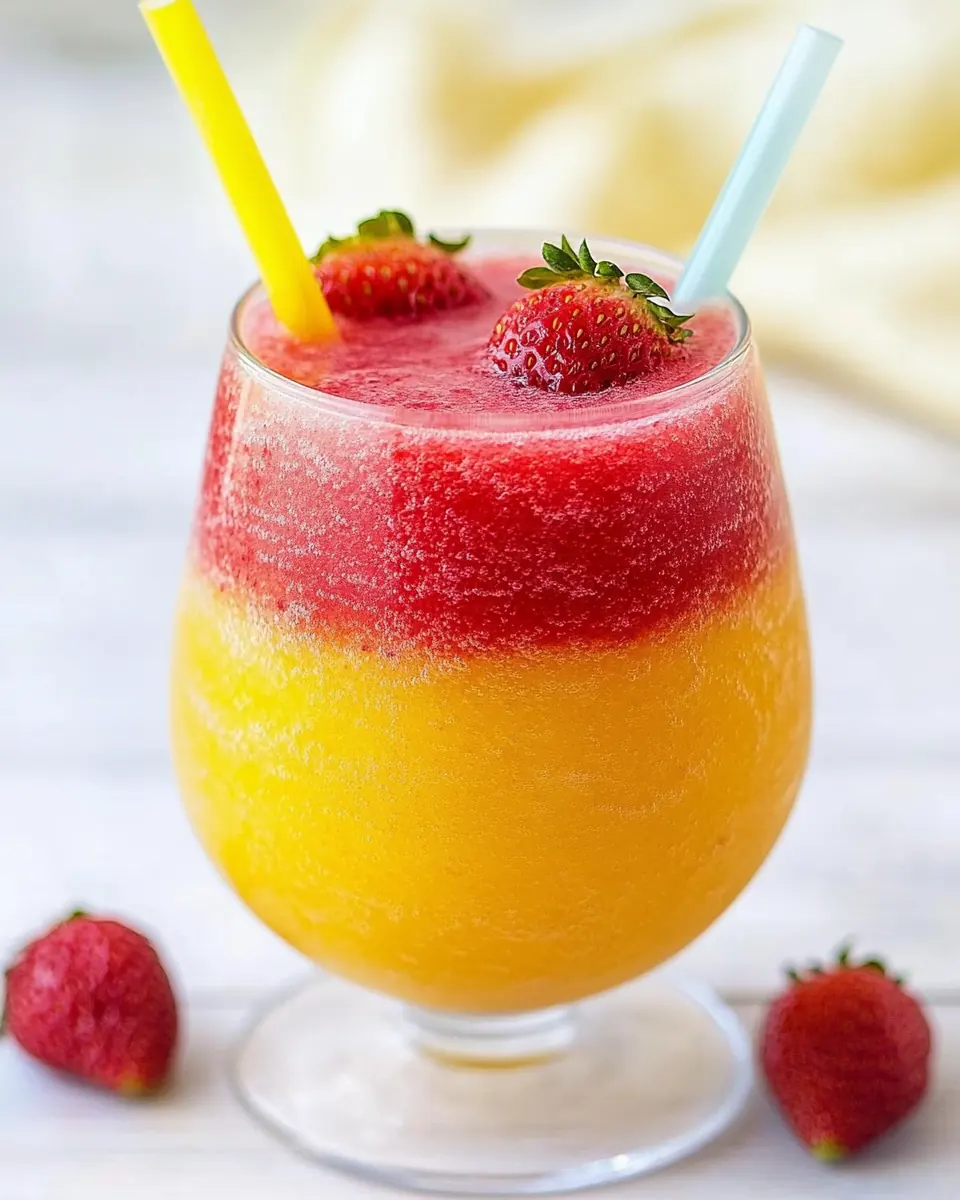
In a blender, combine the strawberries and almond milk and blend until smooth. Scrape off and pour the contents in three separate glasses.: The first smell that greets you will be bright, berry sweet with a slightly tangy edge, and the blender will hum a steady pitch as the frozen strawberries break down into a velvety purée. Visually you want a deep pink to ruby color that looks glossy and dense, not soupy. The reason we blend until smooth is to create a uniform texture so the first layer sits cleanly in the glass. A good sign is when the mixture moves as one thick ribbon when you tilt the jar. Avoid the common mistake of running the blender so long that friction warms the fruit, which dulls the chill and thins the layer. If you notice large chunks, pulse a few more times rather than running continuously. The texture should be cold to the touch at the jar rim, and the aroma should be distinctly fresh and fruity.
Keep the glasses in the freezer for at least 20 minutes to help separate the next layer.: As you transfer the blended strawberries into each glass, listen for a soft plop and watch the first layer settle like a ruby blanket at the bottom. The pouring speed matters for a clean base, so pour steadily and stop when each glass has an even amount. The why here is presentation, the even layer forms the foundation for the sunrise effect and gives a pleasing ratio of berry to mango in each sip. A practical tip is to use a rubber spatula to scrape the jar so you get all the thick, flavorful bits. Beware of pouring too quickly, which can create air pockets or splashes that ruin the smooth surface. The texture should feel dense and cool in the glass, and the fragrance of strawberries should remain prominent.
Next, combine the mangoes and orange juice in the blender and blend until smooth. Pour the contents in the glasses.: You will notice the chilled glass chilling the strawberry layer, which firms it slightly and reduces blending between layers. This short pause is critical because it turns a pourable purée into a semi set layer that won’t immediately dissolve when you add the mango blend. The sensory cue is the glass feeling noticeably cold, and the surface of the strawberry layer taking on a faintly matte look. The reason this matters is structural, it preserves the visual separation so you get a clear sunrise effect. A common error is skipping this step and watching the two layers blur into one; if you are short on time, pop the glasses in for the full 20 minutes rather than guessing. The chilled step also heightens the refreshing quality of the drink.
Serve immediately.: When you blend frozen mangoes with fresh orange juice , the aroma opens up into a heady citrus tropical mix that smells almost like a fruit stand. Blend until the texture is silky and there are no fibrous strings remaining, resulting in a glossy, orange purée. The reason for this specific combo is balance, the juice brightens the mango and makes it pourable while maintaining body. Watch the sound of the blender, it should go from a rough crackle to a more uniform whirr as the mixture becomes smooth. Avoid underblending which leaves stringy bits, and avoid over thinning by adding too much juice, which will make the mango layer runny. The ideal visual cue is a thick, sunny orange stream when you tilt the jar, and the scent will be fragrant and citrus forward.
Pour the contents in the glasses: As you pour the mango layer over the chilled strawberry base, do it slowly and let the mango stream settle gently to form a distinct top. The sound is a soft settling whisper, and the contrast of color will be immediate, creating the sunrise effect you are aiming for. The why is aesthetic and textural, the contrast enhances the tasting experience with each sip starting with mango then finishing with berry. If the mango layer splashes and mixes, pause and try pouring closer to the surface on the next glass to reduce turbulence. The ideal outcome is a clear boundary between the orange and red layers and a fragrant citrus top note. If you notice the layers blending, return the glasses briefly to the freezer and pour again once firmer.
Serve immediately: The final sensory reward is the cold, bright sip that carries first the tropical mango and then the tangy strawberries . Serving right away preserves the texture contrast and the chill, and you will hear soft clinks as the glass meets the saucer. The reason to serve at once is that the layers will slowly merge as they warm, which dulls the visual effect and can thin the texture. A common oversight is letting glasses sit at room temperature, which leads to watery separation. Enjoy the immediate freshness, and notice how the aromas shift between sips, offering a lively and balanced tasting experience.