Line a square 8×8 pan with parchment paper or aluminum foil. If using aluminum foil, coat the foil in butter so the fudge releases from the foil.: The room will smell neutral when you prep the pan, and this step prevents sticking so your fudge releases cleanly. Use parchment for easiest removal, or coat foil in butter if you prefer foil, because the coating helps the fudge peel away without tearing. A common mistake is skipping the barrier and struggling to lift squares out, so take the extra minute to line the pan thoroughly and press the paper into corners.
Place the sugar cookie mix in a heat-proof bowl. Heat the sugar cookie mix in the microwave for thirty seconds, then stir. Repeat for 1 1/2 to 2 minutes or until the mixture reaches 160 degrees. This ensures our flour is safe to consume, as raw flour without being heated should not be eaten. (see notes): You will notice faint vanilla and sweet flour scents as you warm the mix, which signals the raw flour is becoming safe. Heating in the microwave thirty seconds at a time and stirring helps break clumps and prevents hotspots, while bringing the mixture up to about 160 degrees ensures safety. Avoid overheating, because browning the flour will change the flavor profile; check and stir frequently to avoid pockets of dryness.
Pour sweetened condensed milk in a medium pot. Turn the stove to medium heat and stir frequently. Gently heat the sweetened condensed milk until just warm, not boiling.: As you gently warm the condensed milk on medium, it will steam slightly and the aroma becomes intensely sweet and milky, which tells you it is softening and ready to meld with other elements. Stirring frequently prevents scorching on the bottom, which can cause a burnt note. The typical error here is letting it come to a boil, which can separate the fats and ruin the smooth texture, so keep the heat moderate and attentive.
Turn the heat to medium low. Place the butter in the pan and let it melt, stirring well. Turn the heat on the stove off.: When you add the butter and let it melt into the warmed condensed milk, you will see the mixture become glossier and slightly thinner, a sign the fat is integrating. This glossy sheen helps the final fudge set with a tender mouthfeel. If you leave the heat too high while melting the butter, the mixture can bubble aggressively and create a grainy finish, so reduce heat and stir gently until fully incorporated.
Pour the white chocolate chips into a large heat safe bowl. Place the bowl in the microwave and heat the white chocolate chips at half power, stirring about every thirty seconds. Continue heating and stirring at half power until a smooth white chocolate sauce forms, about 2-3 minutes.: Melting the chips at half power with thirty second intervals produces a smooth, satiny sauce without scorching. As you stir, watch the chips transform from grainy to glossy, and stop heating while a few small unmelted pieces remain, using residual heat to finish the job. Overheating white chocolate will seize and become dry, so patience with short bursts and stirring prevents that common mistake.
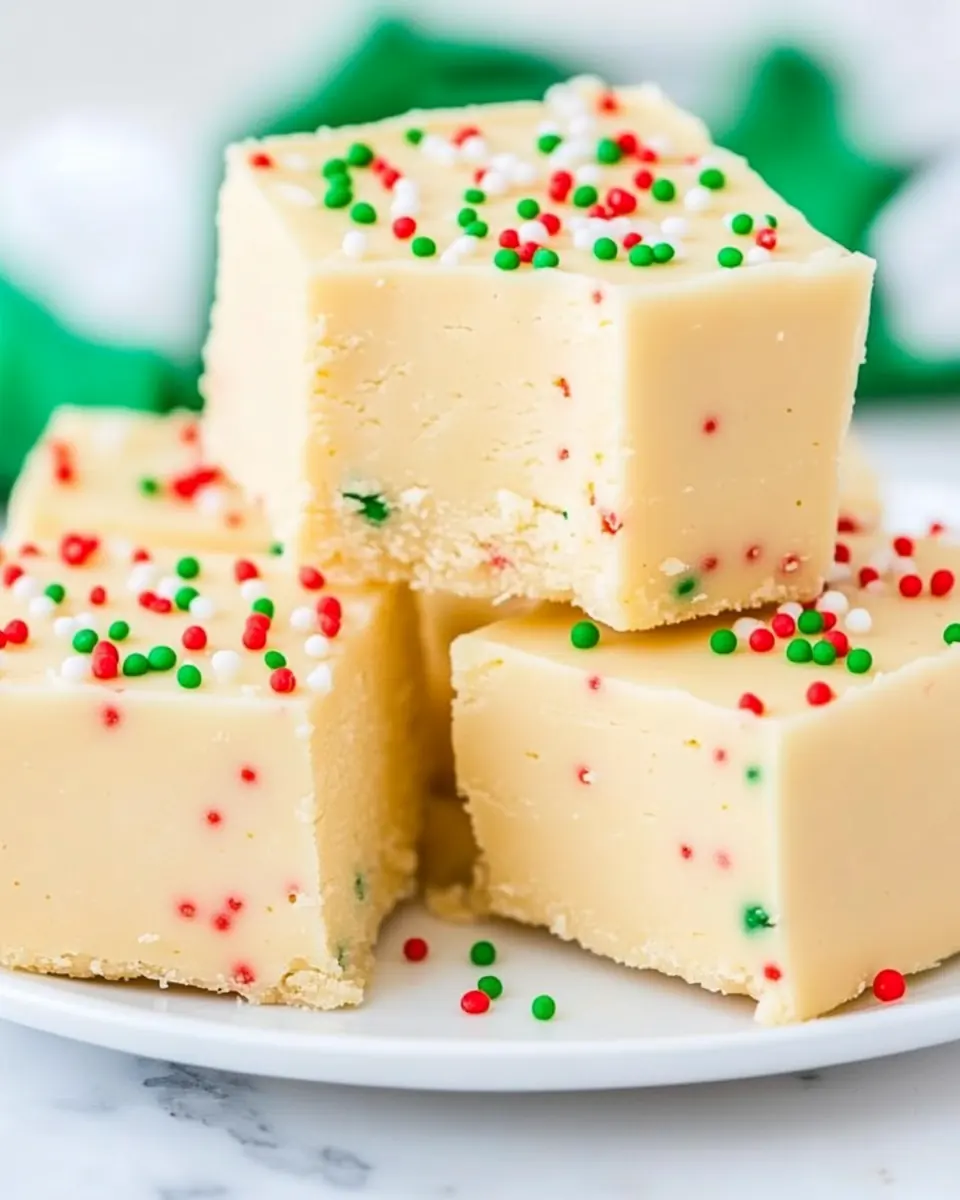
With a large whisk, mix the sugar cookie mixture into the sweetened condensed milk mixture and blend well. Add the melted white chocolate and stir until fully blended. Pour the mixture into your prepared pan. Immediately top with sprinkles if desired.: As you blend these components, the texture becomes denser and the aroma shifts toward cookie batter, which signals proper integration. Adding the melted white chocolate next creates a cohesive, creamy matrix; stir until fully blended and you have a uniform, pale batter. One mistake to avoid is adding the cookie mix while the condensed milk is too cool, which makes clumping more likely, so ensure warmth and whisk briskly to eliminate pockets of dry mix.
Chill in the refrigerator for at least 4 hours to fully set. Remove the fudge from the refrigerator about 30 minutes before cutting, letting it sit on the counter. Slice the fudge and enjoy!: When you transfer the batter, note its sheen and thickness as it levels; it should hold shape but spread to fill corners. Immediately top with sprinkles if desired, pressing lightly so they adhere. A frequent error is waiting to add sprinkles and having them sink or not stick, so apply them while the surface is still tacky for best presentation.
Chill in the refrigerator for at least 4 hours to fully set: As the tray chills, the fudge firms and the flavors knit together, yielding a sliceable texture. Cold setting keeps the squares dense rather than soft or gooey, which is crucial for neat serving. Avoid cutting too soon; insufficient chilling results in messy slices and a softer mouthfeel than intended.
Remove the fudge from the refrigerator about 30 minutes before cutting: Allowing the tray to rest at room temperature slightly softens the edges and makes slicing cleaner, producing smooth bites instead of crumbling edges. The internal aroma wakes up and becomes more inviting as it returns toward room temperature. Cutting while too cold often causes the fudge to crack or shatter, so let it sit briefly for optimal slices.
Slice the fudge and enjoy: When you slice, use a sharp knife and consider warming the blade under hot water then wiping it dry for cleaner cuts, as the heated blade glides through without tearing. The finished squares should be dense, creamy, and lightly textured from the cookie mix, offering a satisfying contrast. A common oversight is using a dull knife and pressing too hard, which compresses the squares rather than cleanly separating them, so take your time and use a steady, single stroke for each cut.