Preheat the oven to 375 degrees Fahrenheit and set aside a 9-inch pie pan.: As the oven warms, you will hear a low hum and feel a steady rise in kitchen warmth, which primes the environment for baking. Preheating ensures the crust starts to set immediately, creating a flakier base. A common mistake is not waiting long enough for the oven to reach temperature, which can lead to a soggy bottom, so always use an oven thermometer if yours runs cool or hot. Visually, you want the oven light to show consistent heating, and the time spent now saves you from uneven results later.
Add 1 1/4 cup all-purpose flour and 1/4 teaspoon salt to a large bowl and whisk to combine. Use a pastry cutter to cut in 1/3 cup shortening until it is the size of small peas.: The dry mixture should look uniform and slightly dusty after whisking, and when you cut in the shortening , you will notice pea sized bits dispersed throughout. Those little lumps melt during baking and create those coveted flaky pockets. If you overwork the dough here, it can develop too much gluten and become tough, so stop once the pieces are pea sized. Touch is important you want a cool, crumbly texture before adding any liquid.
Add 4-5 tablespoons cold water to the flour and stir with a fork until it begins to come together. Add a tablespoon or two of additional water until a dough forms. Press the dough into a ball.: You will feel the dough shift from crumbly to slightly cohesive as the cold water is incorporated. The key sensory cue is tackiness without wetness, and the dough should hold together when pressed but not be sticky. Using water that is too warm can make the fat smear, which ruins flakiness, so keep everything cold. A frequent slip up is adding too much water too quickly, so go slowly and test by squeezing the dough in your hand.
Roll the dough out on a lightly floured surface until it forms a circle that's 2-3 inches wider than your pie pan.: The dough should glide under the rolling pin with gentle pressure, showing a slightly floured sheen on the surface. Aim for even thickness, and rotate the dough occasionally to avoid sticking. If the dough starts to tear or becomes elastic, let it rest in the fridge for a few minutes to relax the gluten. Using too much force at this stage makes the crust chewy rather than tender.
Roll the dough onto the rolling pin and then unroll it over the pie pan. Press the crust into the pan and crimp the edges as desired. Prick the bottom of the crust several times with a fork.: When positioned in the pan the crust should sit snugly, hugging the sides without gaps. Crimping adds both style and a small seal that helps prevent shrinkage. Pricking the bottom prevents large air pockets from forming while blind baking. A common error is not trimming excess dough, which can burn at the edges, so tidy up before the oven. The visual cue is a smooth even surface after pricking.
Place a sheet of parchment in the bottom of the crust and add pie weights or unbaked beans until the bottom of the crust is filled. Bake for 10-12 minutes before removing the parchment paper and the pie weights or beans and bake for another 7-8 minutes until the bottom of the crust is beginning to brown. Reduce the oven to 325 degrees Fahrenheit when the pie crust comes out.: The crust will steam under the weights which keeps it from puffing, and you will hear a faint crackling as the surface sets. After removing the weights the exposed surface should look dry and pale at first, then take on a subtle golden tone during the second bake. Browning signals that the base is losing excess moisture, which helps prevent a soggy filling. If you skip the second bake, the bottom may remain underdone, so resist the urge to shortcut. Adjusting the oven down to 325 degrees prevents the filling from overbrowning once added.
While the crust is baking, whisk 4 tablespoons cornstarch, 2/3 cup granulated sugar, and 1/4 teaspoon salt before adding 1/4 cup unsalted butter, 1 1/2 cup heavy whipping cream, and 1 cup whole milk. Cook over medium heat while whisking constantly until the mixture starts to thicken, about 6-7 minutes. Once thickened to a thin pudding-like consistency, turn off the heat and whisk in the 1 1/2 tablespoon vanilla extract or paste.: As the filling heats you will notice a transformation from a thin milky liquid to a glossy, slightly thickened custard that coats the whisk. The aroma grows richer, buttery and slightly sweet, and the whisking prevents lumps while activating the cornstarch . If the heat is too high it can scorch the dairy, leaving an off aroma, so keep it at medium and stir continuously. The look you want is a smooth, silky ribbon when the whisk is lifted, which indicates proper thickening.
Pour the filling into the crust once it’s finished par-baking.: When pouring, the filling should flow like thick cream and settle evenly in the crust, filling the pan without overflowing. You may hear faint settling sounds as air leaves and the custard finds its level. Allow the filling surface to smooth naturally; avoid jostling the pan which can create bubbles. A common mistake is pouring while the filling is still too hot, which can cause the crust to soften excessively, so let it cool briefly if needed.
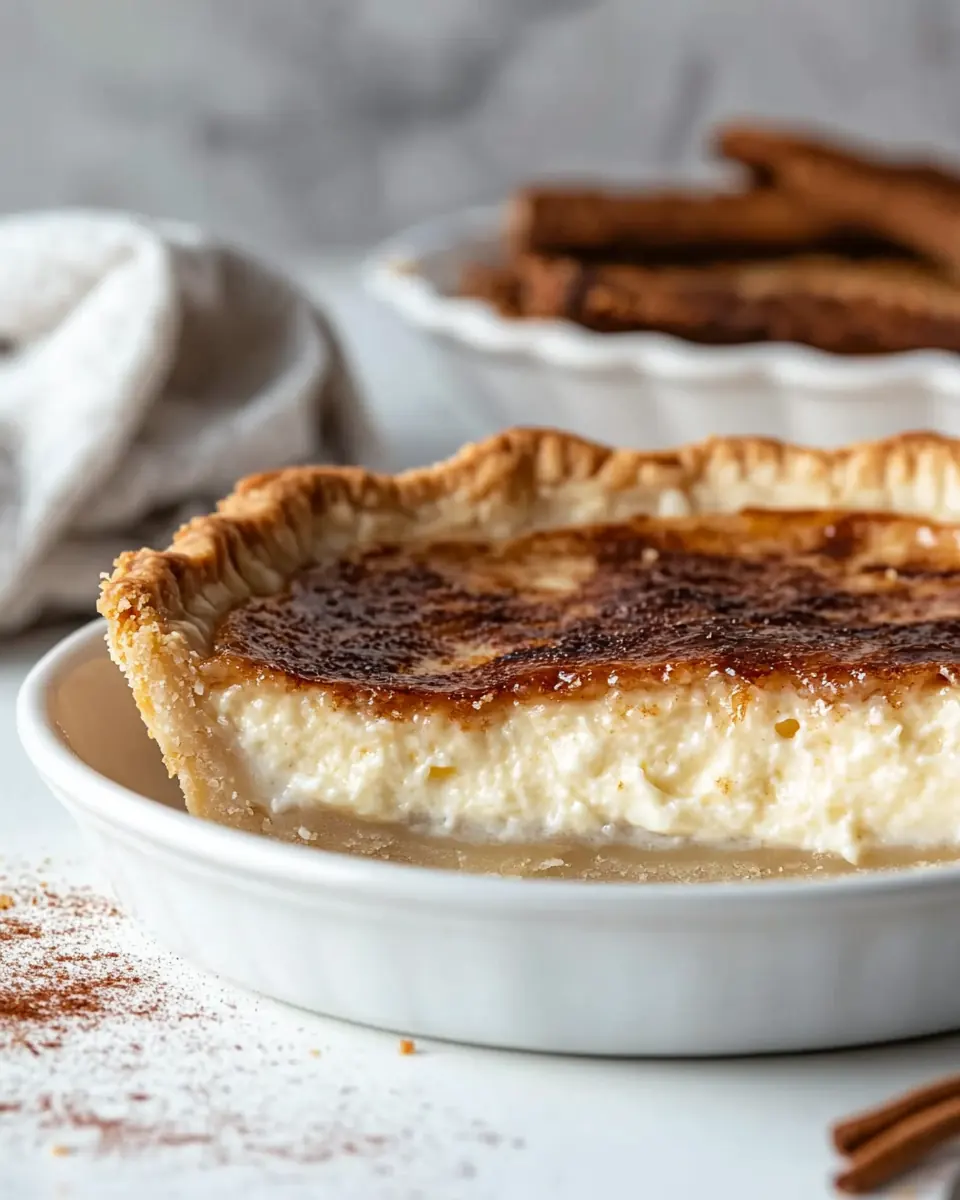
Carefully brush 3 tablespoons salted butter melted over the top of the filling and sprinkle evenly with 1/3 cup granulated sugar and 1 1/2 teaspoons ground cinnamon.: Brushing the surface with melted salted butter creates a glossy bed for the sugar to adhere to, and the sugar plus ground cinnamon will crisp under heat. The aroma of toasted spice will begin to emerge even before baking further. Make sure the sugar is spread uniformly for even caramelization, and avoid over brushing which can wash away the sugar. The visual cue is a uniformly sugared surface ready to bubble and brown.
Bake at 325 degrees Fahrenheit for 30 minutes before turning on the broiler and broiling for just about 1 minute or until the cinnamon topping starts bubbling.: During this bake the filling will set gently, losing its watery sheen and becoming faintly jiggle free at the center. When you turn on the broiler, watch closely the sugar melting and the cinnamon releasing aromatic oils that create tiny bubbles and toasted spots. Broil for only about a minute because sugar can go from glossy to burnt very quickly, and smell is your best alarm for doneness. A common error is walking away during broiling, which risks a burnt top.
Remove from the oven and let the pie cool to room temperature before chilling in the refrigerator for at least 4 hours before serving.: Cooling allows the custard to lock into a sliceable texture while the flavors meld and the topping firms. You will notice steam subside and the pie holding shape better as it cools. Chilling overnight deepens the flavor and makes slicing cleaner. Cutting too soon yields a runny filling, so patience here really rewards you with neat slices and balanced texture.