Combine all ingredients for the shortcake in a bowl using a fork. Let the mix sit 2-3 minutes to thicken.: Right away you will notice the dry ingredients forming a slightly gritty mixture that becomes cohesive as you add the egg and heavy cream . The smell should be subtly sweet with a hint of coconut from the coconut flour . The fork motion gently brings ingredients together without overworking them, producing a batter that is tender rather than elastic. I listen for a smooth, slightly glossy batter texture and watch for any dry pockets, which indicate more mixing is needed. A common mistake is vigorous mixing, which can produce a dense result instead of the light shortcake we want, so stop when just combined.
Fill the batter into 2 well-greased ramekins. Microwave on high for 90 seconds. Once they have cooled down, turn the cakes out onto a plate and slice into 4 disks.: During this brief rest the coconut flour hydrates and swells, which changes the batter from thin to pleasantly thick. Visually you will see it gain body and look less runny, and the surface may become slightly matte. This step matters because it prevents you from adding extra liquid prematurely, which would alter the finished texture. A frequent error is skipping this rest and ending up with a batter that spreads too much in the ramekin, producing thin cakes.
Whisk the heavy cream until stiff peaks. Stir in the Greek yogurt, vanilla and powdered sweetener, if using.: As you spoon the batter in, notice how it holds shape but still levels itself, indicating good consistency. Greasing the ramekins ensures you can unmold the cakes cleanly without tearing the crumb. You should feel a slight resistance when you press the batter down gently, and the surface should be smooth. If you skip greasing, the cake can stick and fragment when removed, so take the extra moment to grease thoroughly.
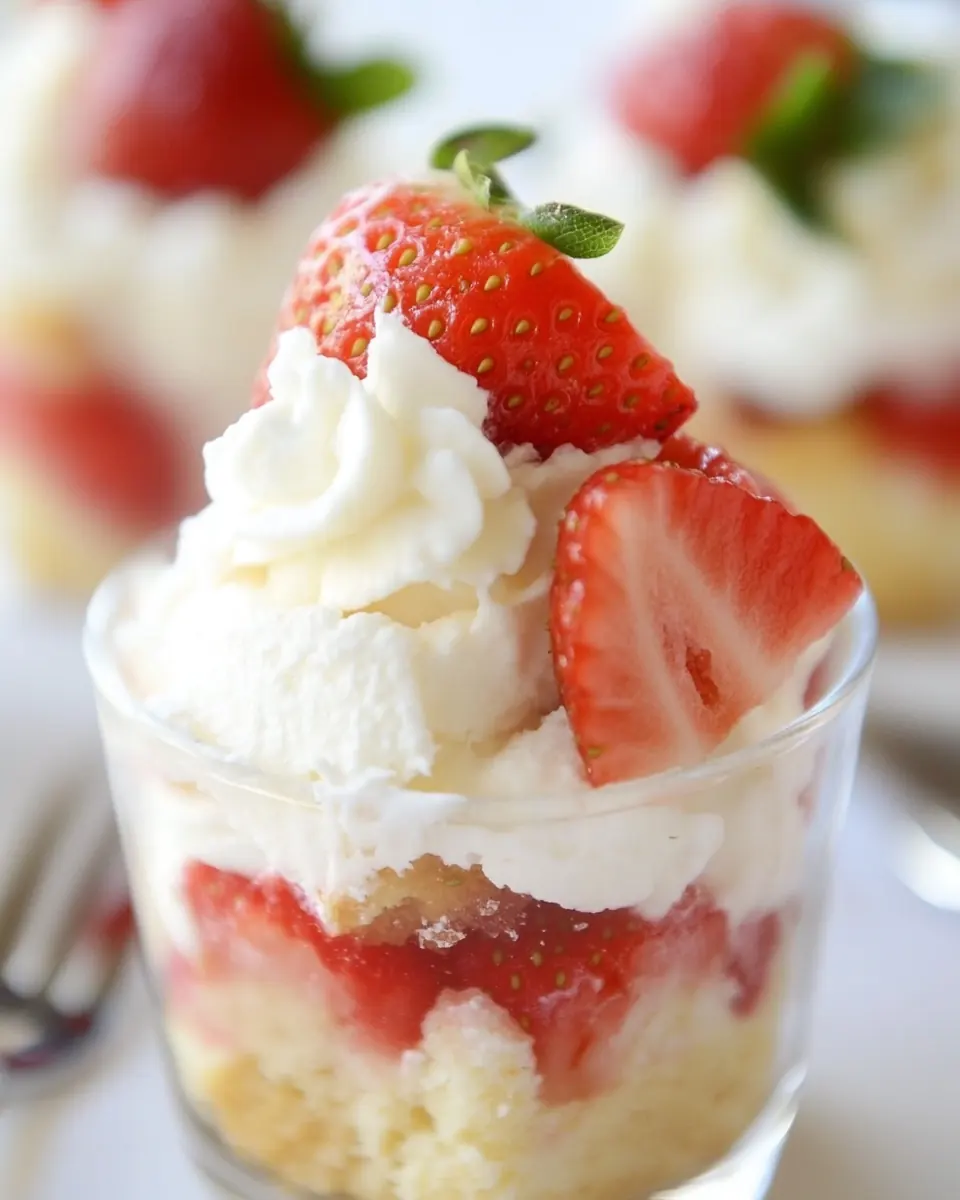
Place a slice of shortcake at the bottom and line the outer edges of each pot with strawberry slices.: Microwave cooking produces a quick rise and steam based heat that yields a tender interior. You will hear soft bubbling as moisture heats and smells of warmed coconut and egg will emerge. After ninety seconds, the cakes will spring back slightly when touched, a reliable visual cue they are cooked through. Microwaves vary, so if yours is particularly powerful reduce time slightly; an overcooked cake can become rubbery and dry, which is the usual pitfall here.
Add 1/2 tablespoon of sugar free strawberry jam, followed by 3 heaped teaspoons of the cream topping.: Cooling firms the crumb so the cakes hold together when sliced. The interior should be moist and pale, and the exterior slightly set. The action of turning them out lets you inspect for even cooking and texture. If you try slicing while too hot, the cake may crumble, so patience here ensures neat layers and better assembly.
Add another 1/2 tablespoon of strawberry jam, the second shortbread disk and top with the remaining cream. Decorate the top with another strawberry.: As you whisk the second measure of heavy cream , the mixture will first look glossy, then billowy, and finally hold peaks that stand upright. The sound changes too, from smooth to a soft whoosh as air is incorporated. This aeration creates the lightness that contrasts with the cake. Overwhipping leads to grainy or curdled cream, so stop when you see firm peaks that still feel silky.
Stir in the Greek yogurt, vanilla and powdered sweetener, if using: The addition of Greek yogurt brings tang and stability to the whipped heavy cream , giving it body and a faint acidity that balances the strawberry sweetness. Visually the cream becomes creamier and slightly denser, and you will smell the vanilla's warm note. Mix gently to avoid deflating the whipped cream, and be cautious not to over-sweeten, a common error that masks the strawberry flavor.
Place a slice of shortcake at the bottom and line the outer edges of each pot with strawberry slices: When you press the sliced strawberries against the ramekin walls, you create an elegant ring that shows through the glass or cup, and it ensures a burst of fruit in each spoonful. The vibrant red provides visual contrast and a juicy texture against the tender cake. A frequent mistake is using overly ripe fruit that becomes too soft and weeps, leading to soggy layers.
Add 1/2 tablespoon of sugar free strawberry jam, followed by 3 heaped teaspoons of the cream topping: The jam adds concentrated fruit intensity and a glossy layer that soaks slightly into the cake, while the cream adds coolness and silkiness. As you spoon, you should hear a soft dolloping sound and see the jam spread modestly, seeping into the cake edge. Too much jam can overwhelm the structure and make the pots runny, so measure carefully to maintain balance.
Add another 1/2 tablespoon of strawberry jam, the second shortbread disk and top with the remaining cream: Layering builds height and complexity, the second jam layer deepens flavor, and the final blanket of cream ties everything together. The finished texture should be creamy on top, jammy in the center, and tender at the base, with a nice contrast of temperatures. Avoid pressing down hard when assembling, which can compress the layers and make them dense instead of light.
Decorate the top with another strawberry: A final whole or halved strawberry crowns the pot, providing a fresh accent and a clear signal this is strawberry dessert. The top should look invitingly glossy and balanced, not overloaded. Be mindful of presentation; overcrowding with fruit can hide the layered structure and make serving less elegant.