Preheat oven to 375 degrees F.: As you start, you will notice a clean, warm heat build in the oven that prepares the puff pastry dough to rise properly. The warmth activates the layers and ensures an even bake, producing that flaky, golden crust we want. A common mistake is not allowing the oven to fully reach temperature, which can result in dense pastry, so wait until the oven signals it is ready. You might hear the oven fan kick in and see the interior light glow, and the smell of warmed metal is familiar and reassuring. Set your rack in the center for balanced browning, and keep a baking sheet handy.
Unwrap both of the puff pastry doughs and cut into 8 squares (4 from each dough).: When you unfold the puff pastry dough , it will feel cold and slightly tacky, and you should see distinct layers. Use a sharp knife or a bench scraper to cut cleanly so edges seal properly later. The sound is faint as the blade slices through layers. Work quickly to prevent the dough from warming, because excess warmth melts the butter and deflates the layers. If the dough softens, chill it briefly on a sheet pan. Uniform squares help the turnovers cook evenly and look consistent.
Place a heaping tablespoon or two of cherry pie filling in the center of each square. Brush the edges of the squares with the egg white and fold over to enclose the pie filling.: The cherry pie filling will glisten, and spooning it into the center leaves room at the edges for sealing. Brush a thin line of egg white around the perimeter to create a tacky surface that bonds the dough. As you fold, press the edges firmly so the filling stays inside, and crimp with a fork or your fingers for a decorative seal. Watch for any leaking filling, which means the seal needs reinforcement. Overfilling is a common trap, causing bursts in the oven, so stick to the suggested spoonfuls.
Bake on an un-greased baking sheet for 20 to 25 minutes, or until puff pastry is golden brown.: Once in the oven, the pastries will begin to swell and the surface will change from pale to a deep, inviting gold. You may hear a gentle crackle as steam expands the layers. Visual cues are key here, because exact time varies with ovens; aim for an even golden color and crispy edges. Avoid opening the oven frequently, because that lets heat escape and hinders rise. A common mistake is baking until the top is brown but the bottom is undercooked, so rotate the sheet once if your oven has hot spots.
Let cool on a wire rack.: After baking, the turnovers will be hot and their centers actively bubbling. Placing them on a wire rack prevents the bottoms from steaming and keeps the crust crisp. You will notice a faint aroma of cooked fruit and butter as they cool. Give them a short rest so the filling sets slightly; piping glaze onto piping hot pastries can cause it to slide off. Avoid stacking them while warm, which can trap moisture and soften the crust.
Combine the powdered sugar, milk and vanilla extract in a bowl and whisk until smooth. Pour in a frosting bag or zip close bag then snip off the tip or corner to pipe on the cooled turnovers. Enjoy!: The glaze should be silky and pourable, with a glossy sheen. Start with the measured powdered sugar and add milk slowly while whisking to avoid lumps, then stir in vanilla extract for aroma. The mixture will smell sweet and fragrant, and its texture should coat a spoon cleanly. If it seems too thick, add a teaspoon of milk at a time. Lumps or an overly thin glaze are common pitfalls, but a vigorous whisk corrects texture.
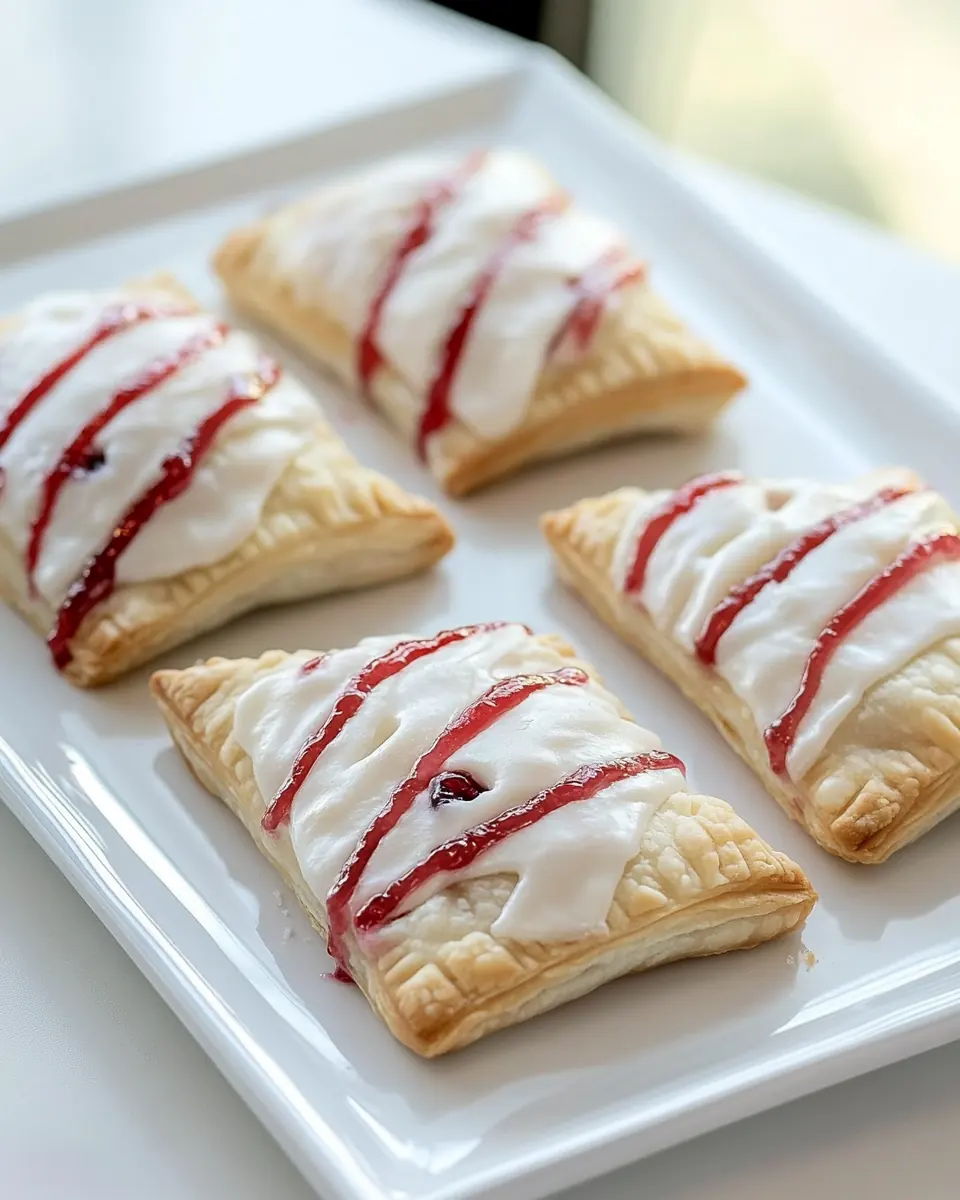
Pour in a frosting bag or zip close bag then snip off the tip or corner to pipe on the cooled turnovers. Enjoy!: Transfer the glaze into a bag and apply gentle pressure to drizzle over each turnover in a ribbon or crosshatch pattern. The sound is quiet as the glaze falls, and it quickly sets to a glossy finish on the cooled pastry. Visually, the white glaze contrasts with the golden crust and sticky cherry patches, making them look irresistible. Serve once the glaze has set enough to avoid sticky fingers. A frequent oversight is glazing while the pastries are too warm, which causes the glaze to melt away, so ensure they are cool enough to hold the finish.