Line a large rimmed baking sheet with wax paper and set aside.: You will notice a smooth surface when you press the paper down, which makes spreading the yogurt easier and prevents sticking. I like using a rimmed sheet so the mixture cannot slip off when you move it to the freezer, and the wax paper peels away cleanly once frozen. A common mistake is using parchment that is too small, causing the edges of the bark to freeze to the pan, so be sure the paper overhangs slightly for easy removal.
In a bowl, whisk together yogurt, maple syrup, vanilla extract, and sea salt. Whisk until well combined. Adjust sweetener as desired (see note): As you whisk, watch the mix go from lumpy to glossy and uniform, with the tiny air bubbles adding a softer mouthfeel once frozen. This step helps distribute the maple syrup and vanilla evenly so each bite tastes balanced. If you stop whisking too early, you may get pockets of sweetness or vanilla, which creates an inconsistent flavor profile. Taste and adjust so it matches your preference, keeping in mind freezing mutes sweetness slightly.
Pour the mixture onto the lined baking sheet and spread it as evenly as possible, using a spatula, roughly 1/4 inch thick (see note): When spreading, aim for an even sheet, about a quarter inch thick, so pieces freeze uniformly and thaw at the same rate. The surface should be smooth and satiny; any thin spots will freeze faster and may become icy while thicker areas stay creamier. A common error is spreading too thin, which causes rapid thawing and flimsy shards that crumble instead of breaking cleanly.
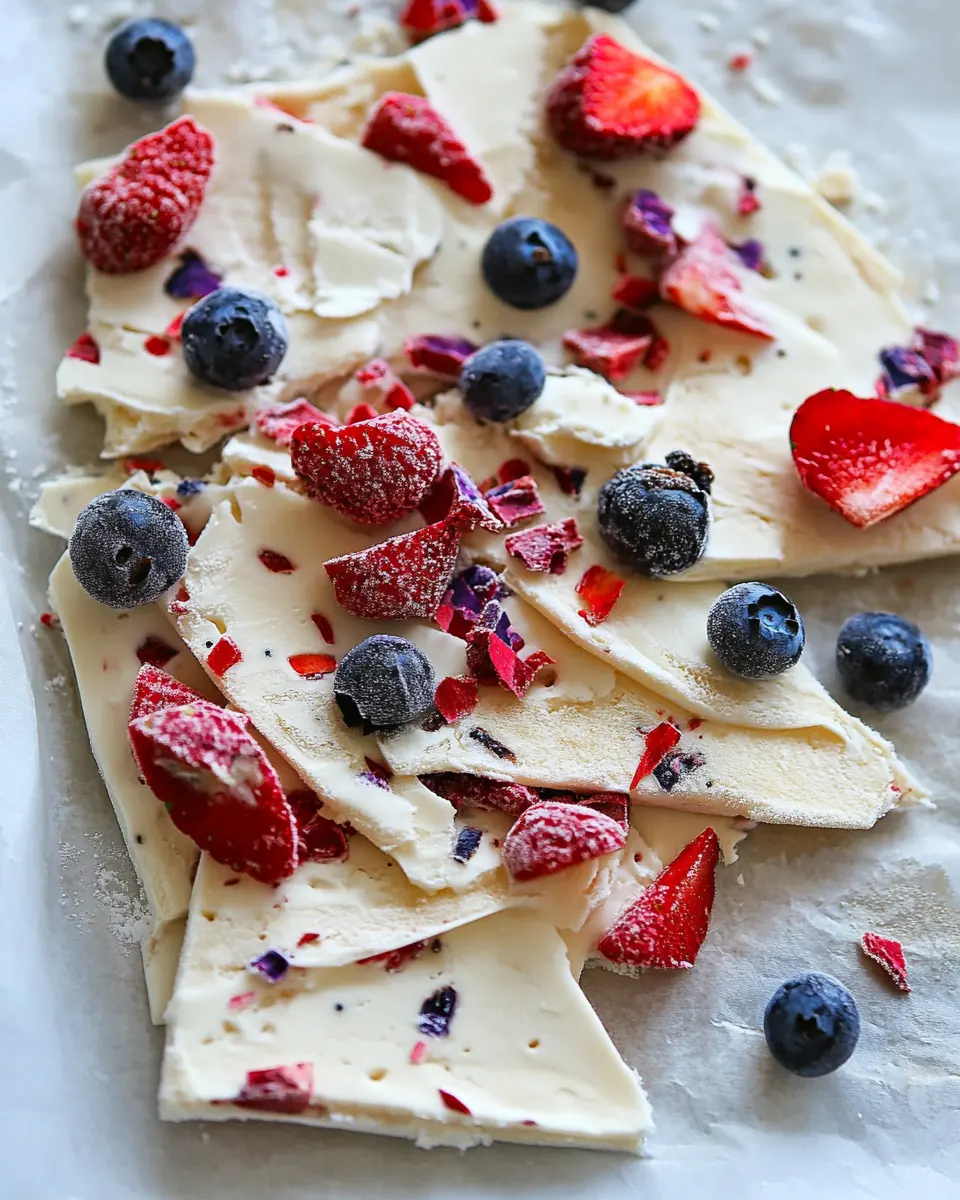
Scatter the add-ins evenly across the yogurt mixture and sprinkle with cinnamon if desired.: As you place blueberries , raspberries , sliced cherries , and unsweetened shredded coconut , press them just enough to make contact so they adhere when frozen. Visually distribute color and texture so every shard looks appealing. If you pile fruit in one area, those spots may thaw differently, and the surface can become unevenly textured. Lightly dust with cinnamon if you like a warm aromatic accent.
Freeze until firm, at minimum 3 hours.: During freezing you will notice the surface lose its glossy sheen and become matte and rigid. The cold draws moisture inward and sets the mixture into a single solid sheet. Allowing the bark to stay in the freezer beyond three hours helps it firm thoroughly and resist crumbling when you break it. A frequent oversight is opening the freezer repeatedly, which slows firming; leave it undisturbed for best results.
Once frozen completely break the bark into pieces.: When the bark is ready, it should snap cleanly with a crisp sound, and you can break it into irregular pieces with your hands or a knife. The contrast of crunchy edges and creamy centers is most apparent when the pieces are well chilled. If the bark bends rather than snapping, it needs more time in the freezer. Avoid letting it partially thaw before breaking, as that leads to ragged, sticky pieces.
Keep in the freezer until ready to serve. Store in an airtight container or reusable bag in the freezer for up to 3 months.: Proper storage preserves texture and prevents freezer burn. I layer pieces between sheets of wax paper in an airtight container so they do not clump together. Labeling with the date helps you use the bark while it still tastes fresh. A common mistake is storing in a loosely closed container, which can introduce freezer odors and cause icy crystallization on the surface.