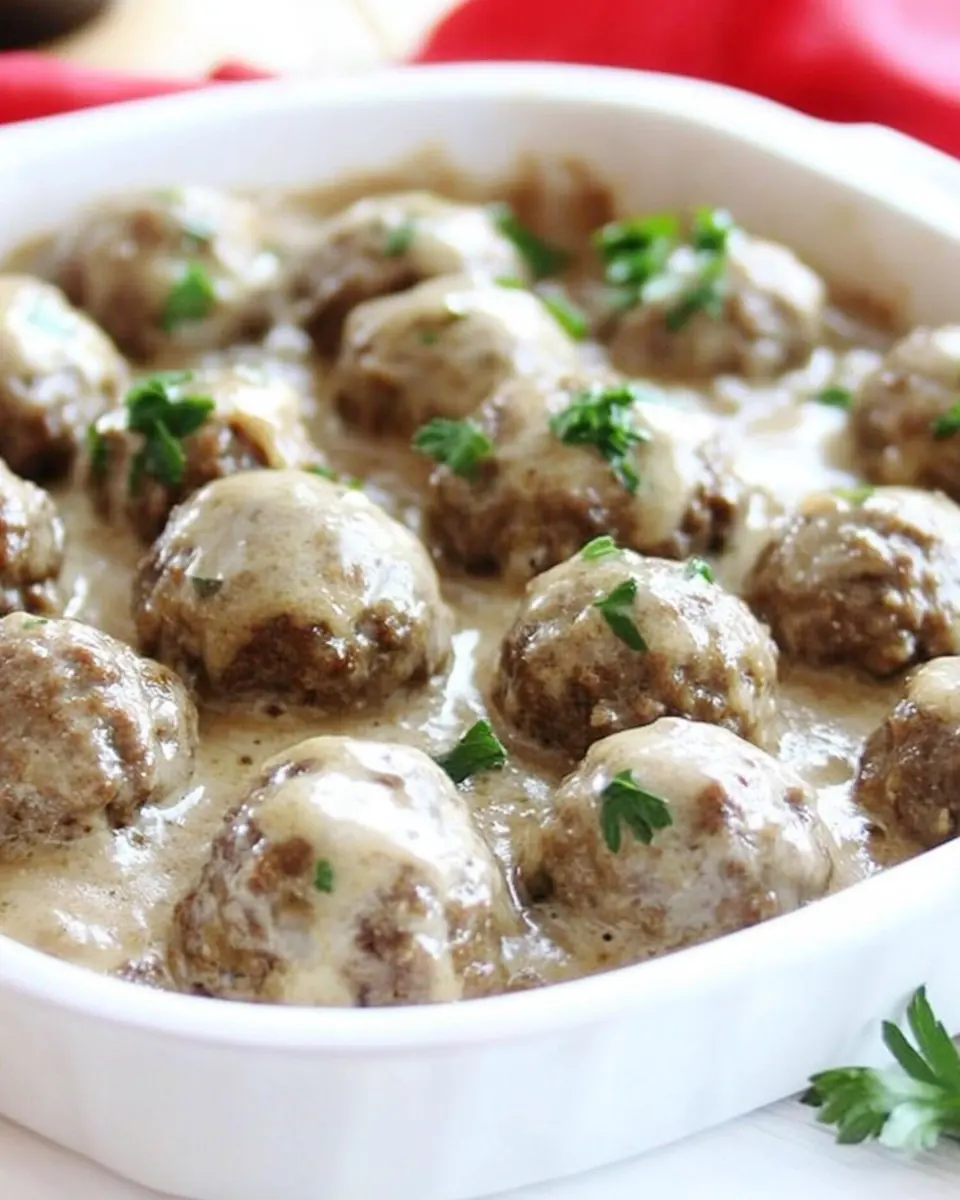
In a large cast iron skillet, melt butter over medium heat. Sprinkle in flour and whisk. Cook 1 minute and slowly whisk in beef stock to prevent lumps. Cook 3 minutes or until the sauce starts to thicken.: The kitchen will fill with a warm, familiar aroma as the butter liquefies, signaling the beginning of a rounded sauce. Listen for the soft sizzle that tells you the skillet is at the right temperature, and tilt the pan to ensure even melting. This step matters because the melted butter coats the pan and evenly cooks the all purpose flour in the next step, forming a smooth roux. A common mistake is turning the heat too high, which can cause the butter to brown or burn, creating bitter notes. If you see brown flecks, reduce the heat and scrape them out, or start fresh to avoid off flavors.
Reduce heat to low and melt in sour cream, salt and black pepper. Add in frozen meatballs, stir to coat and cover with foil. Cook 10 minutes or until meatballs are heated through.: As you add the all purpose flour , you will hear a faint change in sound as the whisk moves through the thickening paste, and the mixture will look matte and slightly grainy before smoothing. Constant whisking prevents lumps and ensures the flour cooks evenly, which removes any raw starchy taste. This technique matters because an uncooked flour taste would ruin the sauce's final silkiness. One issue to avoid is adding too much flour at once; add precisely and keep whisking so the roux remains consistent.
Serve over mashed potatoes, rice or egg noodles if desired.: During this minute the roux will lose its raw edge and begin to develop a faintly toasted scent, signaling it is ready for liquid. Adding the beef stock in a slow, steady stream while whisking keeps the sauce smooth and glossy. The visual cue you want is a homogeneous, shiny sauce with no flour streaks. If you pour too quickly, lumps form and create an uneven texture, which is hard to fix later. Take your time and whisk briskly to integrate the liquid fully.
Cook 3 minutes or until the sauce starts to thicken: As the sauce simmers, you will notice it change from watery to slightly clingy, coating the back of a spoon. The aroma deepens, and small bubbles will appear along the edges indicating the starches are fully activated. This thickening gives body that helps the sauce cling to the beef meatballs . A mistake here is to rush and not let the sauce reduce briefly, which results in a thin, underwhelming gravy. Keep moderate heat and watch for the coating consistency as your sign.
Reduce heat to low and melt in sour cream, salt and black pepper: Lowering the temperature before adding the sour cream prevents curdling, and as it blends in the sauce becomes silkier and slightly glossy. Add salt and black pepper carefully, tasting after each pinch to reach balance. The gentle heat allows the dairy to integrate without separating, which preserves the creamy mouthfeel. A frequent pitfall is adding dairy to boiling sauce, which causes splitting; always cool slightly and stir steadily.
Add in frozen meatballs, stir to coat and cover with foil: When you introduce the beef meatballs , they will clink softly as they nestle into the sauce, and as you stir the gravy will cling to their surfaces. Covering with foil traps gentle steam that warms the interior evenly while keeping the sauce moist. This method ensures the meatballs absorb flavor instead of just warming on the surface. Avoid leaving the heat too low such that the meatballs barely warm, or too high which can dry them out; aim for a gentle low simmer.
Cook 10 minutes or until meatballs are heated through: Over these minutes the sauce will deepen and thicken slightly as it reduces and the flavors marry with the beef meatballs . Check one meatball for temperature to ensure it is hot in the center, and notice the way the sauce tightens on the spoon rim as a sign of readiness. This step matters because under heated meatballs are unsafe, while over heating can toughen them. A common mistake is assuming frozen items heat instantly; give them the full time and check doneness.
Serve over mashed potatoes, rice or egg noodles if desired: The final presentation will show glossy sauce pooled around the meatballs, and whatever base you choose will soak up those juices for an inviting plate. Serve immediately so the sauce remains silky, and garnish if you like with a simple accent. This matters because a good starch companion creates a complete mouthfeel and ensures no flavorful sauce goes to waste. Avoid letting the dish sit too long, which can make the sauce thicken and lose its fresh texture.