First, place butternut squash in its whole form in the oven at about 350 degrees for 30-45 minutes. This will just soften it up enough to cut it up, while not cooking it.: The oven heat will slowly warm the exterior, giving the interior a softened, yielding texture that makes peeling safe and easy, and you will notice the squash skin becoming slightly tender to the touch. You should smell a gentle roasted aroma as the sugars begin to wake up, not a strong caramel scent yet. This warming step prevents fighting the firm raw squash and reduces the risk of uneven slices, which can lead to burnt edges or undercooked centers when you later roast at higher heat. A common mistake is skipping this step and trying to peel and cut a very hard squash, which increases the chance of slips and uneven pieces; take the extra time here and you will save effort later.
Once soft, cut in half. Scoop out the seeds, and cut away the skin.: When the squash yields under gentle pressure, remove it using oven mitts and let it rest briefly so you can handle it safely; you will feel the skin release steam and the flesh will be warm and tender when you slice through. Use a sharp knife and steady motion, and scoop out the seeds with a spoon; the seeds may be sticky and slightly warm, and removing them clears a cavity so you can lay the halves flat for peeling. The reason for halving after softening is safety and precision, because softened flesh is easier to control and results in cleaner cuts. A typical slip up here is trying to force a cut through a still too firm squash, which can rock the knife and cause uneven halves; wait until it feels pleasantly soft.
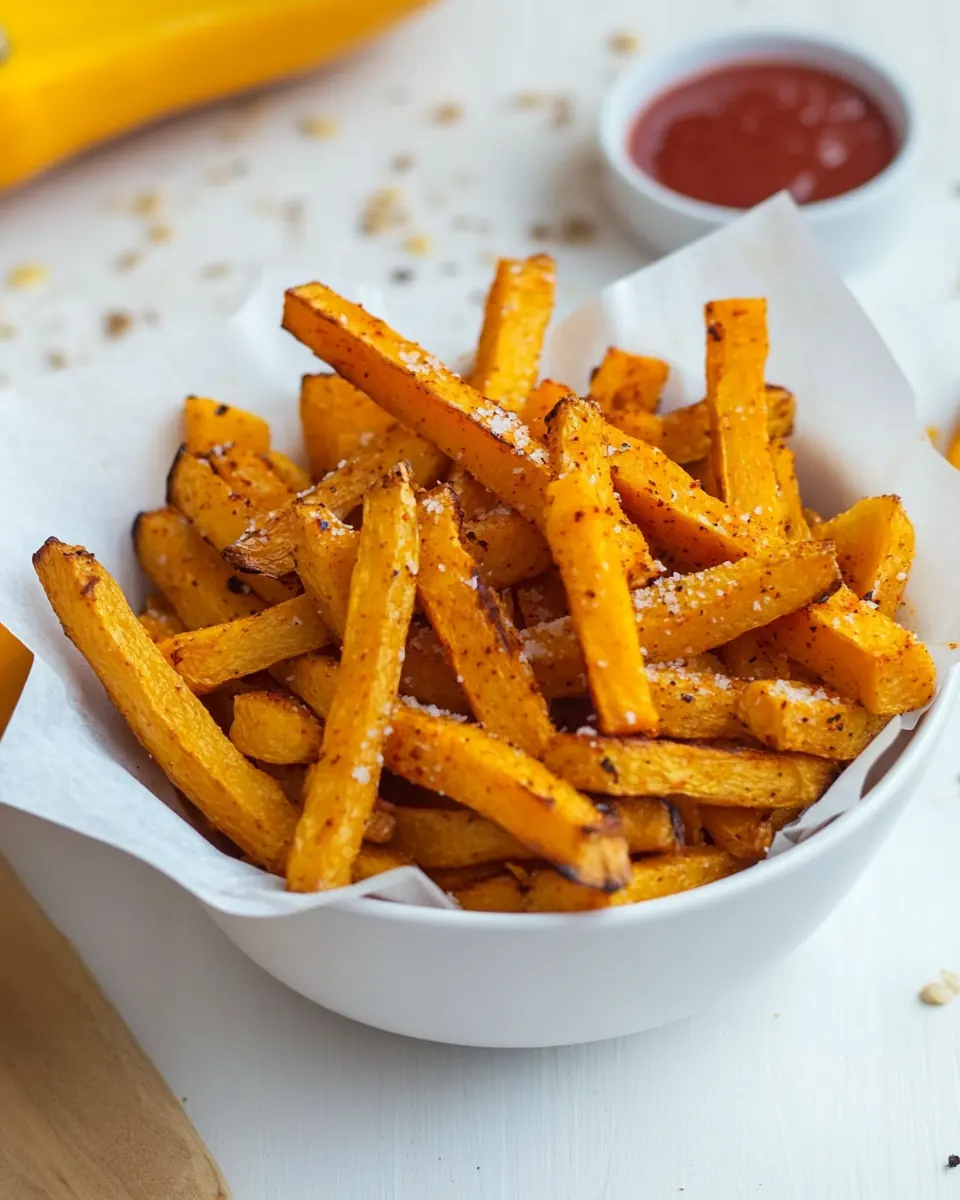
Slice flesh into french fry size sticks.: Running a spoon inside will reveal a tender, slightly stringy seed cavity, and the skin should lift away cleanly after the flesh has been softened by the initial roast. You will notice the interior color deepening to a warm orange, and the texture will be almost buttery when pressed. Removing the skin now is smoother than attempting to peel raw squash; it reduces ragged edges and helps yield uniform sticks. Avoid gouging too deeply into the flesh when peeling, as that reduces yield and can create uneven pieces that cook inconsistently.
Arrange in a single layer on a cookie sheet, and drizzle with olive oil. Sprinkle with salt, garlic salt and any other seasonings you choose.: Aim for consistent thickness so that each stick cooks at the same rate, and listen for the soft whisper of the knife as it slides through the warmed flesh. The sticks should be firm enough to hold their shape but tender when pressed, about the diameter of a typical french fry; this proportion allows the exterior to crisp while the inside stays tender. Even sizing is crucial, because a mix of very thin and very thick sticks will lead to some burning while others remain underdone. A common error is cutting too thin, which leads to overly browned, dry edges, so keep them substantial enough to retain a pleasant interior.
Increase temperature to 425 and cook for about 25 minutes, or until the fries get browned, yet not burned. (time will vary depending on the size of your sticks): Lay the sticks so they have space around them, and the thin shimmer of olive oil helps them brown evenly; when you tilt the sheet you should see the oil glisten and coat the surfaces. The oil promotes Maillard reactions, giving the edges a nutty, roasted aroma, and helps any seasonings adhere. If the sticks are crowded, they will steam instead of crisping, so give them breathing room on the pan. Watch out for uneven layering, which traps moisture and prevents browning, causing limp fries instead of crisp ones.
Sprinkle with salt, garlic salt and any other seasonings you choose: Lightly dust the sticks so every piece carries a hint of seasoning; the salt will draw moisture to the surface and aid in crisping, while garlic salt introduces a savory background note that balances sweetness. You will see the crystals sit on the oil sheen, and the aroma will take on a mild garlicky warmth even before roasting. Seasoning right before roasting ensures it sticks and flavors the crust; a common misstep is over seasoning early, which can lead to uneven flavor or excess surface moisture, so measure with a light hand.
Increase temperature to 425 and cook for about 25 minutes, or until the fries get browned, yet not burned: As the oven intensifies, you will hear a faint sizzle as the oil and natural sugars react, and the kitchen will fill with a roasted, slightly sweet scent. Look for golden brown edges and occasional darker caramel spots for the best texture contrast; turn or shuffle the pan halfway through if some pieces are browning faster than others. The high heat is what creates that crisp exterior while preserving a soft interior, so resist lowering the temperature as that can prolong moisture and produce soggy fries. The trickiest mistake here is overcooking, which dries the interior and leaves brittle edges, so check visually toward the end of the time window and pull them when the color looks deep golden without blackened chips.