Position racks in the upper and lower thirds of your oven. Preheat oven to 400 degrees F. Line 2 baking sheets with parchment paper.: As the oven warms the air starts to smell faintly of heated metal and insulation, and you can feel the kitchen warming up which sets the stage for caramelization. Proper rack placement encourages even heat circulation so both sheets brown evenly, and the parchment prevents sticking and makes cleanup easy. A common error is crowding the oven with too many pans, which disrupts airflow and prolongs cooking, so stick to the two trays. If your oven runs hot, a quick oven thermometer check will keep you on track. Using racks in the upper and lower thirds helps manage hot spots, and rotating the pans later evens out color differences.
Place the egg white in the bottom of a large mixing bowl. Briskly whisk until it is foamy.: The whisking introduces air, creating a frothy surface that helps the seasonings cling to the fries and promotes a delicate coating that crisps. You should see tiny bubbles form and the white lighten in color, which signals readiness. If you stop too soon, the coating will be patchy and spices may fall off during tossing; whisk until foamy but not stiff. Overwhisking can break down the proteins and make it wetter, so aim for a glossy foam. The action should be brisk, and the bowl should feel light as you move it, indicating enough aeration.
Cut potatoes into fry-shaped sticks that are about 1/4- to 1/2-inch wide and 3-inches long. Make the pieces as uniform as possible so that the fries bake evenly. Place the fries in the bowl with the egg white as you go.: When you cut the sweet potatoes consistently you get even cooking and predictable textures, with crispy edges and tender centers. The sound of the knife through the flesh is a firm, clean cut, and the exposed surfaces will take on more color as they roast. Uneven pieces lead to some fries burning while others remain undercooked, so take the time to match sizes. If a piece is much thicker, it may need extra time on a separate tray. As you add the sticks to the bowl, they begin to glisten and accept the foam, which readies them for oil and spices.
Drizzle the fries with the oil.: The first wetting of the fries should create a light sheen on each piece, helping heat transfer and caramelization. You will hear a soft dragging sound as you toss the oiled pieces, and visually the surfaces will darken slightly. Too much oil will pool and inhibit crispness, so distribute it evenly and use your hands or tongs for even coverage. If it feels soggy, blot briefly with a paper towel before seasoning to avoid steaming in the oven.
In a small bowl, stir together the curry powder, salt, black pepper, garlic powder, and cayenne.: Mixing the spices releases aromas as essential oils come alive, and inhaling that small burst of scent hints at the layered flavor to come. Aim for a homogenous blend so every fry gets balanced seasoning. Skipping this step can result in uneven pockets of flavor, and clumping can form if you add them dry to a very oily bowl, so whisk them first to distribute evenly.
Sprinkle the spices over the fries. Toss to coat the fries evenly. Try to get them to be as evenly moistened and seasoned as possible.: As you toss, you will see the spice blend adhere to the foamed surface, creating a speckled, appetizing appearance. The aroma will lift and hint at warmth from the curry and heat from the cayenne. Achieving even coverage ensures no bite is bland or overly spicy. A typical mistake is aggressive over tossing which can break fragile fries; use gentle folding motions to maintain shape while distributing seasoning.
Spread the fries onto the baking sheets, dividing them evenly between each. Make sure the fries are not crowded, or they will steam and not crisp up.: Arranging the fries into single layers allows hot air to circulate and encourages each edge to brown. You'll notice that spaced fries take on a dry sheen rather than a wet one, which is ideal for crisping. Crowding is the most common culprit when fries turn out limp, so resist the temptation to pile them together. If you must bake in batches, do so for the best texture. Watch for small pools of oil, and space fries away from them to avoid sogginess.
Bake the sweet potato fries for 20 minutes.: During this initial bake the kitchen fills with a toasty, sweet aroma as sugars begin to caramelize. The surface will start to develop a light golden hue and the fries will firm up slightly. This period sets the foundation for the final crisp, so patience pays off. Opening the oven frequently will drop temperature and extend cooking time, so try to peek sparingly. If you cut the fries thicker than recommended, they may need a longer first bake to reach tenderness inside.
Remove the pans from the oven, then flip the fries over (I recommend using a large spatula—scoop the fries in big sections, then use a fast turn of your wrist).: When you flip, you will hear a soft clatter as fries shift on the sheet and you may see steam release from the hot surfaces. This flip exposes the other sides to direct heat and promotes even browning. Use a large spatula to scoop in sections, and give the pans a quick wrist turn to flip; this helps prevent breaking individual sticks. Flipping too roughly can scatter small pieces unevenly, so be steady and intentional.
Rearrange the fries back into a single layer to make sure they are not overlapping. If any look like they are browning too quickly, keep these towards the center or front of the baking sheet (the back of the oven tends to be the hottest).: After flipping, take a moment to nudge fries into a tidy single layer, watching for darker edges that may overbrown. The visual cue of deepening brown spots tells you where heat is concentrating, and moving those pieces inward can prevent burning. Overlapping will create steamed spots that never crisp, so take a minute to spread them out. If you notice inconsistent color, it often points to uneven thickness or oven hot spots.
Return the pans to the oven, switching their positions on the upper and lower racks.: Swapping rack positions evens out differences in oven heat, which is especially helpful for home ovens with hot zones. You may hear a faint hiss as the sheets reenter the hot oven, and the smell will deepen as caramelization proceeds. This rotation helps both sheets finish at the same time. Forgetting to switch can leave one sheet browner than the other, so set a timer to remind yourself.
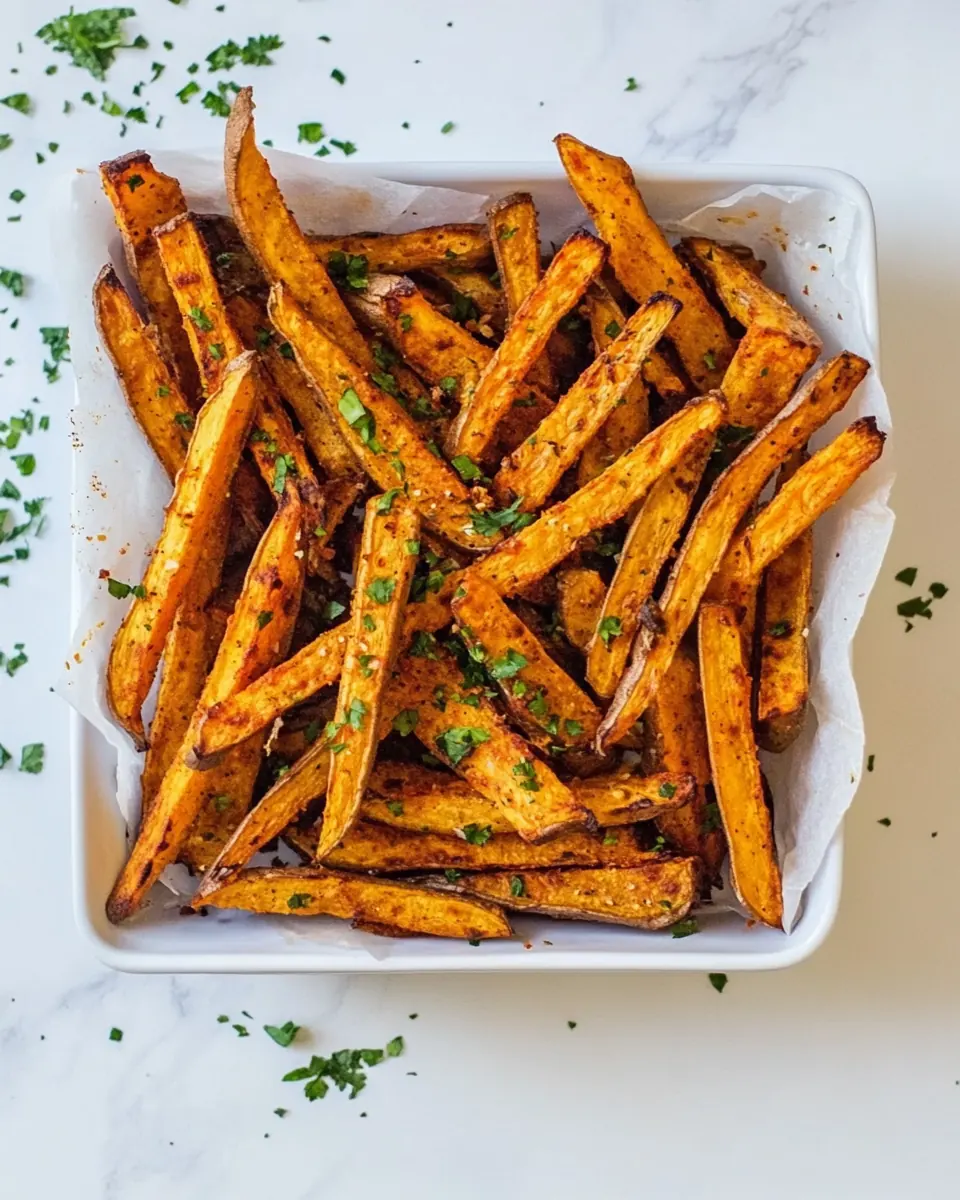
Continue baking until the fries are crisp and brown on the outside and tender on the inside. The ends may look very dark on some of the fries, and you’ll see lighter brown spots in a few places. This will take about 10 to 15 additional minutes, depending on your oven and what size you cut the fries.: In the final phase, the sound is minimal, but visually you will see edges that are deeply caramelized and centers that yield when pressed. The precise timing depends on piece size and oven characteristics, usually taking about 10 to 15 additional minutes. This step concentrates flavor and texture, so monitor closely to catch the moment they are just right rather than overdone. A common pitfall is relying only on time; instead check for both crisp edges and a tender interior by testing one piece.
Remove from the oven. Sprinkle with a pinch of additional salt. Serve immediately.: The finishing salt brightens and balances the roasted sweetness, and as you transfer them to a serving dish the steam releases a final aromatic note. Serving hot preserves the contrast between crisp exterior and soft center, so invite your guests quickly. If you leave them to sit too long, they will lose crunch, so plan your plating so the fries hit the table while still warm. A light garnish of herbs added at the end brings freshness to the dish.