Preheat the oven to 425°F. Line a rimmed baking sheet with aluminum foil or parchment paper. With a fork, poke holes in the outsides of the sweet potatoes. Bake for 40 to 60 minutes (timing will depend upon the size of your sweet potatoes), until very tender when pierced with a fork. Set aside to cool.: You will notice a sweet, earthy aroma building in the kitchen as the sweet potatoes roast, and their skins will darken and blister slightly, signaling that the sugars are concentrating. The fork holes let steam escape so the potatoes do not burst, and the high heat helps the interior become silky. A key sensory cue is when a fork slides in with almost no resistance, indicating full tenderness. If potatoes are underbaked, you'll get lumps and a denser texture in the filling, so resist removing them early. Avoid wrapping them tightly while hot, as trapped steam can make the flesh watery.
Reduce the oven temperature to 350°F. Coat a 9×13 casserole dish or similar 2 1/2 quart casserole dish with nonstick spray.: Lowering the oven to 350°F ensures the casserole cooks gently without the topping burning. When you coat the dish, the surface should look evenly glossy, which prevents sticking and makes serving easier. The visual cue is a thin, even sheen of spray. If you skip greasing, the edges may cling as the filling sets, making portions messy to serve. Use a dish close to the stated size for even cooking, because a too shallow dish can overbrown the topping prematurely.
Once the sweet potatoes are cool enough to handle, remove the peels. Scoop out the sweet potato flesh and place it in a large mixing bowl or the bowl of a stand mixer fitted with the paddle attachment. (You can also use an electric hand mixer.): As you scoop, the flesh should be smooth and moist, not stringy. The act of scooping into a bowl keeps skins from adding coarse bits. Using a stand mixer with the paddle gives a very even mash, while a hand mixer offers more control. Avoid leaving any burnt or dry edges of skin in the mash since they can create gritty bits. If you see fibers, give a brief extra beat to smooth them out but do not overwork or the mixture can become gluey.
Add the butter, eggs, sugar, maple syrup, vanilla, cinnamon, salt, and milk.: As these ingredients join the warm sweet potatoes , aromas lift immediately, especially the maple and vanilla. The butter melts into the mash creating glossy richness, while eggs will help set the mixture in the oven. Adding milk loosens the texture so it becomes creamy rather than dense. Stir gently at first so nothing splashes, then increase speed or vigor. A common mistake is adding too much liquid at once, which can make the filling runny; adjust milk gradually to reach the desired thickness.
Beat until smoothly combined.: You should feel the mixture change from slightly lumpy to a uniform, silky mass, and you'll see a glossy surface indicating proper emulsion. The smell will be sweet and warmly spiced. Properly combined, the filling holds together but is spoonable, not pourable. Overbeating can cause the eggs to break down and create a firmer set, so stop once smooth. If you notice pockets of unmixed butter, fold gently until fully incorporated.
Scoop into the prepared baking dish.: As you transfer the filling, use a rubber spatula to scrape every bit into the dish, leaving a level surface to receive the topping. The filling should sit slightly mounded but even enough so the streusel adheres on top. When spreading, the touch should be gentle so you do not compress the air that helps keep it light. If you press too hard, the texture can become denser after baking.
Next, prepare the topping. In a medium mixing bowl, melt the butter. Sprinkle the chopped pecans, coconut, brown sugar, flour, and salt over the top. Stir until evenly moistened and combined. Scatter the streusel topping over the sweet potatoes in an even layer.: The butter should be warm and fluid, coating particles of pecans and coconut so they brown evenly in the oven. When mixed, the streusel takes on a sandy, slightly sticky texture that clumps when pinched. Spread it across the surface so there are no large bare spots, and leave some variation in cluster size for a pleasing crunch. A common error is overmixing the streusel which can make it too pasty rather than crumbly; stop once everything is moistened.
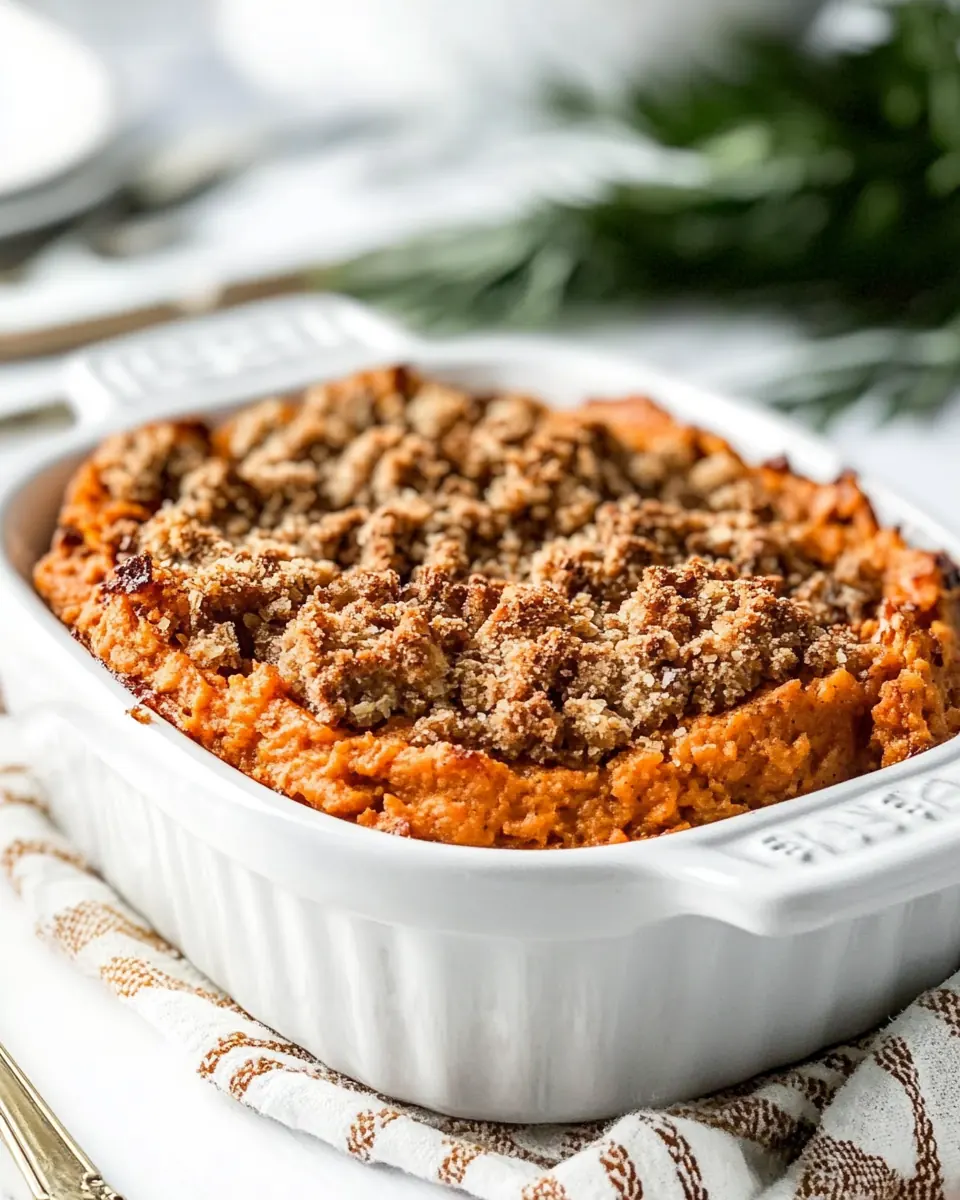
Bake the sweet potato souffle until the topping is lightly browned and your kitchen smells amazing, about 40 minutes. Let rest 5 minutes, then enjoy warm.: During this bake, the topping will sizzle and caramelize, giving off a toasty aroma from the pecans and brown sugar. Look for a golden brown surface with scattered darker spots on nut pieces, and for gentle bubbling at the edges indicating the filling is set. Letting it rest allows residual heat to finish the interior and helps slices hold shape. A common pitfall is overbaking which dries the filling, so check at the earlier end of the time range and cover loosely with foil if the topping is browning too quickly.