Open a can of full-fat coconut milk and pour a small amount (about 1/4 cup) into a large skillet or dutch oven. Add the onion and saute until very fragrant and softened, about 5 to 8 minutes. Add the bell pepper and saute an additional 2 minutes to soften.: As the warm milk hits the skillet you will notice it separates slightly, releasing fragrant coconut oils, which is perfect for blooming the curry paste. The scent should be soft and sweet, signaling the fat is ready to carry aromatics. Use a gentle medium heat to avoid scorching the milk, because burning will introduce a bitter note. A common mistake here is turning the heat too high and causing the milk to curdle, so keep the heat moderate and stir gently as you add the next ingredients.
Add the remaining coconut milk, panang curry paste, peanut butter (almond butter), sugar, fish sauce, and sea salt and bring mixture to a full boil. Reduce heat to a simmer and cook 15 minutes to allow flavors to develop, stirring occasionally.: The onion should sizzle softly when it hits the pan, and within a few minutes you will smell a sweet, savory aroma as the natural sugars begin to emerge. Visually, the pieces will turn translucent and glossy, shrinking slightly in size. This step builds the foundational flavor layer, which is why taking the time matters. If the onion browns too quickly, lower the heat and stir more often to avoid a bitter edge.
While you are sautéing the onion and bell pepper (and simmering the panang sauce), heat a separate skillet over medium-high and add about a tablespoon of coconut oil (or cooking oil of choice). Add the chopped chicken and brown on two sides, about 3 to 5 minutes.: When you add the red bell pepper , the pan will hiss a bit, and the pepper should become tender while still holding some structure. The color will brighten and the scent will become fruitier, which contrasts nicely with the savory base. This brief cook prevents the pepper from turning limp and losing its fresh note. Overcooking here removes the crispness and can make the texture mushy, so aim for just softened.
Cover this skillet and continue cooking until chicken is cooked through, about 3 to 5 minutes. Drain any excess liquid off of the chicken. Transfer the chicken to the skillet/pot with the curry mixture. Continue cooking a gentle simmer for additional 10 minutes to allow flavors to come together.: As you pour in the remaining coconut milk the sauce will look pale and creamy, and stirring in the panang curry paste will immediately tint it a warm, inviting color. The aroma intensifies as the paste blooms in the fat, and folding in the peanut butter adds a silky sheen. Bringing the pot to a full boil briefly helps meld flavors, but keep a close eye because coconut milk can foam up. Boiling too vigorously may split the sauce, so lower to a simmer once it reaches a rolling bubble.
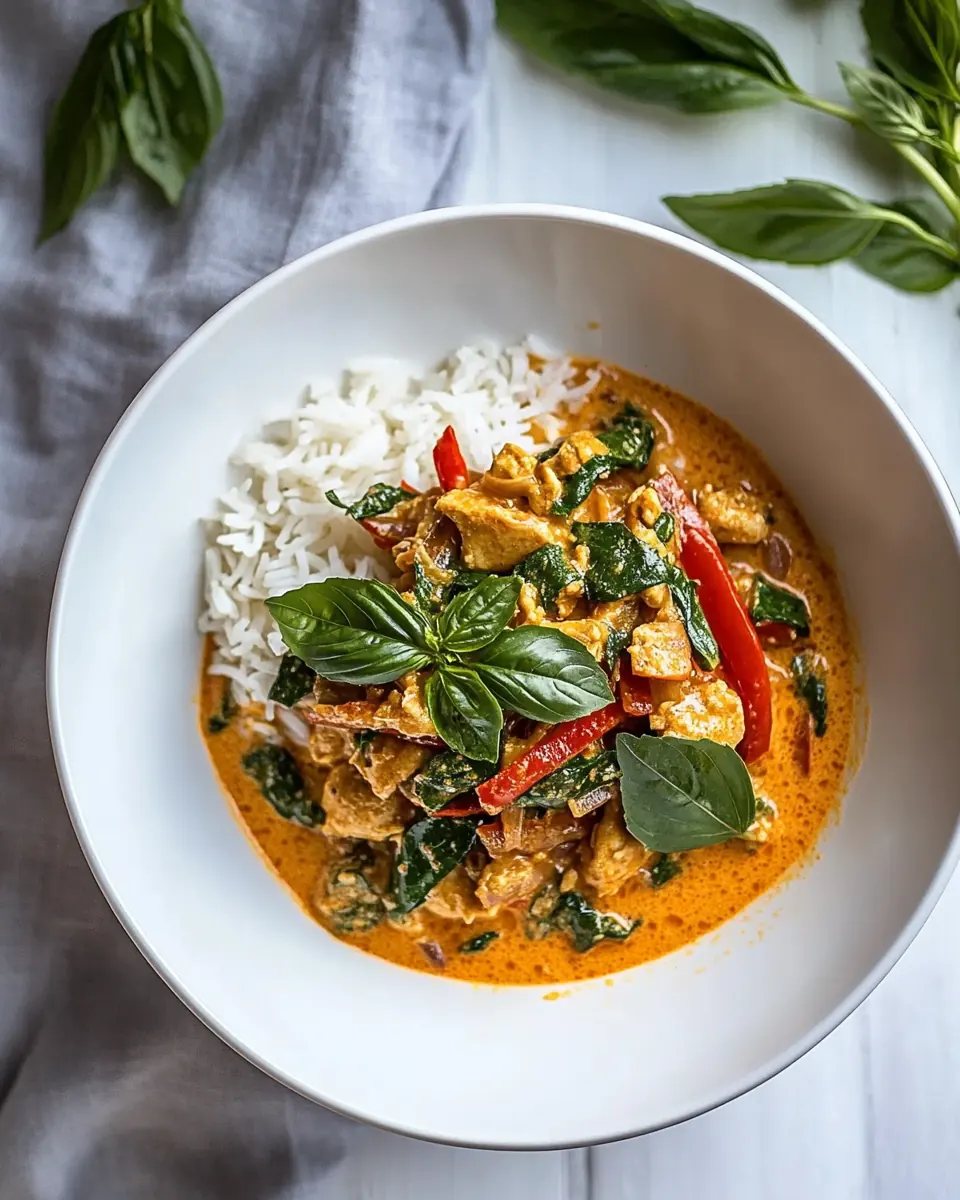
Serve panang curry with your choice of rice, cauliflower rice, zucchini noodles, quinoa, etc.: At a gentle simmer you will see small bubbles around the edges and the sauce will thicken slightly, taking on a more concentrated aroma. This resting simmer is where flavors deepen and marry, giving the curry its characteristic roundness. Stir occasionally to prevent sticking and to encourage even reduction. If you skip this time the curry may taste one dimensional, so be patient and let the sauce settle into its full character.
While you are sautéing the onion and bell pepper and simmering the panang sauce heat a separate skillet over medium-high and add about a tablespoon of coconut oil: Heating a separate pan yields better texture for the chicken , and the small pool of coconut oil will shimmer when ready. You should hear a bright sizzle when the chicken hits the pan, which indicates good contact and browning potential. If the oil smokes heavily the pan is too hot, which can char the surface without cooking through. Moderate the heat to maintain control.
Add the chopped chicken and brown on two sides, about 3 to 5 minutes: As the chicken sears you will see a golden crust form and hear a satisfying sizzle. That crust boosts flavor through the Maillard reaction, and it helps the meat hold juices during the simmer. Aim for even browning on each side and avoid moving the chicken too frequently, because that prevents a proper sear. A common error is crowding the pan, which causes steaming instead of browning, so cook in batches if needed.
Cover this skillet and continue cooking until chicken is cooked through, about 3 to 5 minutes: Covering helps the internal temperature rise evenly, making the chicken tender and juicy. You will hear less sizzle as steam accumulates, and the surface will firm up to a cooked texture. Use a timer or an instant read thermometer to ensure doneness, aiming for fully opaque pieces and juice that runs clear. Overcooking here leads to dryness, so check early if your pieces are small.
Drain any excess liquid off of the chicken: After cooking, draining helps prevent the curry sauce from becoming too thin when you combine everything. You might notice a small amount of rendered liquid in the pan, which is normal; tipping the pan and using tongs works well to remove excess. Leaving too much liquid can dilute the sauce and change the intended texture, so be mindful to remove what is not needed.
Transfer the chicken to the skillet pot with the curry mixture: As you add the browned chicken into the simmering curry, you will hear the sauce bubble more actively, and the pieces will begin to take on the sauce color. This step allows the chicken to finish absorbing flavors while the sauce thickens further, integrating texture and seasoning. Stir gently to coat each piece, taking care not to break the meat apart. Vigorous stirring can shred the chicken and change the mouthfeel.
Continue cooking a gentle simmer for additional 10 minutes to allow flavors to come together: During this final simmer the sauce will reduce a touch and cling to the chicken , becoming glossy and slightly thicker. The aroma should become harmonious, with the nutty, sweet, and savory notes balanced. Taste and adjust seasoning with a pinch of sea salt if needed. Avoid letting the sauce evaporate completely, which would make it too thick and intense, so maintain a gentle bubble.
Serve panang curry with your choice of rice cauliflower rice zucchini noodles quinoa etc: The warm sauce will glisten as you spoon it over your chosen base, and the contrast in textures adds to the experience. Traditional jasmine rice soaks up sauce, while lighter options keep the dish fresher. Plate with care to show the bright red pepper against the creamy curry. One mistake is serving it straight from a stone cold pan, so allow it to rest a minute so flavors finish settling.