Preheat the oven to 375 degrees F. Spray a 9 x 13 inch baking dish with nonstick spray.: The air in the oven should feel warm and steady when you open the door, and the preheated environment ensures even baking of stuffing and chicken . You want a consistent heat so the stuffing sets while the chicken finishes cooking, avoiding spots that undercook. A common mistake is putting the dish into an oven that is not up to temperature, which can lengthen cooking time and lead to uneven texture.
In a large cast iron skillet, melt the 4 tablespoons butter. Add in the onions, celery, garlic and a big pinch of salt and pepper. Cook, stirring often, until the veggies soften, about 5 minutes. Stir in the fresh herbs. Cook for 2 to 3 minutes. Turn off the heat.: As the butter foams and then calms, you will smell sweet onion and aromatic herbs blooming, a sign the base flavors are building. Texture will shift from crisp to tender, and stirring keeps the vegetables from sticking and browning too quickly. Avoid rushing the softening step, since undercooked vegetables will leave raw, crunchy bits in the stuffing.
Place the bread cubes in the sprayed baking dish. Pour the onion celery mixture over top, being sure to scrape the pan so all the flavor gets into the bread cubes. Add another pinch of salt and pepper and toss everything well.: As the warm vegetable mixture hits the bread, it should hiss slightly and steam, which helps the cubes soak up flavor. Tossing ensures even distribution so every cube carries some of the sautéed aromatics. Over saturating the bread can make the stuffing soggy, so aim for even coating rather than puddles of liquid.
Whisk together the chicken stock and egg. Pour the mixture over the breadcrumbs and toss. Drizzle the remaining 4 tablespoons butter over the stuffing.: Whisking until fully combined makes the liquid silky and stable, which helps the bread set into a tender custard as it bakes. The smell will become richer and the mixture should look evenly moistened. A frequent error is pouring cold stock straight onto dry bread without mixing, which leads to uneven hydration and dry pockets.
Stick the pan in the oven, uncovered, for 20 to 25 minutes.: The oven sound is a soft, steady hum, and you will see the top of the stuffing start to firm and gain slight color at the edges. This initial bake sets the structure so the chicken can be added without making the whole dish collapse. Do not close the oven frequently to check, since heat loss will extend baking time and affect texture.
While the stuffing cooks, make the chicken. In the same cast iron skillet, heat the olive oil over medium heat. Stir together the garlic powder, dried sage, oregano and a big pinch of salt and pepper. Sprinkle it all over the chicken.: The oil should shimmer and release a faint, herbaceous scent when the spice blend hits the pan, signaling the aromas are activating. Seasoning in advance ensures the chicken carries flavor to the interior as it browns. A common mistake is underseasoning the skin, which results in bland bites once roasted.
Brown the chicken in the pan about 3 to 4 minutes per side, until it’s deeply golden in color.: You will hear a steady sizzle and see the skin transform to a deep, inviting brown; that Maillard reaction adds nuttiness and depth. Browning also creates the drippings essential for the gravy. Avoid moving the thighs too often, or they will not develop a proper crust and will stick to the pan.
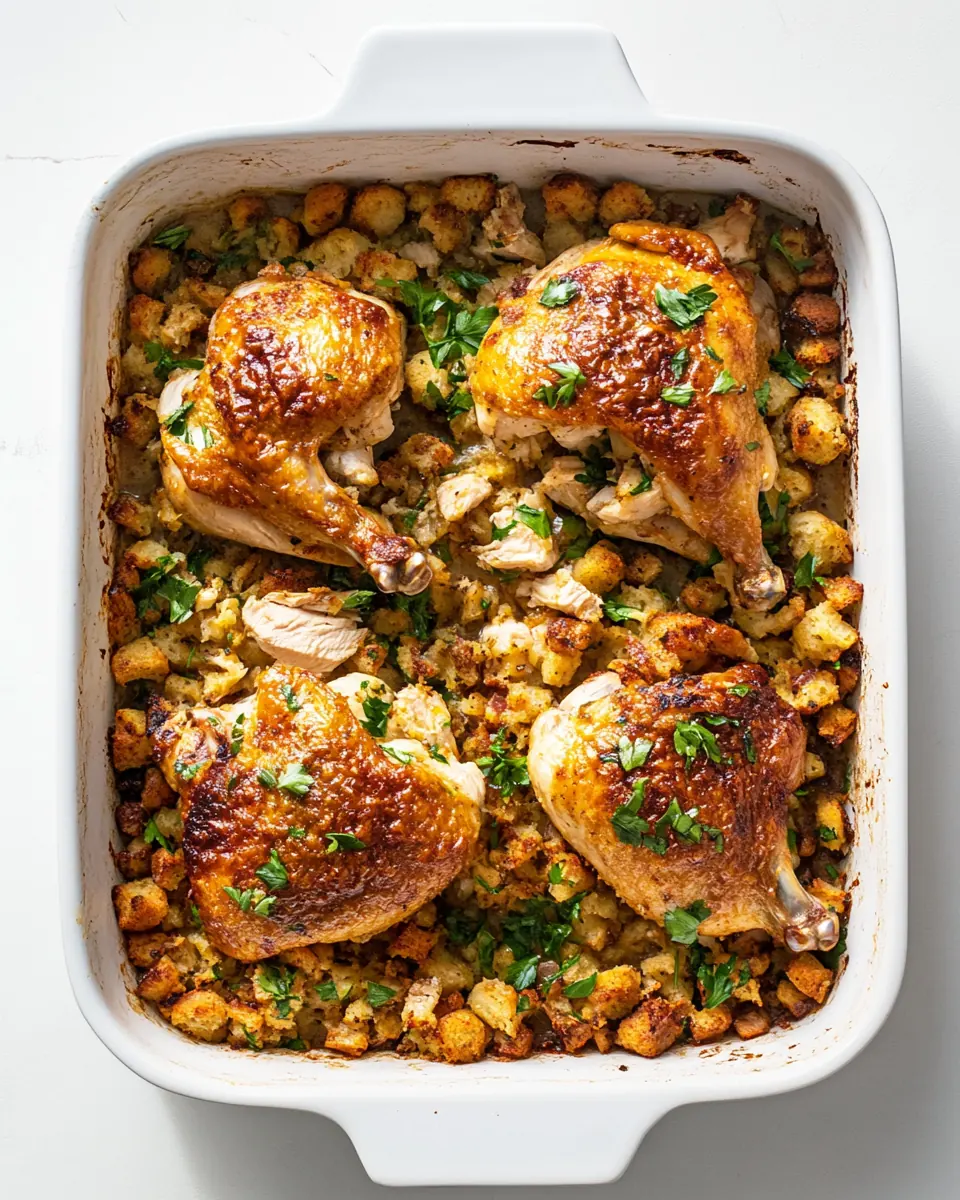
When the stuffing is finished, remove the pan. Take each chicken thigh from the skillet and nestle it into the stuffing. Return the pan to the oven and cook for another 20 to 25 minutes, or until the internal temp of the chicken and stuffing both reach 165 degrees F.: As the thighs rest in the stuffing, juices will blend into the bread, and you may see tiny bubbles where the stuffing meets the meat. The kitchen will smell like roasted herbs and warm bread. Use a thermometer to verify doneness, because relying on color alone can be misleading and lead to undercooked poultry.
While that cooks, make the gravy. In the same pan where you cooked the chicken (don’t clean it out!), heat the remaining drippings over medium heat. In a shaker cup, shake the stock and flour together for at least 30 seconds to make a slurry, until it is fully combined.: Heating the drippings teases out browned flavor notes and releases a savory perfume that signals the sauce is beginning. The slurry should be lump free and pale, which helps it marry smoothly with the hot fat. If you add flour directly to hot drippings without mixing it first, you risk clumps that will be hard to whisk out.
Pour the slurry into the drippings in the pan, whisking the entire time. Continue to whisk to avoid any lumps and stir until the gravy has thickened, anywhere from 10 to 20 minutes. Make sure you are scraping the bottom of the pan! Stirring is key - I have stood and stirred gravy for 20 to 30 minutes at a time!: As you whisk, the gravy will shift from opaque to glossy and coat the back of a spoon, releasing a rich aroma filled with roasted notes. Scraping the bottom pulls in fond, building complexity; patience here yields a smooth, velvety sauce. A common error is turning the heat too high, which can make the gravy scorch and taste bitter.
Taste the gravy and season it with salt and pepper to your liking. Salt and pepper make all the difference here. The drippings and stock add flavor, but the salt is what brings the flavor out.: Adjusting seasoning at the end lets you control intensity since reduction concentrates salt. The gravy should taste balanced, not flat or overly salty. Avoid oversalting early, because once reduced you cannot remove excess salt easily.
When the chicken and stuffing bake is finished, sprinkle it with extra chopped parsley. Serve and drizzle with gravy. Enjoy!: The final presentation should look warm and inviting, with golden chicken skin and scattered green parsley for brightness. Drizzling the gravy adds shine and a finishing savory note. One mistake to avoid is letting the dish sit too long before serving, which can cause the stuffing to settle and lose its pleasing contrast.