Preheat the oven to 400°.: The room warms with anticipation as the oven climbs to 400° , and you can almost smell the promise of caramelization. Preheating ensures the casserole starts cooking at the right rate so the top can brown without the interior being underdone. If you skip this and put the dish into a cold oven, the bake time will lengthen and textures may suffer, so always let the oven reach temperature before you insert the pan.
Combine the sliced potatoes, cream, garlic, gruyere cheese, nutmeg, salt, and pepper in a large bowl until thoroughly mixed. Ensure the potatoes are seasoned and coated by tasting some of the cream after mixing it.: When you toss the thinly sliced russet potatoes with heavy whipping cream , minced garlic , shredded gruyere cheese , nutmeg , and seasoning, you will feel the cool cream coating each slice, and the aroma of raw garlic and nutmeg will float up. I like to stir gently but thoroughly so every slice is nestled in the creamy mixture, which encourages even cooking and consistent seasoning. Taste a bit of the cream to check salt and pepper, because the potatoes will absorb seasoning as they bake. A common mistake is hurried stirring that breaks the slices; be gentle to keep the layers intact.
Transfer the mixture to a deep 13×9 casserole pan sprayed with non-stick spray and flatten out with a spoon to make it level.: The act of transferring fills the kitchen with soft, milky steam and the bowl slowly lightens. Pressing the mixture level with a spoon creates uniform thickness so the heat penetrates evenly and no pocket remains undercooked. I use a deep 13×9 pan so there is room for bubbling without spilling. If your pan is shallower, you risk the top drying out or the cream bubbling over, so choose a deep dish or divide into two pans.
Cover in foil and bake in the oven at 400° for 80 to 90 minutes.: As the casserole bakes covered, the steam and heat meld the layers, and you will notice gentle bubbling at the edges when it is close to done. This covered phase allows the potatoes to cook through in the rich cream without the top over-browning. The interior will smell custardy and savory. Opening the oven too often to check can drop temperature and lengthen the bake, so resist peeking; instead, check near the end of the time window for tenderness with a skewer.
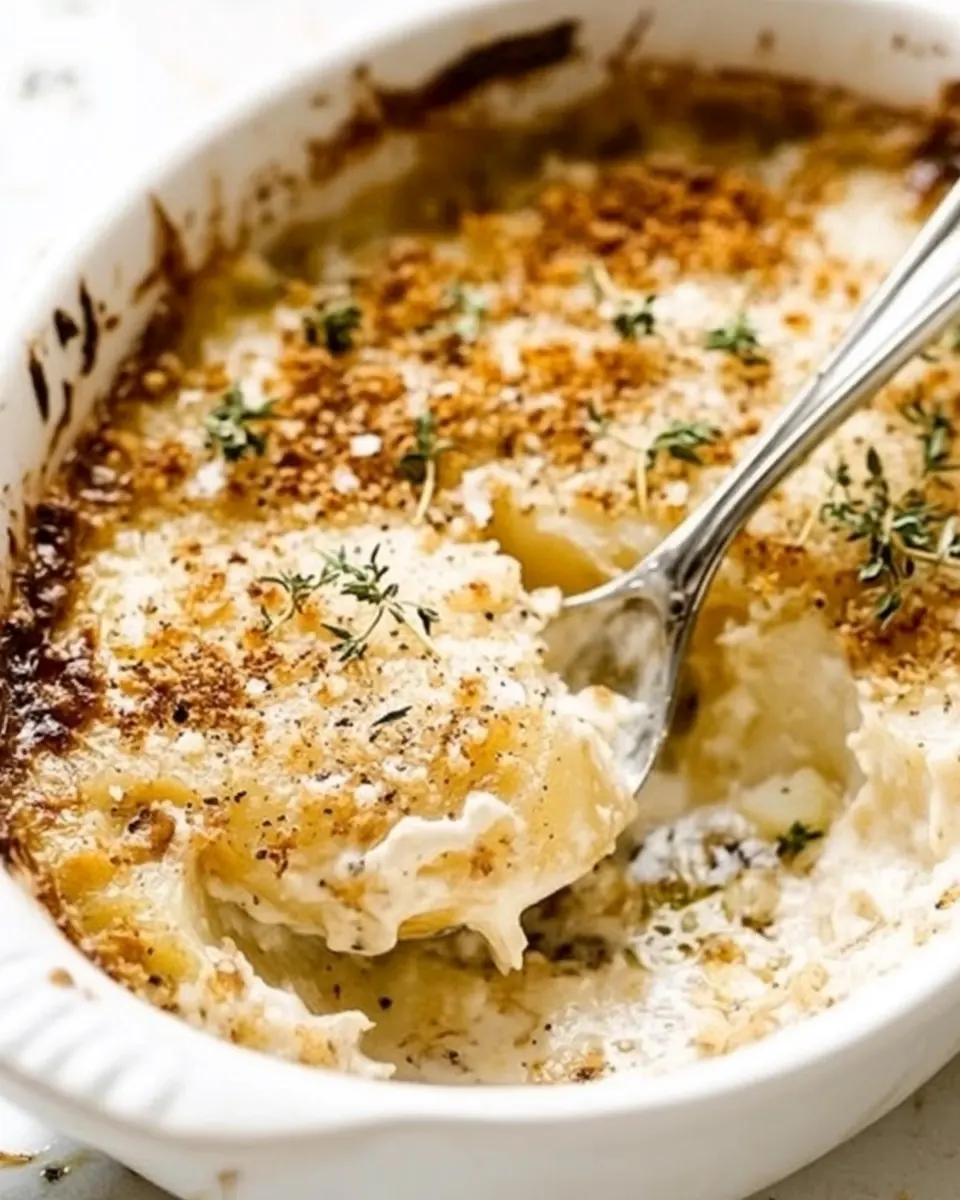
Remove the foil and evenly sprinkle on the breadcrumbs and cheese, completely coating the sliced potatoes.: Revealing the gratin shows a pale, bubbling surface that is ready for its crunchy finish. Sprinkling breadcrumbs and parmesan cheese evenly gives you uniform browning and a pleasing bite. The visual cue to look for is even coverage, and you want the crumbs to lie evenly so they toast at the same rate. A common oversight is clumping the crumbs in one spot, producing an uneven crust.
Drizzle on the melted butter and place back in the oven for 20 to 25 minutes or until golden brown on top and cooked throughout.: Drizzling melted butter over the topping encourages an even, glossy browning and intensifies aroma as it toasts. The oven will start to produce sounds of gentle crackling as moisture leaves the surface and the crumbs crisp; the top should turn a rich golden color. This finishing bake creates contrast between the crunchy top and the silky interior. Beware leaving it too long, which can dry the interior, so watch for that golden cue and a bubbling perimeter.
Let cool at room temperature for 5-10 minutes before serving.: After you remove the dish, the surface will glisten and steam will rise gently, and allowing a brief rest helps the custardy center settle so you can slice clean portions. The aroma will mellow slightly and the gratin will be easier to plate. Rushing to carve immediately can cause the filling to run, so give it those few minutes to firm up for attractive slices.