Make the Ice Cream Custard: In a medium bowl, whisk the egg yolks to break them up. Add 1/4 cup of the sugar and whisk to combine; set aside.: In a medium bowl, whisk the egg yolks to break them up. Add 1/4 cup of the sugar and whisk to combine; set aside. : The aroma here is gentle and sweet, and when you whisk the egg yolks with the sugar they lighten and thicken slightly, creating a pale ribbon that coats the whisk. This initial step helps dissolve sugar into the yolks so they temper more smoothly later, preventing graininess in the finished custard. A common mistake is rushing the whisking, which can leave undissolved sugar and lead to a grainy texture. Take your time until the mixture looks cohesive and slightly glossy.
In a medium saucepan, stir together the cream, milk, remaining sugar and salt and place over medium-high heat. When the mixture approaches a bare simmer, reduce the heat to medium.: As the heavy cream and milk warm, smell the sweet dairy and notice small wisps of steam, not a rolling boil. Reducing to medium when tiny bubbles gather around the edge protects the proteins and fats from breaking, which keeps the custard silky. If you overheat and boil, the mixture can scald, giving a boiled milk aroma and making it harder for the yolks to thicken properly.
Ladle out a scoop of the hot cream mixture and, whisking the eggs constantly, add the cream to the bowl with the egg yolks. Repeat, adding another ladle-ful of the cream mixture to the bowl with the egg yolks, continuing to whisk. Pour the egg yolk mixture back into the saucepan.: You will feel the warmth transfer as you temper the yolks, and the whisking motion is crucial to evenly distribute heat so the yolks do not scramble. The texture will become smoother and slightly warmer to the touch as the tempered mixture returns to the pan. If you pour the hot dairy directly into the yolks without tempering, you risk curdling, which ruins the silky texture you want, so always go slowly and keep whisking.
Using a rubber spatula, stir the mixture constantly over medium heat until it is thickened and coats the back of the spatula (it should register between 170 and 175 degrees F on an instant-read thermometer), about 1 to 2 minutes.: At this stage the custard changes noticeably: it will smell richer, and when you drag your finger across the spatula the trail should remain, indicating it coats. Hitting the 170 to 175 degrees F window is what sets the proteins enough to thicken without scrambling them. Overcooking beyond this range risks grainy texture and eggs that taste cooked; undercooking yields a runny custard that will not hold its structure in the churned ice cream.
Strain the custard through a fine-mesh sieve into a clean bowl and whisk in the vanilla extract. Place the bowl in an ice bath and stir the mixture occasionally until cool. Remove the container from the ice bath, cover and refrigerate until completely chilled, at least 2 hours or overnight.: Straining removes any tiny coagulated bits so the mouthfeel remains silky, and the cool, fragrant custard will smell of dairy and vanilla. The ice bath accelerates chilling, which is essential to protect fat crystallization and to let the custard rest so flavors marry. A common error is skipping chilling time; warm custard churns poorly and invites larger ice crystals, leaving a coarse texture rather than smooth creaminess.
Make the Fudge Ripple: In a small saucepan, whisk together the sugar, water, cocoa, corn syrup and salt. Place the pan over medium-high heat and whisk until the mixture comes to a full simmer. Once the mixture has simmered and the sugar is completely dissolved, remove from heat and add the chopped chocolate. Let sit for 1 minute, then whisk until melted and smooth. Whisk in the vanilla extract. Allow to cool to room temperature, then place in an airtight container in the refrigerator and chill completely before using. (Any leftovers can be kept in an airtight container in the refrigerator for up to 2 weeks.): In a small saucepan, whisk together the sugar, water, cocoa, corn syrup and salt. Place the pan over medium-high heat and whisk until the mixture comes to a full simmer. Once the mixture has simmered and the sugar is completely dissolved, remove from heat and add the chopped chocolate. Let sit for 1 minute, then whisk until melted and smooth. Whisk in the vanilla extract. Allow to cool to room temperature, then place in an airtight container in the refrigerator and chill completely before using. (Any leftovers can be kept in an airtight container in the refrigerator for up to 2 weeks.) : When the mixture reaches a full simmer you'll hear a gentle bubbling and smell rich cocoa steam, and the syrup should become glossy and homogeneous. Adding the finely chopped bittersweet chocolate off heat lets residual heat melt it into a velvety sauce, and the corn syrup helps keep the ribbon fluid and shiny. If you overcook the syrup it can become overly thick or grainy, so remove from heat as soon as the sugar is dissolved and the mixture has simmered briefly.
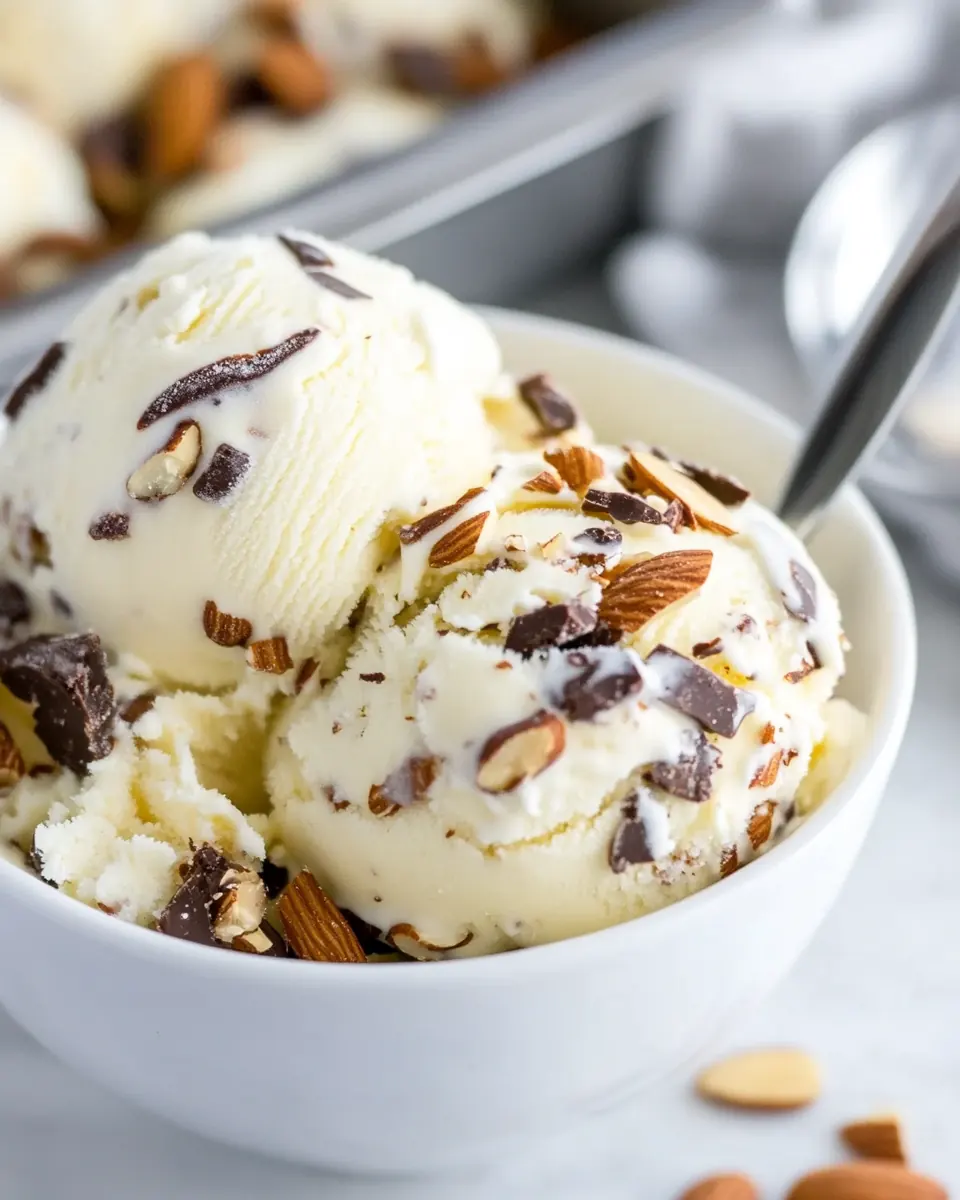
Churn the Ice Cream: Freeze the ice cream according to the ice cream maker's instructions, adding the chopped almonds during the last minute of churning. As you transfer the ice cream to the storage container, alternate layers of the ice cream with drizzles of the fudge ripple. Once all of the ice cream is in the container, use a butter knife to gently swirl the mixture.: Freeze the ice cream according to the ice cream maker's instructions, adding the chopped almonds during the last minute of churning. As you transfer the ice cream to the storage container, alternate layers of the ice cream with drizzles of the fudge ripple. Once all of the ice cream is in the container, use a butter knife to gently swirl the mixture. : Here the room fills with the scent of chilled cream and toasted nuts, and the texture is aerated and spoonable straight from the machine. Adding the chopped toasted almonds at the end preserves their crunch, and layering the cold ice cream with chilled fudge ripple creates beautiful ribbons that set without freezing solid. A typical slip is stirring the ripple in too vigorously, which will blend it away; use gentle layers and a few careful swirls to get distinct ribbons.