In a large bowl, combine water, yeast and honey. Mix with a spoon, then let sit until foamy, about 10 minutes. Add in the flour and olive oil stirring with a spoon until the dough comes together but is still sticky. Using your hands, on a floured surface, form the dough into a ball and work the additional 1/2 cup flour into the dough if needed. You can also do all the mixing and kneading in your stand mixer with the dough hook attachment. Now rub the same bowl with olive oil, then place the dough inside, turning to coat. Cover with a towel and place in a warm place to rise for about 1 1/2 hours.: The moment the warm water meets the yeast and honey you will notice tiny bubbles start to form, a soft, yeasty scent rising like bread beginnings, which signals active fermentation. This foamy stage ensures the dough will rise with lightness, giving a tender interior and airy pockets. Stir gently so you do not deflate the mixture, and let it rest in a warm draft free spot; if no foam appears in about 10 minutes the yeast may be inactive, so it is better to start again than push a dead dough. A common mistake is using water that is too hot which kills the yeast , so keep the temperature warm but not scalding.
Place a small skillet over medium-low heat and add the walnuts. Toast the walnuts for 5-8 minutes, stirring and watching closely to make sure they do not burn. You will know they are toasted by the smell. Once toasted, remove from the heat and allow to cool 5 minutes.: As you fold the flour and olive oil into the foamy mix, the texture changes from liquid to a shaggy mass, and you will hear soft tearing sounds as gluten begins to form; this is when the dough is developing structure. The slight tackiness indicates proper hydration for an open crumb once baked. Avoid adding excessive flour at this stage, because over dry dough yields dense crust; instead, work gradually and trust the feel, aiming for a cohesive, springy ball.
Add the cooled toasted walnuts, basil and parmesan to the bowl of a food processor. Pulse until finely ground and then drizzle in the olive oil. Add the pepper and a pinch of crushed red pepper if desired. Taste and adjust to your liking.: Kneading by hand develops elasticity, and you will recognize success when the dough becomes smooth and slightly shiny, springing back when poked. The tactile feedback is vital, as too little kneading yields weak structure and too much makes the dough tight. If the dough sticks excessively, sprinkle small amounts of flour rather than dumping it in, and avoid over kneading which can make the crust tough; rest the dough briefly if it resists smoothing out.
Heat a medium skillet over high heat and add the butter. Add the nectarines to a bowl and toss with coconut sugar or honey. Add the nectarines in a single layer to the hot skillet. Sear for 1 minute and then flip and sear another minute more or until lightly caramelized. Remove the nectarines from the skillet and repeat with any remaining nectarines.: Coating the dough with a thin film of olive oil prevents it from drying during the rise and adds a subtle richness to the outer crust. The bowl will feel silky where the oil is applied, and you will hear faint slick sounds when you turn the dough. Covering it allows the surface to remain soft; if the bowl is not oiled the dough can form a stiff skin which impedes proper expansion during proofing.
Preheat the grill to high heat or heat a large cast iron grill pan or skillet. Preheat the oven to 425 degrees F.: During this rise the dough doubles and fills with fragrant, slightly sweet fermentation aromas, and you will notice it gently doming and softening. This slow change builds flavor and creates air pockets that translate to a light crust. Avoid placing it in direct heat or drafts which cause uneven rising, and if your kitchen is cool, choose a slightly warmer spot to keep the process steady but not rushed; premature overproofing is a common pitfall that leads to collapsed dough.
Once the pizza dough is ready, lightly flour a counter. Divide the dough in half. Use your hands or a rolling pin to roll each piece of dough out until you have a flattened disk. Place the pizzas on a greased baking sheet and then use your hands to gently tug, pull and push the pizza dough into your desired shape. You may also use a rolling pin for this. Rub each piece of dough with olive oil. Once the grill is hot carefully transfer the pizza doughs to the grill. Grill for 2-3 minutes or until lightly charred. Flip and grill one minute longer. Immediately remove from the grill and place on a baking sheet.: Toasting the walnuts in a skillet releases fragrant oils and a deep, nutty aroma within five to eight minutes; you will hear a faint whisper of crackle and see their color deepen slightly. Remove them from heat as soon as the scent intensifies and they are golden to avoid bitterness from burning. Let them cool so the heat does not wilt the basil later; rushed processing of hot nuts can produce a gummy pesto texture.
Divide the pesto between the two pizzas. Now add the shredded fontina to both pizzas. Add the sun-dried tomatoes and then the nectarines. Sprinkle the blue cheese over then nectarines. Add the sliced jalapeño if desired. Bake in the preheated oven for 10-15 minutes or until the cheese is melted and gooey. Remove and allow to cool 5 minutes. Slice and serve with the spicy balsamic drizzle (below): Pulsing these ingredients yields a coarse, sandy texture before you drizzle in the olive oil , and the aroma becomes herbal and savory. The parmesan melts slightly into the mixture, adding umami and body. Pulse until evenly ground but not turned to paste unless that is your preference; over processing can make the pesto too runny, while under processing leaves large chunks that may not spread evenly on the pizza.
Add the balsamic vinegar, coconut sugar and sambal oelek to a small saucepan and bring to a boil. Reduce to a very low simmer and cook for 10-15 minutes, until liquid reduces by about half and is slightly syrupy. Remove from heat, pour vinegar in a bowl or glass to drizzle over pizza when ready. Set aside to cool and thicken. Serve with the pizza.: As you drizzle olive oil the mixture emulsifies and gains a glossy sheen; the smell becomes bright and rounded. Stop when the pesto is spreadable but not soupy, because excess oil will make the pizza greasy and interfere with the bake. Taste and add the toasted pepper or crushed red flake in small amounts so the herbal balance remains the star.
Heat a medium skillet over high heat and add the butter.: When the butter melts and foams you will see the surface shimmer and smell a toasty, caramel like note beginning to form, which primes the pan for the nectarines . Getting the skillet properly hot ensures a quick sear that caramelizes without stewing. Be careful of smoking; if the pan smokes excessively, reduce the heat to avoid burning the butter and fruit.
Add the nectarines to a bowl and toss with coconut sugar or honey.: Tossing the sliced nectarines with the sweetener ensures an even glaze that promotes browning; the slices will glisten and smell faintly of toasted sugar. This step concentrates the fruit sugars on the surface so they caramelize quickly in the hot pan. Avoid clustering slices together in the pan, because overcrowding traps steam and prevents proper searing.
Add the nectarines in a single layer to the hot skillet.: When the slices hit the hot surface you'll hear a soft sizzle and watch edges brown within a minute, signaling caramelization. Flip after one minute so both sides pick up color and a slight chew. If you move them too soon they will not sear properly and will lose moisture instead of browning, so be patient for that golden edge.
Sear for 1 minute and then flip and sear another minute more or until lightly caramelized.: The fruit will release a warm, jam like aroma and show glossy, browned edges when it is ready, indicating concentrated sugars and depth of flavor. Remove to a plate to cool slightly so the juices set, otherwise they can make the pizza soggy when baked. Commonly people cook too long and the fruit becomes mushy, so watch for color and slight resistance when flipped.
Remove the nectarines from the skillet and repeat with any remaining nectarines.: Working in batches preserves heat in the pan so each batch sears quickly and evenly, producing consistent caramelization across slices. Let the first batch rest briefly before returning more slices to avoid lowering pan temperature. Failing to manage batches properly often results in uneven sear and some slices that are overcooked.
Preheat the grill to high heat or heat a large cast iron grill pan or skillet.: Heating the grill or grill pan sets the stage for a rapid char that gives the dough a smoky, blistered surface, and you should hear an immediate hiss when the oiled dough meets the grates. This direct heat develops texture and quick browning before the oven finish. If you skip this step and bake cold dough, you will miss the desirable charred notes that add complexity.
Preheat the oven to 425 degrees F.: An oven at 425 degrees F provides a hot environment to melt cheeses and finish the crust without drying toppings, resulting in a balanced bake. The heat should be consistent, so preheat thoroughly for even results. Putting pizza into an underheated oven will lengthen cooking time and yield a gummier crust.
Once the pizza dough is ready, lightly flour a counter.: When you turn the risen dough out, a light dusting of flour prevents sticking while preserving the dough's hydration. The dough should feel elastic and slightly pillowy, and working gently keeps trapped air intact. Over flouring here can make the surface dry and hamper stretchability, so use sparingly.
Divide the dough in half.: Splitting the dough yields two manageable pizzas that bake evenly and allow for different topping distributions if desired. Each piece will relax after cutting, so give it a few minutes before shaping to ease stretching. If you try to stretch immediately you may find the dough snapping back, making shaping frustrating.
Use your hands or a rolling pin to roll each piece of dough out until you have a flattened disk.: As you shape, you will feel the dough thin and develop a rim; the rim traps air that puffs in the oven, creating a pleasant chew. Rolling gives a uniform thickness while hand stretching preserves more airy pockets, so choose the method you prefer. Resist pressing out all the air because that yields a denser crust.
Place the pizzas on a greased baking sheet and then use your hands to gently tug, pull and push the pizza dough into your desired shape.: Guiding the dough with your hands helps maintain its elasticity and creates natural dimples that hold toppings, producing a rustic, artisanal look. The dough will feel springy and warm under your palms as it relaxes into shape. Beware of overworking the edges which can squash the rising power of the rim.
You may also use a rolling pin for this.: A rolling pin will speed shaping and provide even thickness, useful when you want consistent bake time across both pizzas. The resulting surface is ideal for even topping distribution and predictable oven performance. But remember, rolling can press out some bubbles, so expect a slightly different texture than hand stretched dough.
Rub each piece of dough with olive oil.: Brushing with olive oil creates a barrier that helps the bottom crisp and promotes golden color, while adding a small fruity note. The oil also helps the dough pick up char on the grill and creates a glossy exterior. Too much oil, however, can hinder browning and make the crust oily, so use a light, even coating.
Once the grill is hot carefully transfer the pizza doughs to the grill.: Transferring the dough to the grill produces an immediate sizzle and faint smoke, and you will see blistering and light charring in a couple of minutes, which enhances flavor dramatically. Work carefully to avoid tearing; a spatula and tongs help control movement. If the grill is not hot enough the dough will stick rather than blister.
Grill for 2-3 minutes or until lightly charred.: Watch for golden blistering and slightly blackened spots as signs the dough is seasoned with smoky flavor, and use a quick peek beneath to judge readiness. This rapid cook sets the crust before final baking. If you exceed the time the bottom can become overly charred and the dough may dry out.
Flip and grill one minute longer.: A short additional sear ensures both sides have a hint of char and warmth to set the base for toppings, with a satisfying tactile crisp underfoot. This also gives the dough a structure that prevents sogginess when baked with sauce and cheese. Flipping too often interrupts development, so one decisive turn is best.
Immediately remove from the grill and place on a baking sheet.: Moving quickly to the baking sheet preserves the char and prevents the dough from continuing to cook unevenly on the grill. The hot surface and residual heat will cooperate with the oven to finish the pizza. Delaying this transfer can lead to overdone edges or loss of optimal texture.
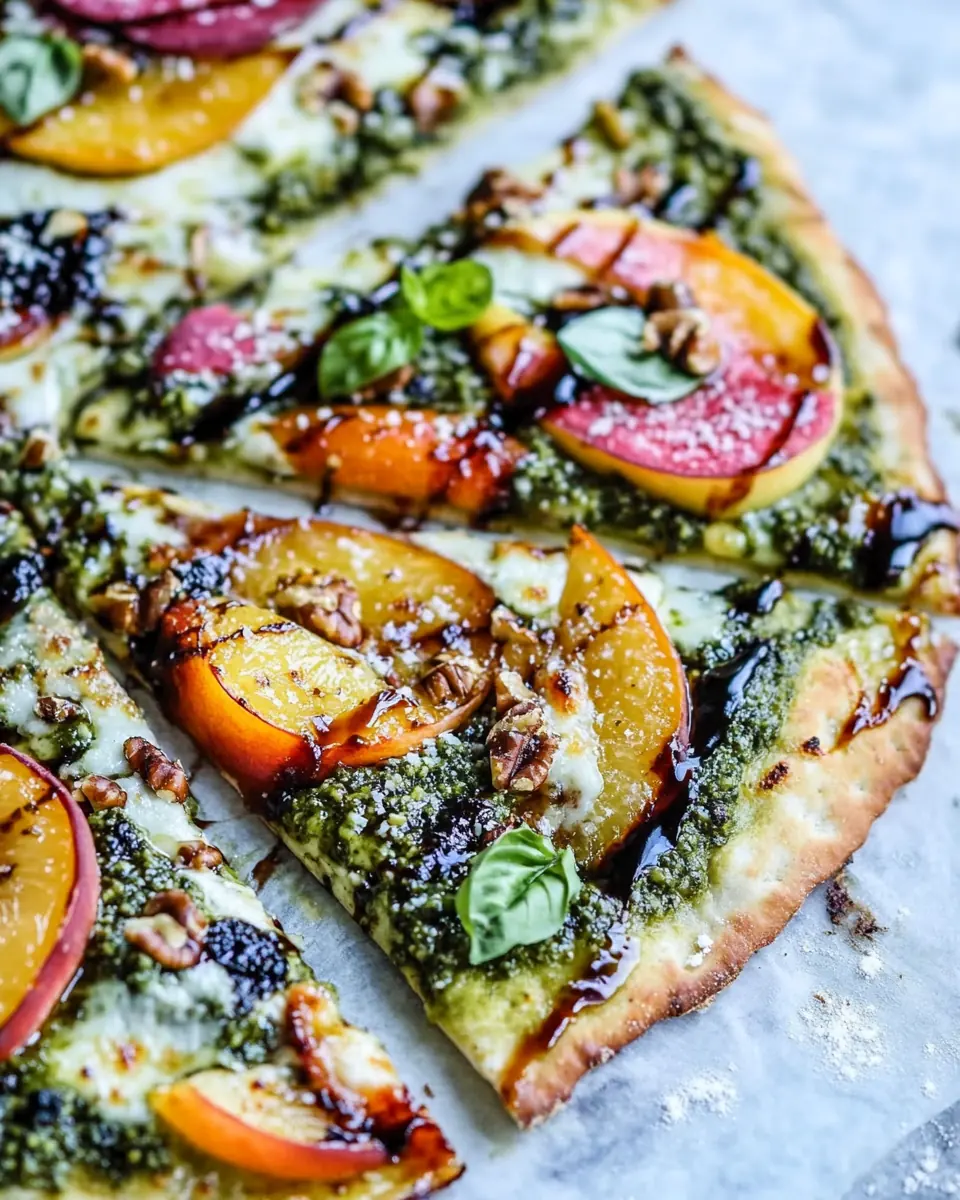
Divide the pesto between the two pizzas.: The aroma of the Toasted Walnut Pesto and Caramelized Nectarine Pizza becomes vibrant now as the pesto spreads, releasing herbal and nutty notes that scent the kitchen. Distribute evenly to ensure each bite has balanced green flavor. Piling pesto too thickly can make the center weigh down and lengthen baking time excessively.
Now add the shredded fontina to both pizzas.: The fontina cheese melts into a silky blanket, bubbling softly and turning pale gold, which provides the creamy backbone for the toppings. Even coverage ensures consistent melt and prevents hot spots. Overloading cheese can smother other flavors and cause excess oiling during bake.
Add the sun-dried tomatoes and then the nectarines.: Placing the sun-dried tomatoes first anchors the fruit and cheese with concentrated tomato flavor, while the warm caramelized nectarines add glossy pockets of sweetness. The contrast sings when balanced; scatter them so each slice gets both sweet and savory. Crowding toppings causes uneven baking and soggy areas.
Sprinkle the blue cheese over then nectarines.: Crumbled gorgonzola or blue cheese creates tangy, salty bursts that brighten the overall profile as it softens and mingles with the melted fontina . These pockets are small flavor explosions, so sprinkle judiciously. Too much can overpower the delicate basil and fruit.
Add the sliced jalapeño if desired.: The fresh jalapeños lend a crisp heat that contrasts with the sweet nectarines and creamy cheeses, and their aroma becomes pronounced as the pizza finishes in the oven. If heat is a concern, remove seeds before slicing to tame intensity. Adding them late prevents them from becoming limp and bitter.
Bake in the preheated oven for 10-15 minutes or until the cheese is melted and gooey.: In the hot oven the cheeses bubble and brown, and the crust finishes to a golden crisp while juices concentrate, giving a satisfyingly warm, aromatic result. Listen for a gentle crackle and look for bubbling edges and lightly bronzed cheese as cues that the pizza is ready. Leaving it much longer risks drying out the fruit and crisping the cheese excessively.
Remove and allow to cool 5 minutes.: Resting for five minutes lets the cheese set just enough to slice cleanly while the flavors marry, and the aroma will deepen into a heady blend of herb, nut, and caramelized fruit. Cutting too soon yields a runny topping and a messier slice, so a brief wait pays off for neat presentation.
Slice and serve with the spicy balsamic drizzle (below): The final drizzle of reduced balsamic vinegar with a touch of sambal oelek and sweetener brightens the pizza with a glossy, tangy finish that ties each component together, adding an elegant sheen and a flavor lift. Drizzle sparingly to avoid overpowering the balanced toppings.
Add the balsamic vinegar, coconut sugar and sambal oelek to a small saucepan and bring to a boil.: As the mixture comes to a boil the kitchen fills with a sweet acidic steam, and you will see it go from thin to slightly viscous as sugars dissolve and flavors meld. This initial heat melds the chili and sweetener into the balsamic vinegar , laying the groundwork for a complex glaze. Keep an eye on it because simmering sugar mixtures can scorch quickly.
Reduce to a very low simmer and cook for 10-15 minutes, until liquid reduces by about half and is slightly syrupy.: The reduction will thicken and darken, giving a glossy syrup that lightly coats the back of a spoon, and the aroma becomes concentrated and tangy sweet with a warm chili undertone. Remove from heat when it reaches a syrupy consistency, because over reducing can make it too sticky or bitter. Stir occasionally to ensure even reduction.
Remove from heat, pour vinegar in a bowl or glass to drizzle over pizza when ready.: Cooling slightly allows the glaze to thicken more and cling to the pizza without running off, producing beautiful ribbons across each slice. The balance of sweet, acid, and spicy is now set; taste and adjust before serving. If it is too thin, let it cool further; if too thick, whisk in a teaspoon of warm water.
Set aside to cool and thicken.: Letting the glaze rest brings the final texture into a spoonable state that will decorate the pizza without saturating the crust, and the scent will mellow into a sophisticated finish. Proper cooling prevents a hot pour that might melt delicate toppings excessively. If you overchill it becomes hard to drizzle, so aim for warm but syrupy.
Serve with the pizza.: Present the slices warm, with the glossy balsamic drizzled sparingly over top to provide a final acidic lift that ties the Toasted Walnut Pesto and Caramelized Nectarine Pizza together. The combined aromas, textures, and temperatures should make each bite memorable and balanced.