Prepare the soba or egg noodles according to the package instructions, which usually take about 5 minutes to cook. Drain the noodles, rinse with cold water, and set them aside in a serving bowl.: The moment you drain the noodles you'll notice their texture and scent, a starchy warmth that feels comforting in your hands, and rinsing them under cool water stops the cooking process and firms their bite, which is essential so they do not go mushy when the hot broth is poured over them. I always time this so the noodles are ready just as the broth finishes, preventing them from sitting and getting gluey. One common mistake is overcooking the noodles , which results in a limp texture that will soak up too much broth and become heavy.
At the same time, bring 1 1/4 cups of water to a boil in a small pot. Add all the aromatics, followed by the shrimp, mushrooms, and nam prik pao. Continue boiling until the shrimp is cooked through. Add the fish sauce and chili powder, then turn off the heat and stir in the lime juice to combine.: After rinsing the noodles you should feel them with your fingers, they should be separate and springy rather than sticky, and placing them into warm bowls helps retain heat when the soup is ladled on. Letting them sit in a serving bowl keeps the meal assembly flowing, making it easy to finish quickly. Avoid letting the noodles sit in water, which can dilute their flavor and cool them excessively.
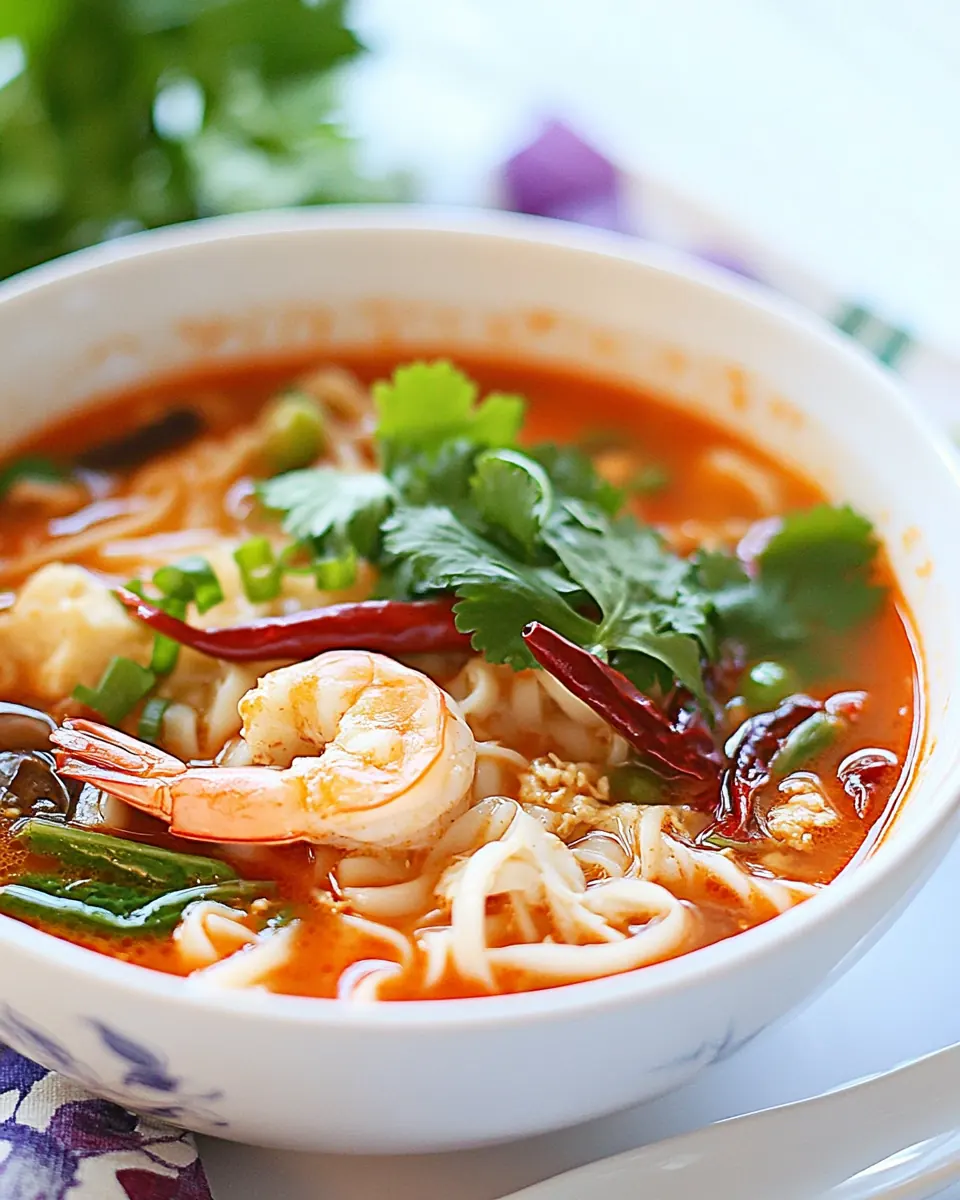
Pour the Tom Yum soup over the noodles and top with cilantro leaves. Serve immediately.: As the water comes to a rolling boil you will hear a clear, lively sound and see tiny bubbles gather before they burst, which indicates vigorous heat that extracts aromatics efficiently. Using the specified amount concentrates the broth so every spoonful is flavorful. A pitfall here is using too large a pot or too much water, which weakens the aromatic intensity and results in a flat broth.
Add all the aromatics, followed by the shrimp, mushrooms, and nam prik pao: Once the water is boiling, slipping in the bruised lemongrass , smashed kaffir lime leaves , and sliced galangal releases a heady perfume, and you will notice the steam carries citrus and herbal notes. Dropping in the shrimp and mushrooms shortly after allows them to cook gently in the flavored liquid, and adding the Nam Prik Pao melts a glossy, smoky streak into the surface that deepens the broth. A typical oversight is adding the shrimp too early, which can lead to an overly firm texture.
Continue boiling until the shrimp is cooked through: You will see the shrimp change from translucent to a firm, opaque pink, and the broth will take on a richer hue as the aromatics and tomato soften, lending body. This visual cue is the most reliable indicator of doneness, and the moment the shrimp looks just cooked, remove the pot from heat to preserve a tender bite. Overcooking is the usual error here, producing rubbery shrimp that detract from the overall experience.
Add the fish sauce and chili powder, then turn off the heat and stir in the lime juice to combine: When you add the fish sauce , the broth takes on a savory roundness, and the chili powder wakes up the tongue with warmth, while stirring in the lime juice off the heat preserves a fresh, sharp citrus top note that brightens every ingredient. Mixing at this stage allows the flavors to marry without cooking away the acidity. A common slip is adding too much fish sauce at once, so I recommend tasting and adjusting gradually.
Pour the Tom Yum soup over the noodles and top with cilantro leaves: As you ladle the steaming broth over the noodles , you will see them loosen and glisten, absorbing the aromatic liquid and making each strand lively and fragrant, and scattering the cilantro leaves adds a bright, herbal finish that lifts the bowl visually and aromatically. Serve immediately so the textures remain distinct and the soup is enjoyed at its aromatic peak. Leaving the assembled bowl to sit will make the noodles swell and the herbs wilt excessively, which changes the intended texture.
Serve immediately: The first spoonful should deliver a balance of heat, sour, and savory, with warm broth, tender shrimp , and springy noodles . Eating right away ensures the components are at their best, and you can adjust seasoning at the table if needed. Waiting too long for serving will diminish the lively citrus aroma and may alter the texture of the shrimp and noodles .