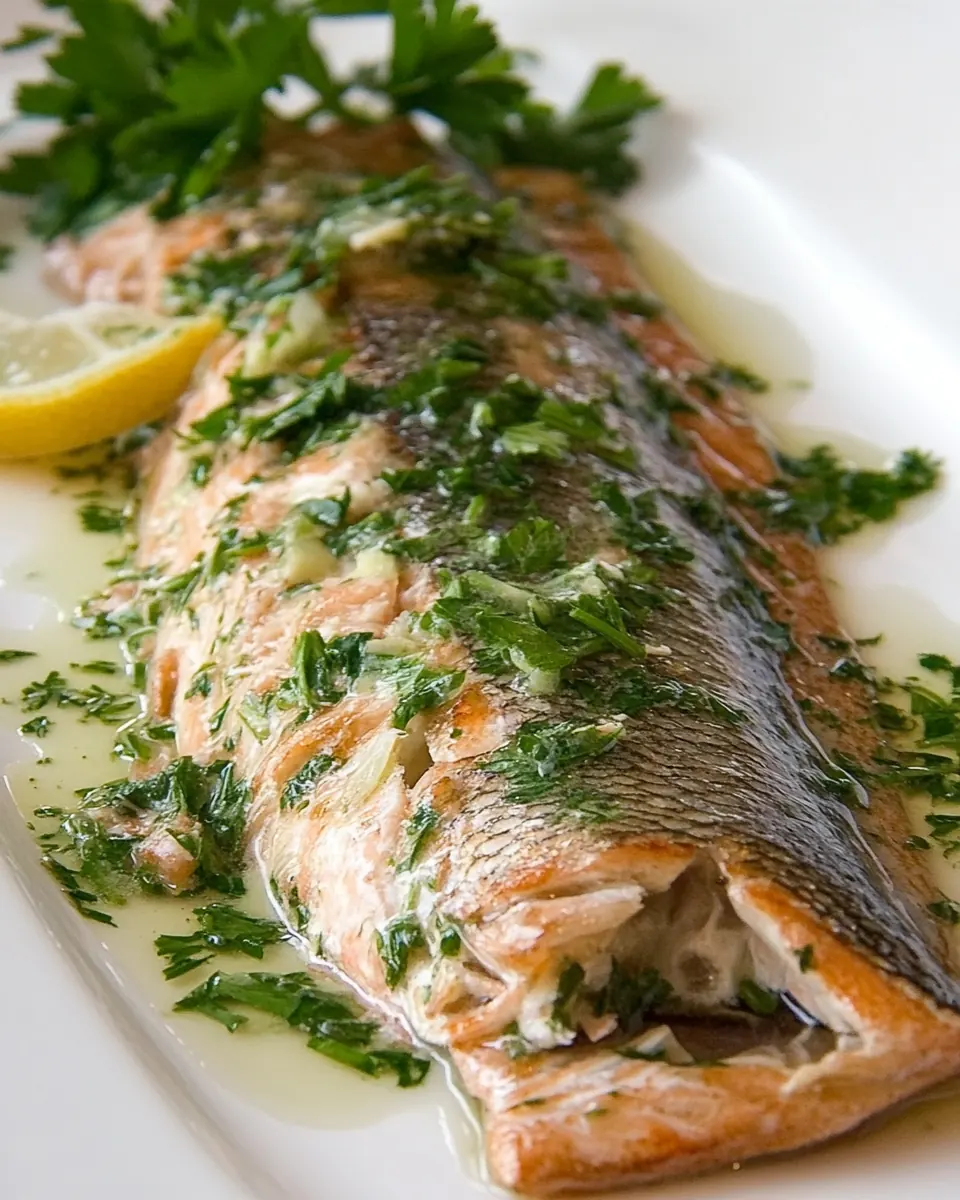
Start by filleting your trout.: The scent of fresh trout is clean and slightly sweet, and filleting it lets you control thickness for even cooking. Use a sharp knife and feel for the backbone as you glide the blade, keeping the motion smooth to avoid tearing the flesh. A common mistake is sawing back and forth which shreds the meat, so maintain steady, confident strokes. If the fish feels too soft, chill it briefly to firm the flesh, that will make cleaner cuts. Proper filleting ensures even cooking and a pleasing presentation.
Combine 4 Tbsp of butter with 2 Tbsp lemon juice and 3 Tbsp chopped parsley. Sprinkle with salt and pepper. Mash it all together with the fork.: The aroma of citrus hitting softened butter is instantly bright, and the chopped parsley releases tiny herb fragrances as you mix. Use a fork to mash until the texture is spreadable but still a bit rustic, you should see flecks of green throughout. This compound butter melts into the hot trout , creating glossy, flavored fat that carries taste across each bite. Avoid overbeating which warms the butter too much, making it greasy rather than silky. Taste and adjust salt, since the right balance will make the lemon sing rather than overwhelm.
Sprinkle both sides of the fish fillet with salt & pepper.: You will notice a slight shimmer as salt draws moisture to the surface, which helps the skin crisp up when it hits the pan. Season evenly and gently press the salt into the flesh so it adheres. Over salting is an easy error, so season incrementally and remember the compound butter will add salt too. Proper seasoning before cooking builds a foundation of flavor that penetrates the fish as it cooks.
Drizzle the flesh side with olive oil & cut each fillet in half.: The olive oil helps prevent sticking and encourages browning, and cutting fillets into portions ensures quick, even cooking. Brush or drizzle a thin film across the flesh so it glistens, you should see a uniform sheen. If the oil pools, blot a little to avoid spatter. A common slip up is handling the fillets too much after oiling, which can roughen the surface and prevent a good sear, so keep movements minimal and deliberate.
Preheat non-stick skillet to medium high heat. Once it's hot, add 3 Tbsp of olive oil. Cook trout with the skin side down first for 3-4 min until browned and crisp. Carefully turn each fillet over and continue cooking until just cooked through, about 3 more minutes.: You should hear an immediate sizzle when the fillets hit the pan, and a fragrant toasty note will rise as the skin browns. The visual cue is a deepening golden color at the edges and a steadily opaque change through the flesh. Resist flipping too soon, because the skin needs time to set to avoid sticking. When turning, use a thin spatula and gentle motion to preserve the fillet shape. Overcooking is common here, which dries the fish, so pull it off when the flesh flakes easily with a fork but still looks moist at the center.
Remove finished trout from the skillet & top each hot fillet with 1 Tbsp of the Lemon-Parsley Butter.: The butter will melt into small rivulets over the warm surface, producing a glossy finish and a burst of herb lemon aroma. Spoon it so it pools over the flaked flesh, and give it a moment to soften the exterior without becoming greasy. If the butter melts too quickly and separates, the pan was too hot, so plate promptly and let residual heat finish the melting. Serving immediately preserves the contrast between crisp skin and silky, herb infused topping.