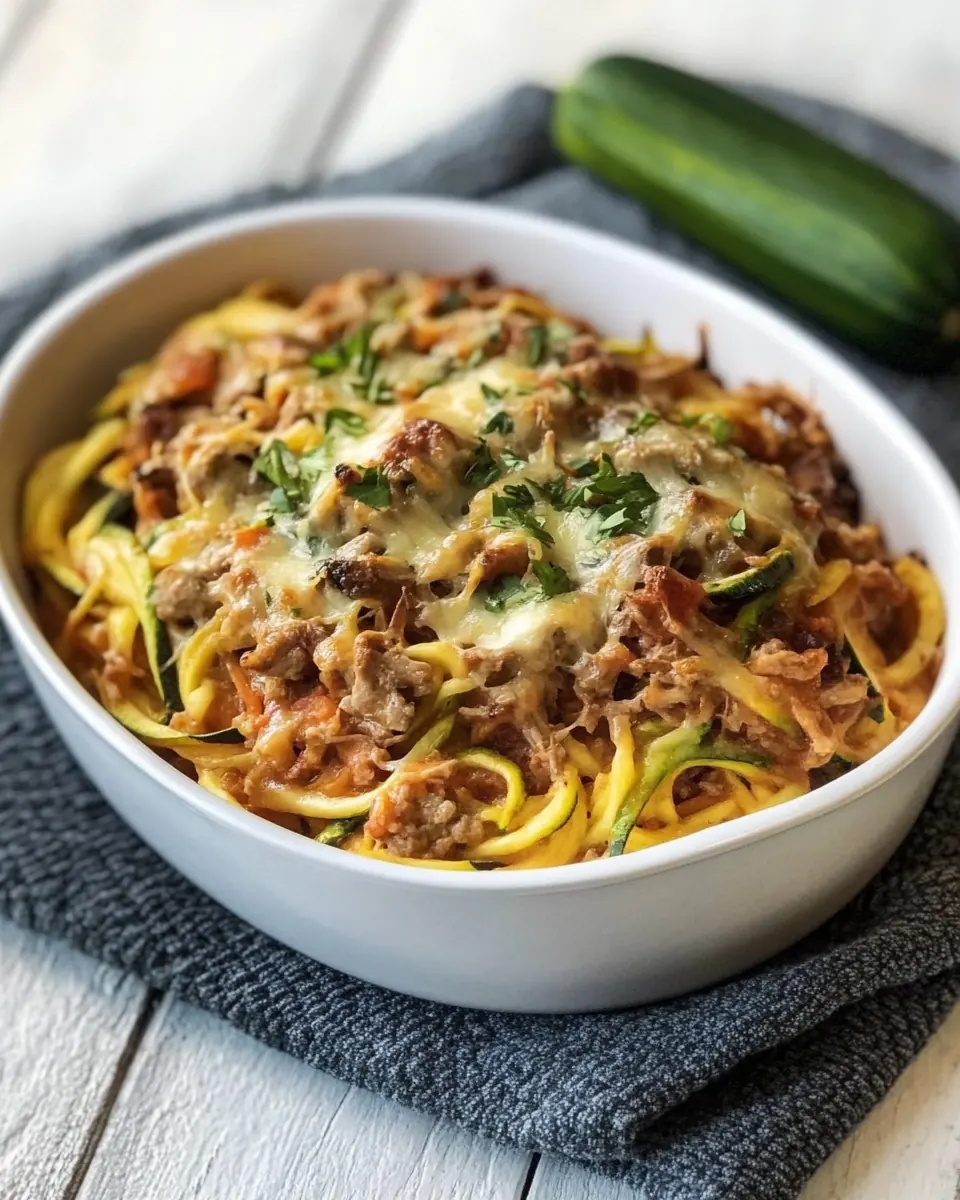
Preheat oven to 400 degrees, spray a 9 x 13 inch pan with nonstick spray. Spread the spiralized zucchini in an even layer in the casserole dish. Set aside.: When you step into the kitchen, the first thing you will notice is the faint warmth of the oven coming to life, which sets the stage for that bubbling finish. Preheating to 400 degrees ensures the cheddar cheese melts quickly and forms a golden top while preventing the zucchini from releasing too much water into the dish. The silent but steady hum of the oven means it is reaching temperature, and using nonstick spray on a 9 x 13 inch pan keeps the bake from sticking, making serving effortless. A common mistake is skipping preheating, which can lead to uneven cooking and a limp topping, so allow the oven to fully reach temperature before you slide the casserole in.
In a large skillet, heat the oil. Once hot, add the onion and cook until soft, about 2 minutes. Add the tuna and tomato paste, cook for about 1 more minute. Stir in the diced tomatoes, milk, thyme, salt, and pepper. Bring to a simmer and stir in the parmesan until melted.: The feel of the long zucchini strands is delicate and fresh, and arranging them in a single even layer helps each noodle heat consistently under the sauce. Visually, an even bed looks tidy and ensures every bite has a similar balance of vegetable to topping. Press gently to compact slightly, but do not overcrowd the pan, as that can trap moisture. A frequent error is piling the noodles too high which prevents proper evaporation during baking, so take a moment to spread them out evenly for the best texture.
Pour the tuna mix over the zucchini noodles. Sprinkle with cheddar cheese on top. Bake, uncovered, for 15 minutes or until cheese is melted and bubbly.: As the oil warms, you get a glossy shimmer and a faint herbaceous scent if using olive oil , which signals readiness. Warming the oil gently prevents the onion from sticking and encourages even softening. You want the skillet hot enough to make the onion sizzle lightly when it hits the pan, but not so hot that it browns immediately, because that would change the flavor profile. A typical mistake is overheating the oil, which can scorch the aromatics; keep the heat at medium to moderate to coax sweetness from the onion .
Once hot, add the onion and cook until soft, about 2 minutes: The onion will release a sweet steam and soften quickly, turning translucent which indicates it has given up its sharp edge. You'll hear a soft sizzle that tells you the moisture is evaporating and the sugars are blooming. Cook just until tender to preserve a gentle bite and avoid caramelization here because you want a light base for the sauce. Overcooking is the main pitfall, leading to a deeper, browned flavor that may compete with the other components.
Add the tuna and tomato paste, cook for about 1 more minute: When you fold in the flaked tuna , it warms and releases a savory, ocean-kissed aroma that blends with the concentrated, slightly sweet scent of the tomato paste . Cooking them together for a minute helps the paste lose its raw tin and integrate into the protein, creating a cohesive core for the sauce. Expect a slight hissing sound as the paste cooks into the oil and juices, which indicates flavors are melding. Avoid overcooking here because extended heat can dry out the tuna and make the texture chalky.
Stir in the diced tomatoes, milk, thyme, salt, and pepper: Adding the drained diced tomatoes introduces bright, juicy notes while the milk softens acidity and produces a gentle creaminess. The dried thyme gives a subtle herbal lift, and the salt and black pepper bring the whole blend into balance. As it simmers, you will notice a comforting meld of scents and a slightly thickening sauce; gentle bubbling is the visual cue that flavors are marrying. A common mistake at this stage is turning the heat too high, which can cause the milk to curdle, so keep the flame at low to moderate and stir frequently.
Bring to a simmer and stir in the parmesan until melted: The sauce will develop a gentle, rhythmic simmer and release an inviting aroma that is richer and more rounded. As you stir in the grated parmesan cheese , it dissolves into the warm liquid and creates silkiness that helps the sauce cling to the noodles. The sound is a slow, even bubble, and the visual cue is a cohesive sheen rather than separated liquids. If you rush this step or add the cheese to overly high heat, it may clump, so maintain a low simmer and stir continuously to achieve a smooth texture.
Pour the tuna mix over the zucchini noodles: When you ladle the sauce across the bed of spiralized zucchini , you will see the noodles take on a glossy coat, promising flavorful bites throughout. The visual of the sauce cascading and pooling slightly between strands is reassuring, it means each noodle will carry taste without getting waterlogged. Pour evenly to maintain consistent flavor distribution. A frequent misstep is piling the sauce in one spot, which leads to uneven flavor and texture across the casserole.
Sprinkle with cheddar cheese on top: The shredded cheddar cheese will form a blanket that melts into gooeyness and then browns to a golden finish in the oven. You will hear a faint sizzle as the residual heat settles and see the cheese begin to meld into the sauce before baking. Even coverage helps the top bubble uniformly and creates that irresistible crust. Be cautious not to overload with cheese, which can dominate the delicate balance of the dish.
Bake, uncovered, for 15 minutes or until cheese is melted and bubbly: The oven transforms the pan with steady heat, coaxing the cheese to a bubbling, lightly browned state and warming the zucchini just enough to be tender. Look for visual signs like small golden spots on the cheddar cheese and gentle bubbling around the edges as confirmation. The aroma will become richer and slightly toasted, indicating readiness. Overbaking risks drying the casserole and making the zucchini limp, so remove it as soon as the top is bubbly and golden.