Preheat oven to 350°F. Grease and flour two 9-inch round cake pans.: You will smell a faint warmth as the oven comes up to temperature and the pans will feel evenly warm to the touch when ready, which helps the batter start baking uniformly. Greasing and flouring creates a thin release layer so the cake lifts from the pan without tearing, and you can test it by tapping the pan to ensure the coating is even. A common mistake is skipping the flour step after greasing, which can cause sticking, or using too much grease, which creates greasy edges. If your oven runs hot, use an oven thermometer to confirm the actual temperature, because a hotter oven browns the exterior too quickly and leaves the center underbaked.
In a large mixing bowl, cream together the sugar and butter until light and fluffy. Beat in the eggs one at a time, then stir in vanilla extract.: You should notice the texture change as the butter and granulated sugar become paler and aerated, almost like whipped cream, and the sound of the mixer will become smoother and quieter as air is incorporated. Adding the eggs one at a time maintains an emulsion so the batter stays smooth rather than separating, and stirring in the vanilla brings fragrant warmth. If you rush and add eggs too quickly, the mixture can look curdled, which is often fixed by mixing slowly and scraping the bowl to re emulsify. Be careful not to overbeat after adding flour , since that can tighten the crumb.
Combine flour, baking powder, and salt in a separate bowl. Gradually add to the creamed mixture alternately with the flour mix and the milk, starting and ending with the flour mixture.: You will see the batter return to a thicker, ribbon like texture as you fold in the dry flour , and the milk loosens the mixture into a glossy, pourable batter. Alternating prevents the batter from becoming too stiff and ensures even distribution of the leavening. The batter should be smooth and homogenous without streaks of dry flour . A typical error is dumping all the liquid in at once, which can separate the batter; instead, add gradually and scrape the bowl between additions to maintain an even mix.
Divide the batter evenly between the prepared pans. Bake for 30 to 35 minutes, or until a toothpick inserted into the center comes out clean. Allow the cakes to cool in the pans for 10 minutes, then transfer to wire racks to cool completely.: As the cake bakes, the kitchen will fill with a warm, sweet aroma and the tops will take on a pale golden tone. The cakes should spring back slightly when touched and the toothpick test should confirm doneness, ensuring a tender but fully set crumb. Letting them rest in the pans for a short period helps the structure to stabilize so the layers release cleanly. A common pitfall is removing them immediately while too hot, which can cause the layers to crack, so be patient and use the rack to cool completely before frosting.
For the frosting, beat together the cream cheese and butter until smooth. Gradually beat in powdered sugar and vanilla extract until the frosting is fluffy. Fold in the strawberry preserves.: The frosting will become glossy and cloud like as you beat, with a subtle tang from the cream cheese balancing the sweetness of the powdered sugar. When you fold in the strawberry preserves , you should see swirls of pink, and the aroma will gain a bright, fruity note. Overbeating can make the frosting too loose, and adding sugar too fast leads to a grainy texture, so add the sugar in batches and stop as soon as the frosting holds soft peaks. If the frosting looks runny after adding preserves, chill briefly to firm up before spreading.
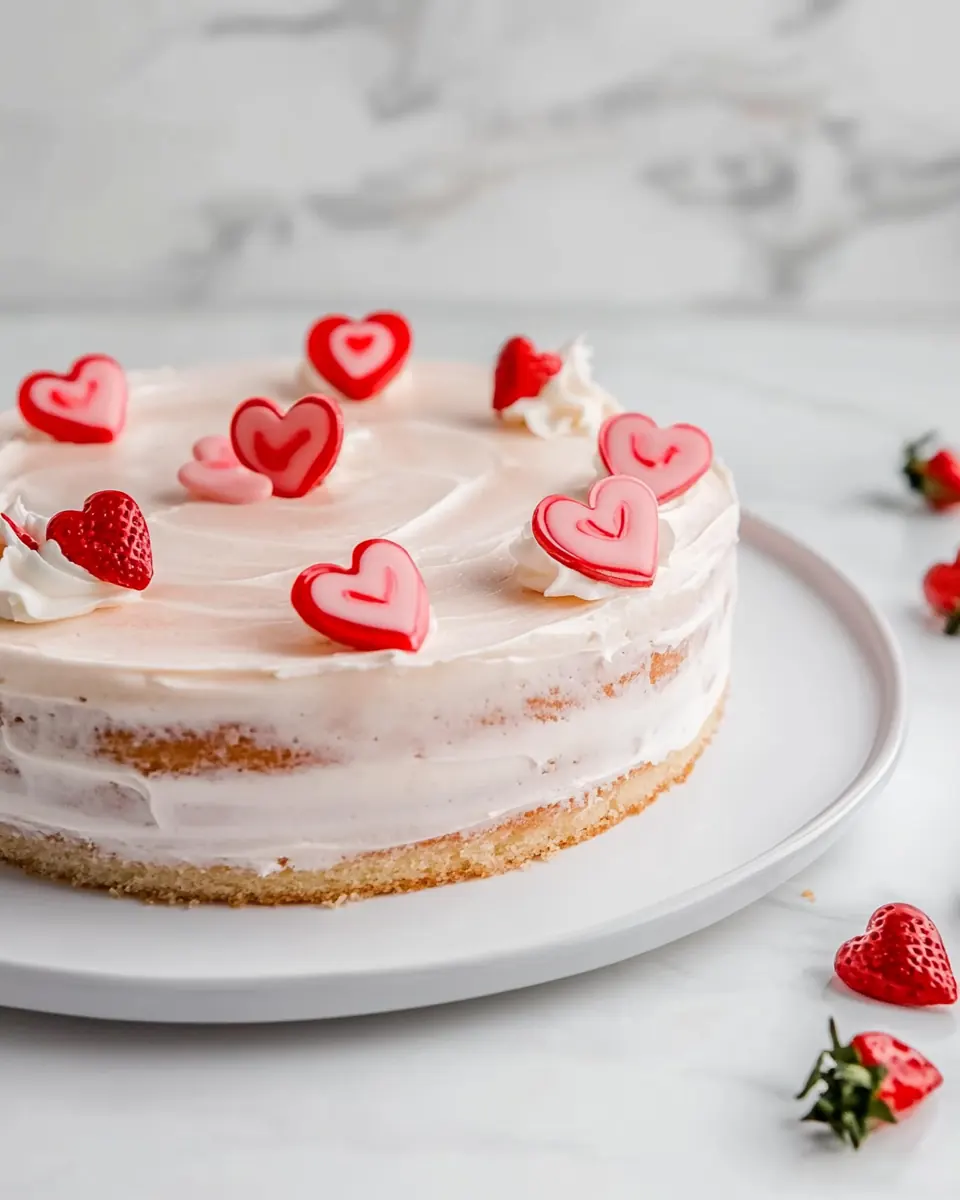
Place one cake layer on a serving plate. Spread with a layer of frosting. Top with the second cake layer and spread frosting over the top and sides of the cake. Garnish with fresh strawberries.: When assembling, the cake should feel stable under your hands and the frosting will spread with a smooth, satiny finish if the layers are completely cool. The aroma of fresh strawberries and the sheen of the frosting make the cake visually inviting. If your layers are slightly domed, level them with a serrated knife for neat stacking. A common mistake is frosting warm cakes, which melts the frosting and makes it slide; always ensure the cake is fully cool before applying frosting.