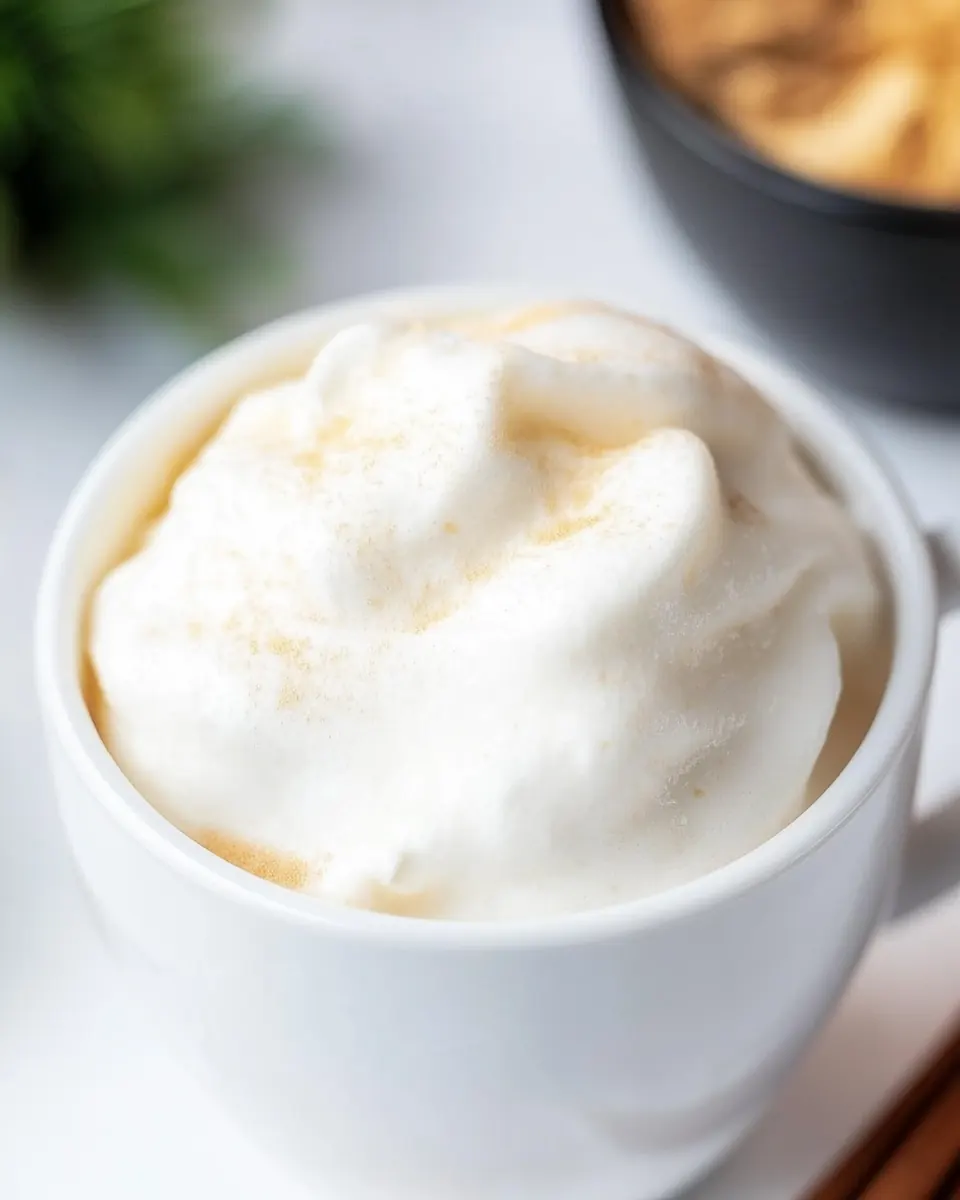
Pour ingredients into a glass measuring cup and froth using a hand frother until you reach the desired thickness. Top iced coffee with cold foam.: You will first notice a gentle increase in volume, and soon the mixture will change from glossy to satin, signaling the right texture; the sound of the frother becomes steadier and slightly higher pitched. This step matters because it sets the foam structure that will rest on your coffee, giving a creamy top without collapsing. A common mistake is frothing too long, which creates overly stiff peaks that do not pour smoothly; stop when the foam is pillowy and holds soft peaks. Visually look for small, uniform bubbles and a sheen on the surface. If the foam seems too thin, try a slightly longer frothing burst rather than continuous whipping, letting it settle briefly and then finishing with short pulses. Smell will be subtly sweet and dairy forward, without a cooked scent which indicates overheating. If the frother drags or slows, pause and gently stir to redistribute the liquid, then resume in short bursts. Keep the frother just below the surface initially, then lower it as foam forms to incorporate air gradually, ensuring even, stable bubbles. The temperature should remain cool; if the container feels warm, stop and chill briefly. If your foam separates, it may be due to over dilution from a watery syrup or warm milk, so next time use cooler ingredients. When the foam barely holds a peak and has a creamy, velvety look, you are ready to top the coffee. This technique preserves the sweet vanilla aroma and yields an elegant finish that sits softly atop your iced drink.
Top iced coffee with cold foam: As you spoon or pour the foam, notice how it floats and forms a gentle cap over the surface, often creating a clear line between coffee and cream; that visual contrast is what makes the drink feel made at a cafe. This step is key because the foam should remain separate at first, gradually melding with the coffee as you sip, giving layered flavor. A common problem is dumping the foam too forcefully which causes it to sink; instead, lower the measuring cup close to the glass and let the foam flow slowly. The initial scent will be sweet vanilla, and you may hear a soft settling sound as the foam meets the coffee. If the foam slides off or disperses immediately, it was likely too thin or the coffee was very warm; use colder coffee and slightly thicker foam next time. For a pretty finish, let the foam rest for a moment so the surface smooths, then drizzle a tiny amount of syrup if desired. The mouthfeel should be creamy up top, then reveal the chilled, brewed coffee beneath. Resist stirring vigorously if you want the layered experience, though a gentle fold with a straw blends everything beautifully. I like to observe the tiny beads forming where the foam meets the glass, as that indicates the right balance of air and fat.