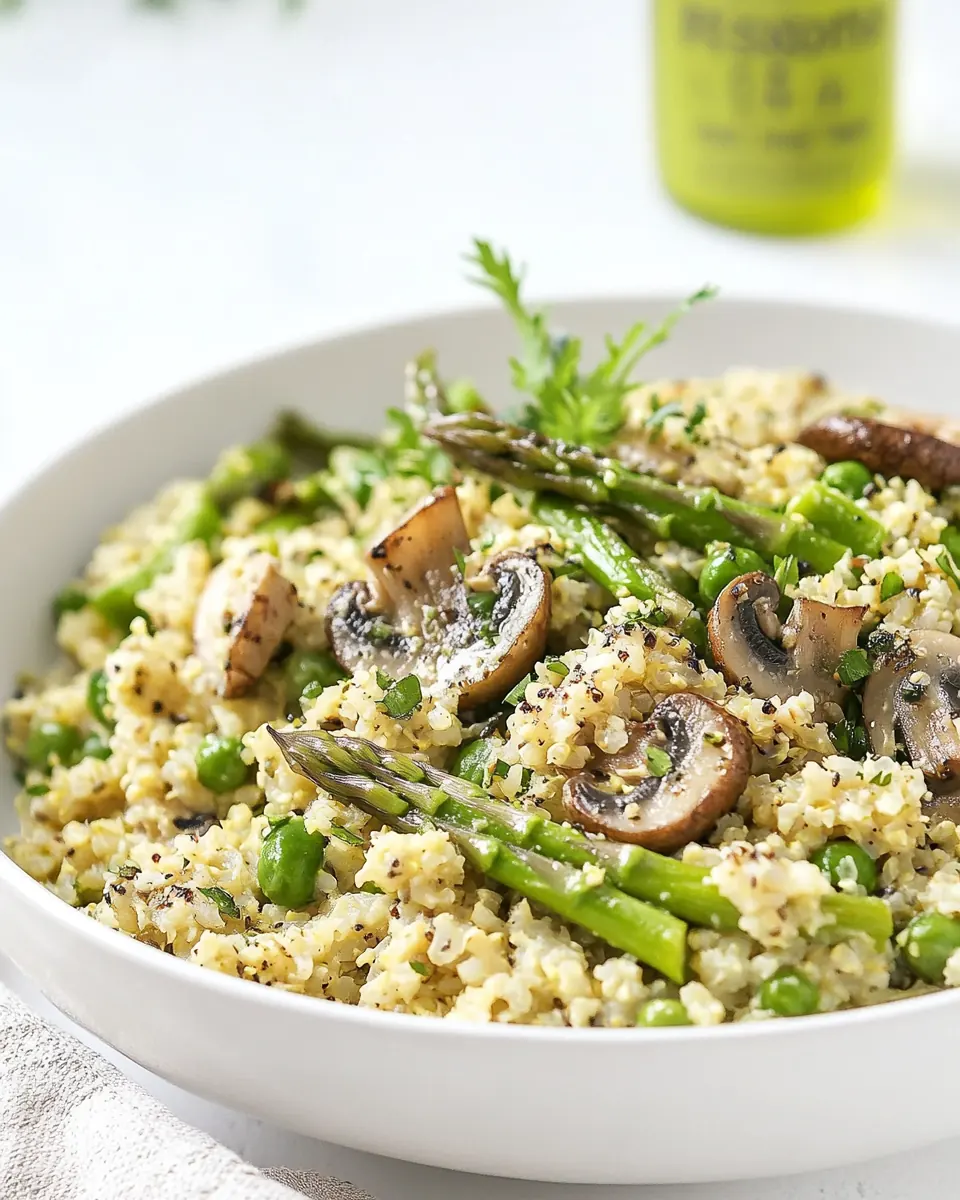
Heat the olive oil in a large skillet or Dutch oven over medium heat. Sauté the onion until it starts to soften, about 5 minutes, then add in the mushrooms and asparagus and cook for 5 more minutes.: Warmth should be noticeable when you hover your hand above the pan and the oil develops a subtle shimmer, not smoke. As the oil heats it carries aromas and ensures the onion and mushrooms brown evenly. You will hear a gentle sizzle when vegetables meet the surface, and that sound tells you the pan is hot enough. If the oil smokes, lower the heat immediately to avoid bitter, burnt flavors. A common misstep is cranking the heat to speed things up, which often results in uneven browning and dry edges rather than a rich, fond.
If you haven't purchased prepared cauliflower rice for convenience, this would be a good time to prepare the rice while the vegetables are sautéing. Simply break up a head of cauliflower into florets and then pulse them in a food processor, or grate them with a box grater, to create a rice-like texture.: As the onion sweats it releases sweet, aromatic vapors and the pan will smell lightly caramelized. When you add the mushrooms , listen for a louder sizzle and watch their edges darken, signaling that their moisture is evaporating and flavor is concentrating. Introducing the asparagus at this point keeps its color vibrant and texture tender crisp. If you crowd the pan, everything will steam rather than brown, losing depth. Stir occasionally to promote even contact with the surface and tilt the pan to redistribute oil if one area seems dry.
Add in the garlic, balsamic vinegar, and thyme and sauté for another minute. Add in the prepared cauliflower rice, coconut milk, and 1 teaspoon of salt, then stir well.: During this prep you should notice the cauliflower taking on a fluffy, granular consistency that will mimic rice. The smell is fresh and green, and handling the florets gives a tactile sense of readiness once pieces are roughly the size of grains. Avoid over processing into a puree, which makes the final texture mushy. A common error is leaving large chunks that wont soften evenly, so pulse in short bursts and check frequently for uniformity.
Bring the coconut milk to a simmer and cover the pot with a lid. Lower the heat and let the vegetables cook until the cauliflower rice is tender, about 10 minutes. Remove the lid. If any excess liquid remains at the bottom of the pan, you can raise the heat to simmer it off. Adjust any seasoning to taste, adding more salt if desired.: Right after adding the garlic , the skillet will bloom with pungent, garlicky perfume, but it burns quickly so keep it moving. The splash of balsamic vinegar will hiss and evaporate slightly, lending a bright, sweet acidity that lifts the pan. As you fold in the cauliflower rice and coconut milk , you will see the mixture go from separate elements into a unified pot with gentle gloss. Stir until the coconut milk coats each grain and the salt dissolves. Over stirring can break the rice down excessively, so be deliberate. A frequent misstep here is adding too much liquid too fast which prevents the rice from absorbing properly.
Serve warm with sliced green onions and black pepper on top. Leftovers can be stored in an airtight container in the fridge for up to 4 days.: When the pot reaches a simmer you will see small bubbles around the edges and gentle steam rising, carrying a complex scent of coconut and roasted vegetables. Lowering the heat allows the cauliflower rice to soften gently and soak up flavor without breaking apart. Peek occasionally to test tenderness; the grains should be yielding but still hold shape. If liquid pools, return to medium heat briefly so it reduces and the texture firms to a risotto like consistency. Tasting is crucial here because salt levels change as the liquid concentrates. A common pitfall is assuming time alone will fix texture, when in fact controlling the simmer and reduction is what creates the right body.
Serve warm with sliced green onions and black pepper on top Leftovers can be stored in an airtight container in the fridge for up to 4 days: As you plate, notice the steam lifting and the way the glossy coconut restrained by reduction clings to the grains and vegetables. The chopped green onions add a lively, fresh snap and the freshly ground black pepper gives a warm finish. For leftovers the texture will tighten slightly, so you may refresh it with a splash of water or a small spoon of coconut milk when reheating. A typical mistake is overheating leftovers which makes the cauliflower mushy, so reheat gently over low heat stirring frequently.