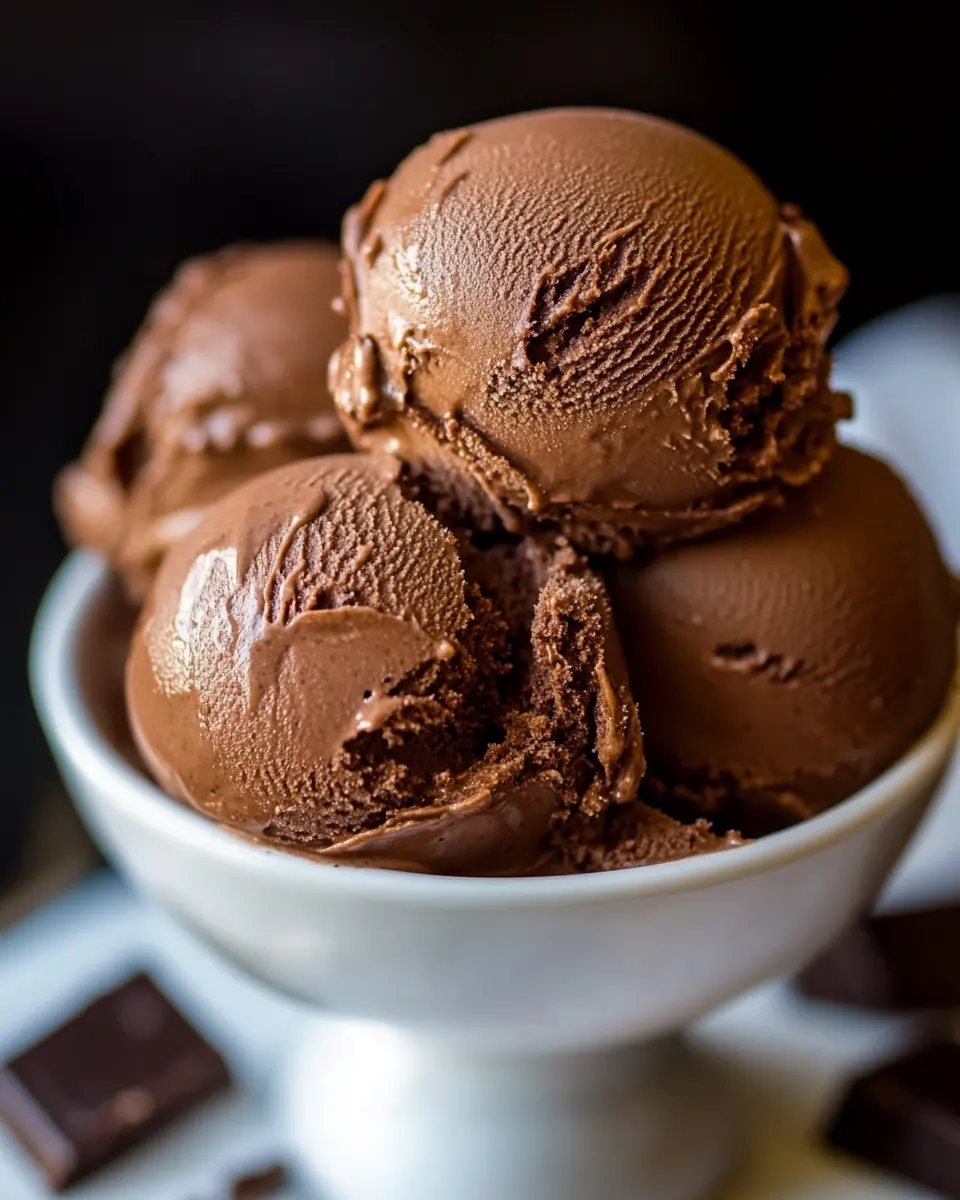
To make vegan chocolate ice cream, first shake the can of coconut milk well. Whisk all ingredients for about a minute, until the cocoa powder dissolves. If you have an ice cream maker, simply pour the mixture into your chilled machine and process according to manufacturer's instructions. Enjoy as soft serve, or freeze the container about fifteen minutes for a firmer ice cream texture. If you do not own an ice cream machine, pour the chocolate mixture into ice cube trays. Freeze, then thaw just enough for a food processor or blender to handle the chocolate ice cubes. Blend until thick and creamy.: You will feel the weight shift when the cream has loosened, and the sound of the liquid moving inside is a quick cue that the solids and liquids are ready to blend. This step matters because the separated cream contains much of the fat that gives the ice cream its silkiness, and if you don’t reincorporate it the mixture can be uneven. A common mistake is pouring from a can with the thick cream stuck to one side, which leads to patches of overly fatty texture and other parts that are thin. If the can is very cold and the cream is solid, I warm it briefly in a bowl of warm water to help everything combine, but don’t make it hot, or you risk losing some of the structure that helps with freezing.
Whisk all ingredients for about a minute, until the cocoa powder dissolves: As you whisk, watch for the glossy sheen that tells you the cocoa has integrated, and inhale the deep chocolate aroma that becomes more pronounced as the powders hydrate. The action of whisking introduces tiny air bubbles that lighten the mouthfeel, aiding churn performance. If you under whisk, lumps of cocoa powder can persist, creating gritty bits instead of a smooth ribbon of chocolate; over whisking is less risky here but can trap too much air, changing the density. Use a fine mesh sieve to sift the cocoa powder before mixing if you often struggle with clumps, and scrape the bowl to ensure no dry pockets remain.
If you have an ice cream maker, simply pour the mixture into your chilled machine and process according to manufacturer's instructions: When you pour into a machine that is already cold, you will hear a steady churn and soon notice the mixture thickening and cooling, the sound shifting from liquid swish to a denser, heavier churn. This mechanical agitation is what creates small ice crystals and an airy structure, producing that familiar smooth scoopable texture. Start the machine cold, and follow the recommended processing time to avoid over churning which can lead to a grainy or icy finish. A frequent error is adding a warm base to a machine that has not fully chilled, which stresses the freezer bowl and yields slower set and larger crystals. Stop churning when the ice cream resembles soft serve, because it will firm up in the freezer.
Enjoy as soft serve, or freeze the container about fifteen minutes for a firmer ice cream texture: The first spoonful has a glossy surface with a texture that yields easily, releasing cocoa scent and creamy mouthfeel. Short additional freezing firms the structure, reducing the melt rate while keeping it easy to scoop. If you leave it too long, the ice cream can become rock hard; plan for about fifteen minutes for a slightly denser scoop, and remember residual heat from your scooping spoon will help shape perfect balls. Avoid returning the container to the freezer repeatedly without covering it, as freezer burn and ice crystal formation will degrade flavor and mouthfeel.
If you do not own an ice cream machine, pour the chocolate mixture into ice cube trays: Fill the trays evenly so the frozen cubes set uniformly, and you will notice the surface go from shiny to matte as the water in the mix crystallizes. Freezing in small portions speeds the solidifying process, which makes the later blending step easier and creates a smoother final texture because the processor works with many small frozen pieces instead of one large slab. A mistake people make is using oversized molds that take too long to freeze, producing uneven crystals. I tap the tray gently on the counter to remove air pockets before freezing for an even set.
Freeze, then thaw just enough for a food processor or blender to handle the chocolate ice cubes: When the cubes become workable but still cold, they will rattle slightly in the bowl and feel firm to the touch. This brief thaw softens the edges so the blades can shear them into a creamy mass without overheating the mixture. The key is timing, because if you wait too long the cubes will liquefy and you lose that desirable churned texture; if you try to blitz them rock solid you risk straining your motor. A helpful trick is to let them sit at room temperature for about two minutes before processing and to add a splash of the reserved nondairy milk if the blades struggle.
Blend until thick and creamy: As the processor works, listen for a change from harsh grinding to a smooth, steady hum, and watch the mixture transform into glossy swirls that cling to the blade. The smell will sharpen, and you will know it is done when the texture resembles soft serve and the surface forms peaks that slowly fold back. This emulsification makes the ice cream feel rich without dairy because the tiny fat droplets coat your palate. Over blending can warm the mixture and make it too thin, so pulse toward the end to maintain body. One common error is blending too long at high speed, which can create a runny consistency that will freeze too hard later.