Preheat oven to 350 degrees Fahrenheit.: The moment you set the oven temperature you begin controlling the environment where the filling will set. You should notice the oven warming and, after a few minutes, a steady heat that will encourage even baking. A reliable oven thermometer helps you avoid an oven running hot which can cause the edges to set too quickly while the center stays unset. A common mistake is not preheating long enough, which leads to an uneven bake.
Press crust of choice into a pan (if using a crust), and set aside.: Working the crust into the pan creates a sturdy base that crisps at the edges and supports the filling. You will feel the dough give way as you press it, and visually the edges should form a neat rim. If using a store bought crust, press around the bottom and crimp the edges for a uniform look. Avoid overworking the crust, which can make it tough; chill briefly if it becomes too warm.
If coconut oil is not already in liquid form, gently warm it up until melted.: Melted coconut oil should be warm to the touch, not hot, so it blends smoothly with the tofu. You'll see the oil transition from solid white to clear liquid, and a faint coconut scent will rise. Too hot oil can cook the tofu when mixed, so warm gently and allow to cool slightly before combining. A frequent error is overheating, which can separate fats in the filling.
Add tofu, sugar, oil, vanilla, and salt to a food processor or blender. Then blend to achieve a thick and creamy filling.: As the blades work, the mixture will become silkier and emit a subtle sweetness and coconut aroma. Blend until smooth and thick, stopping to scrape the sides so no pockets of tofu remain. The texture should be glossy and cohesive. If you underblend, the filling can be grainy; if you overblend at high speed for too long it may warm excessively, affecting set.
Stir in the shredded coconut by hand.: Folding in the shredded coconut preserves texture, giving intermittent chewy bites throughout the custard. Use a spatula and gentle strokes so the coconut disperses evenly without overworking the mixture. You'll notice strands distributed through the filling, which is the right visual cue. Stirring too vigorously can break down coconut pieces and change mouthfeel, so be deliberate.
Pour mixture into the prepared pie crust or a greased pie pan, and use a spatula to smooth the top.: As you transfer the filling, it should glide and settle, creating a glossy surface. The spatula is for smoothing minor peaks so the pie bakes evenly and looks inviting. Watch for air pockets and gently press them out to avoid holes. A common oversight is not smoothing enough which results in uneven browning.
Bake on the center rack of the oven for 30 minutes. Meanwhile, prepare the optional coconut whipped cream.: During baking you will see the filling set from the edges inward and the surface may develop a faint golden hue. A slight jiggle at the center is expected, the filling will firm while cooling. Preparing whipped cream while it bakes makes efficient use of time. Opening the oven repeatedly will drop temperature, so avoid unnecessary peeks which can extend baking time.
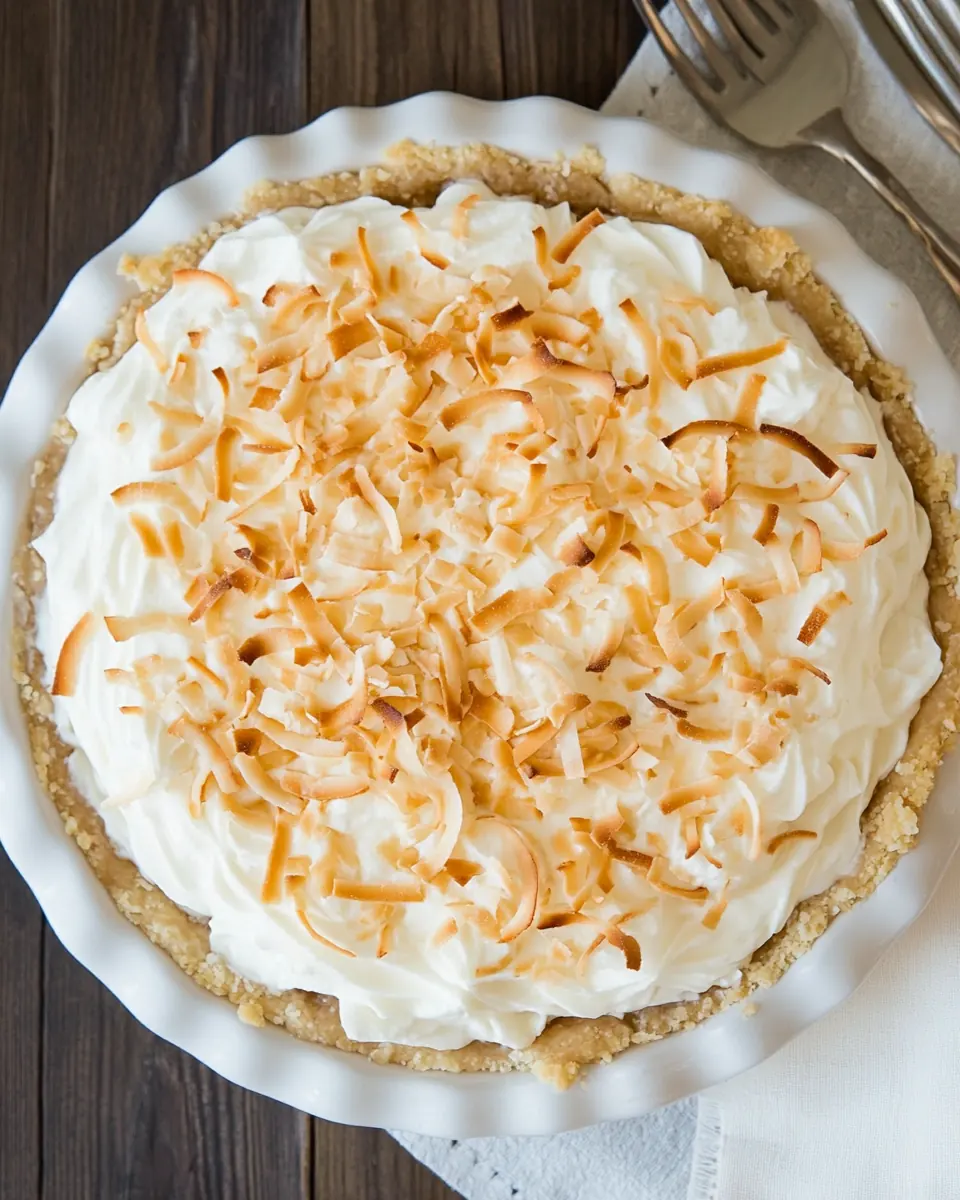
If you want to garnish your vegan coconut pie with toasted coconut, simply heat the coconut flakes in a skillet over medium heat for about 5 minutes.: Toasting brings a nutty, caramel like aroma and a golden color to the flakes, signaling they are ready. Shake the pan and stir frequently to ensure even toasting and watch closely because they can go from golden to burnt very quickly. Use a dry skillet and remove the flakes as soon as they color to prevent bitterness; a common mistake is leaving them unattended.
Remove the pie from the oven, and let cool. Top with coconut whipped cream and toasted coconut if desired.: Cooling is essential so the filling finishes setting and you can slice clean pieces. As it cools, steam will escape and the scent of baked coconut will settle into the pie. Apply whipped cream only when the pie is cool to avoid it melting. Rushing to cut while hot can cause the pie to be loose and messy, so be patient for the best presentation.
View Nutrition Facts: After the pie rests and cools, you can review the nutrition to understand portion sizes and dietary impact. I often calculate this when planning a gathering so guests with restrictions know what to expect. Misreading portion cues can lead to serving slices that are too large or small, so use the yield to guide your slicing.