Move an oven rack to the middle position and preheat oven to 400 degrees. Line a baking sheet with foil or parchment paper for easy cleanup.: You will notice the kitchen warming as the oven comes to temperature, and a steady, even heat is essential for reliable roasting. The middle position promotes balanced browning on the chickpeas so they crisp on all sides rather than burning at the bottom. If your oven runs hot or cool, use an oven thermometer to verify the actual temperature. A common mistake is overcrowding the pan which causes steaming instead of roasting, so leave space between the chickpeas for air circulation and expect a toasty aroma to fill the oven as they begin to brown.
In a small bowl, combine chickpeas with olive oil, basil, garlic powder, 1/4 teaspoon salt, and 1/8 teaspoon pepper. Spread in a single layer on the prepared baking sheet.: The substrate you choose will influence cleanup and browning. Parchment helps prevent sticking while foil is durable and makes tossing the roasted chickpeas effortless after cooking. You will hear a faint crackle as oil and seasonings make contact with the hot metal, and that sound means caramelization is beginning. Avoid using nonstick spray on parchment because it can cause uneven browning; instead, use just the measured olive oil to coat the chickpeas .
Bake for 30 minutes, stirring the chickpeas and rotating the baking sheet halfway through. Remove from the oven and cool slightly.: Mixing by hand lets you feel the texture and ensures even coating so each chickpea gets a touch of seasoning. The oil will glisten on the surface as the herbs and spices cling, creating a fragrant, herbaceous scent. If you skip drying the chickpeas thoroughly, they may steam rather than crisp, which is a common pitfall to avoid. Take a moment to taste a tiny roasted sample after baking to check salt levels and adjust for future batches.
Meanwhile, combine quinoa and water in a small microwave-safe bowl. Cover; microwave for 4 minutes on high. Remove from microwave, stir, and heat again for 2 minutes longer. Stir and let stand 1 minute in the microwave.: Arranging the chickpeas in a single layer guarantees direct contact with the hot sheet, which produces that desirable crisp exterior. You should be able to see space between individual pieces; crowded pans lead to uneven texture. Listen for a subtle sizzling when the tray goes into the oven, and expect small flavor carrying aromas as sugars in the chickpeas begin to toast. A typical error is piling them too closely, so ensure they sit apart for optimal crunch.
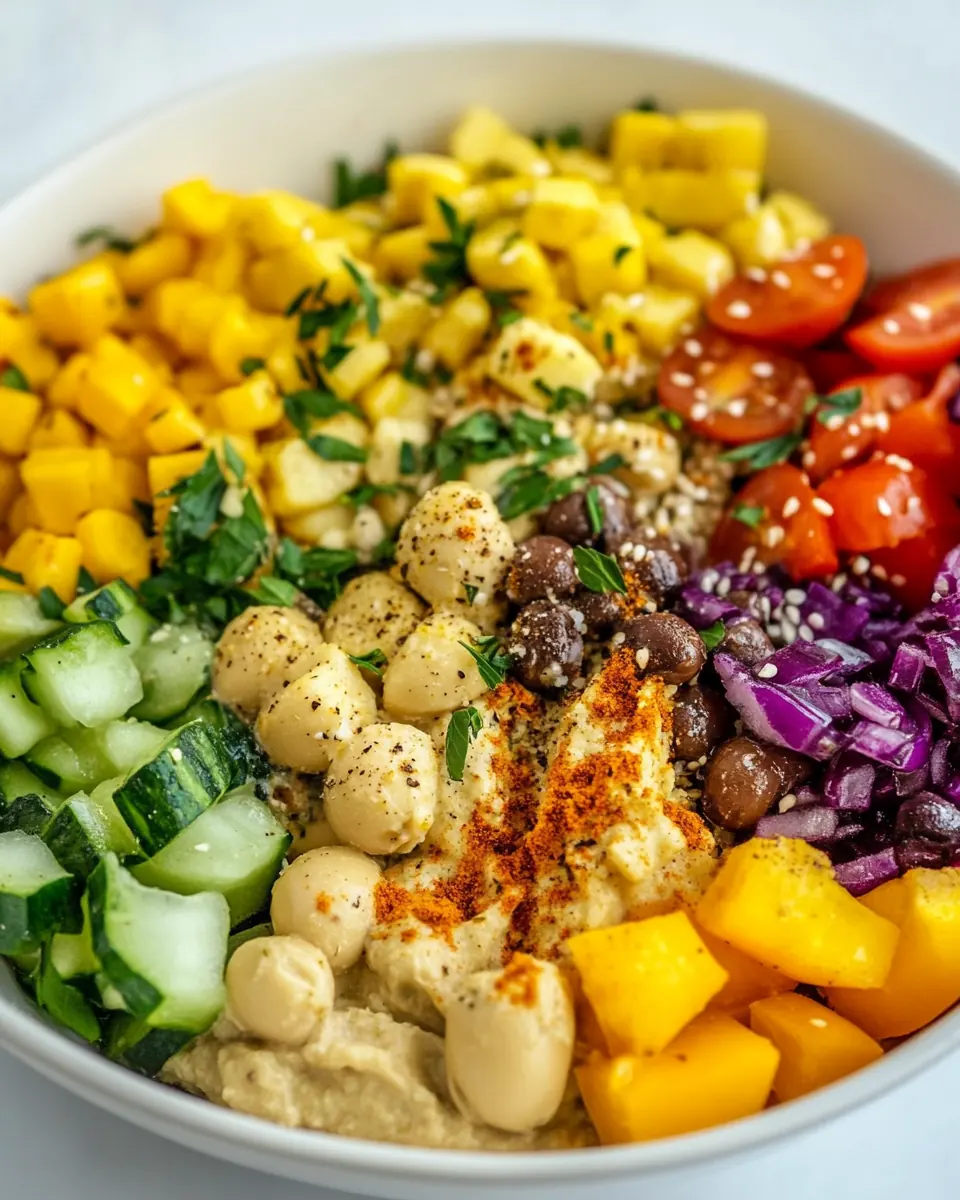
Layer greens in the bottom of a bowl or on a platter. Arrange the grape tomato halves, cucumbers, bell pepper, olives, chickpeas, and quinoa in sections around the bowl. Spoon the hummus in the middle of the bowl and serve.: As they roast, the chickpeas will darken and develop a toasty, nutty scent that signals progress. Stirring and rotating encourages uniform browning and prevents hot spots from burning some while leaving others pale. If you notice rapid darkening, reduce temperature slightly or check earlier, because burnt chickpeas become bitter. The correct cue is a golden to deep golden color and a firm exterior that still yields a tender interior when bitten.
Remove from the oven and cool slightly: Cooling lets the exterior set so the crispness becomes stable rather than collapsing under steam. The moment you take the tray out, you will feel a wave of roasted aroma and see tiny, concentrated oil jewels on the surface. If you try to handle them too soon, they may feel soft, so give them a few minutes to firm up. A typical misstep is storing them warm in a covered container which traps moisture and softens their texture; cool them on the tray for best results.
Meanwhile, combine quinoa and water in a small microwave-safe bowl: The quinoa will absorb the water and swell, releasing a nutty fragrance. Using a microwave safe bowl with a loose cover prevents boil overs while allowing steam to escape. Rinsed quinoa will smell clean and slightly earthy; skipped rinsing can impart a bitter edge. Choose a bowl large enough to let the grains expand so you avoid messy spills.
Cover; microwave for 4 minutes on high: The initial burst of microwave heat begins hydrating the quinoa , and you may hear a gentle bubbling sound as it simmers. That steam softens the germ and makes the grain tender. If your microwave varies in power, the timing can change slightly, so this stage sets the base for a second short burst to finish cooking. A common error is using too little water which produces undercooked, chewy grains; ensure you use the specified amount.
Remove from microwave, stir, and heat again for 2 minutes longer: Stirring redistributes moisture and prevents hot pockets, producing evenly cooked grains that flake apart nicely. The texture should move from slightly opaque to translucent, and when you stir you will notice a pleasant, gentle steam. If it still feels underdone after the second interval, add a splash more water and return for short bursts. Overcooking here leads to a gluey texture, so check often.
Stir and let stand 1 minute in the microwave: Resting allows residual steam to finish the cook, yielding fluffy, separated kernels rather than a porridge like consistency. This pause also cools the quinoa slightly so it integrates well into the bowl without wilting the fresh vegetables. Avoid skipping the rest period because immediate handling can make the grains compact and sticky.
Layer greens in the bottom of a bowl or on a platter: The cool, crisp base of lettuce offers a contrast to the warm roasted pieces and provides a fresh bed that soaks up little juices. Tear the leaves to bite sized pieces so every forkful gets greens. If you pile ingredients too tightly, the presentation becomes muddled, so arrange them thoughtfully for visual appeal and ease of eating.
Arrange the grape tomato halves, cucumbers, bell pepper, olives, chickpeas, and quinoa in sections around the bowl: Visually separating the elements makes the bowl inviting and allows guests to combine flavors as they prefer. The colorful sections create a pleasing mosaic, and you will notice the mix of textures and aromas when you lean in. A common mistake is mixing everything together immediately which hides the layered effect; keep components distinct until serving for the best experience.
Spoon the hummus in the middle of the bowl and serve: Placing a generous dollop of hummus in the center gives you a creamy focal point to scoop from. The contrast between the velvety hummus and crunchy roasted chickpeas is delightful. Serve promptly so the warm and cool elements contrast nicely; if you wait too long, the chickpeas will soften and lose their crisp edge.