Set a large pot over medium-low heat and add the olive oil. When hot, add the onion, carrots, and Italian seasoning. Cook, stirring occasionally, until the onion and carrots are tender but not browned, about 8 minutes.: You will notice the oil shimmer slightly when it is hot enough, that is the cue to add the aromatics. The oil acts as a heat conductor and helps the onion and carrots release their flavors into the pan. Cook gently so the vegetables soften and become sweet rather than brown, stirring occasionally to prevent sticking. If you go too hot, the edges will caramelize too quickly, which can create bitter notes, so lower the heat if you see darkening.
Add the garlic and cook, stirring frequently, for another minute.: As the minced garlic hits the warm oil, it will release an intoxicating perfume, bright and savory. Stir continuously so the garlic softens and infuses the oil without burning, which would turn it bitter. You should hear a soft sizzle but not aggressive popping. If you smell sharp, burnt notes, remove the pot from heat briefly to cool.
Add the vegetable broth, crushed tomatoes, beans, 1/2 teaspoon salt, and 1/4 teaspoon pepper. Bring to a boil, and add the zucchini and pasta. Reduce to a simmer. Stir and continue to simmer until the pasta is cooked through, 15-20 minutes, continuing to stir occasionally to help keep the pasta from sticking together.: When you combine the vegetable broth and crushed tomatoes , the kitchen fills with a warm tomato aroma that deepens as it simmers. Adding the drained beans gives the liquid body, and the broken lasagna pasta will swell as it cooks, releasing a comforting starchiness into the broth. Bring the pot to a gentle boil so the pasta starts cooking evenly, then immediately lower to a simmer to avoid violent boiling that can roughen the pasta texture. Stir occasionally to prevent the pasta from clumping, and watch the pot so it does not boil over, which is a common mishap at this stage.
While the soup simmers, make the cheese topping. In a small bowl, mix together the ricotta, mozzarella, Parmesan, 1/4 teaspoon salt, and 1/8 teaspoon pepper. Set aside.: The act of combining the ricotta cheese , mozzarella , and Parmesan creates a creamy, cohesive topping that will contrast the broth. Mix until smooth and slightly lax so it dollops easily on the soup. The cheeses offer fat and tang which soften the tomato acidity. If the mixture feels too loose, a quick chill firms it up, but avoid adding extra liquid which would dilute the texture.
Add the spinach and parsley to the soup, then taste it and, if it's too acidic for your tastes, add the sugar. I almost always add sugar (or honey) personally to mellow out any acidity from the tomatoes, but I wanted to make this ingredient optional in case you don't want to use the added sugar or your particular canned tomatoes are not too acidic.: As you stir in the chopped spinach and parsley , the pot brightens visually and the herbs release fresh green aroma. The spinach will wilt quickly, creating silky flecks throughout the broth. Taste at this point for acidity from the crushed tomatoes . If it feels sharp, add the optional 1 teaspoon sugar a little at a time until the edge rounds out. Beware of adding too much sugar which can push the profile toward sweet rather than balanced.
Taste again and add more salt and pepper if desired.: Final seasoning ties the whole bowl together. The right amount of kosher salt and freshly ground black pepper will elevate the natural flavors and the cheeses. Taste small spoonfuls, adjusting incrementally, because you can always add more but you cannot easily remove excess salt. If the soup seems flat, a touch more salt often brightens everything.
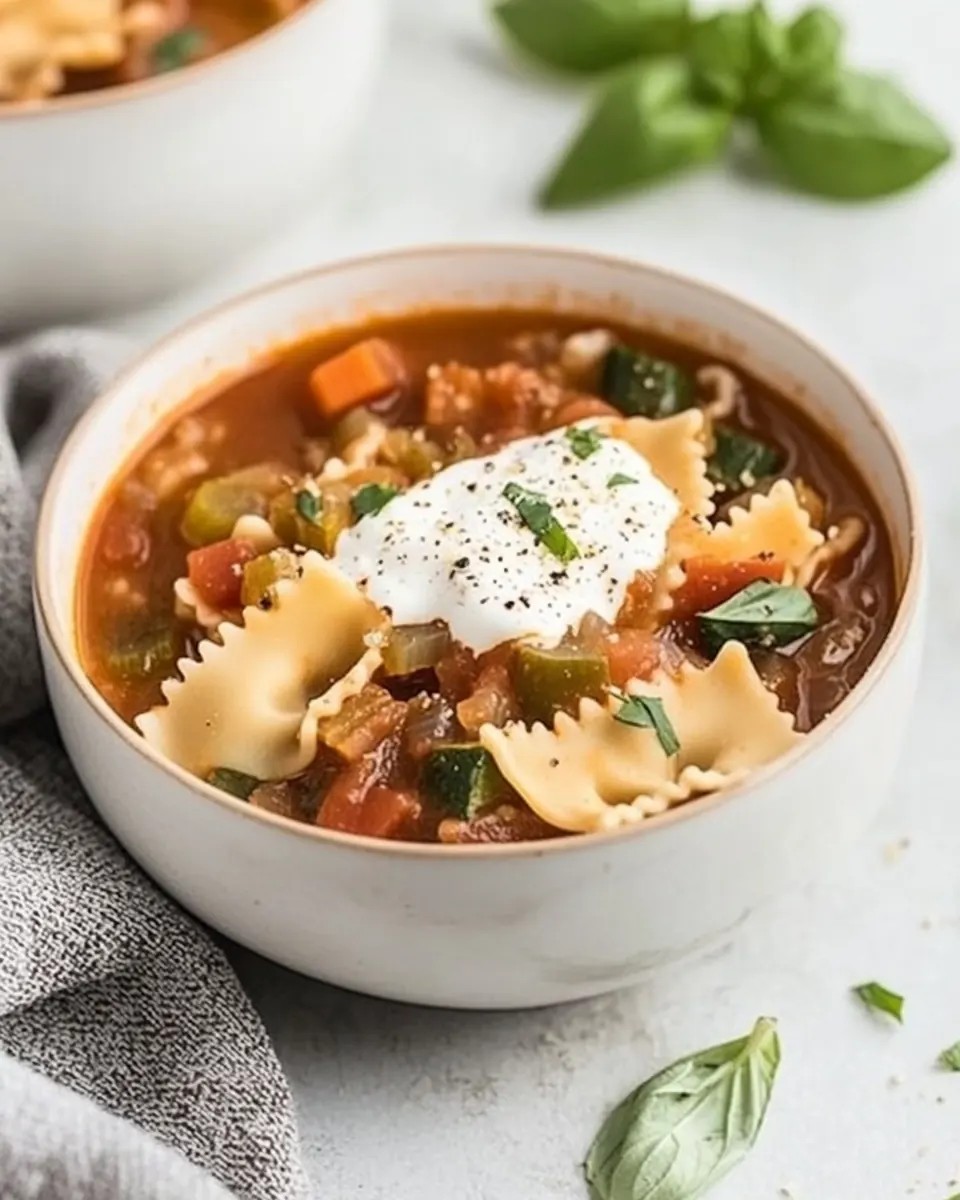
Scoop lasagna soup into bowls and top with a generous spoonful of the cheese topping. Sprinkle with more parsley if desired, and serve.: Serve while steaming hot so the topping softens and slightly melts into the broth, creating a luscious contrast of textures. The cheese will offer creamy ribbons against the tomato base, and a final sprinkle of parsley brightens the presentation. A common mistake is letting the soup sit too long before serving, which allows the pasta to absorb too much liquid, so ladle immediately for best texture.