Preheat oven to 350°F.: The warm, even heat of the oven prepares the squash shells to crisp slightly when they return with the filling inside. Listen for the quiet hum of the oven settling, and trust that an accurately preheated oven ensures the final bake time is reliable. A common mistake is not allowing the oven to fully reach temperature, which can leave the shells limp instead of slightly crisped. If your oven runs cool, give it an extra five minutes before inserting the boats.
Prepare spaghetti squash by cutting off ends and slicing in half lengthwise. Scoop out the seeds in the center. Place face up in a microwave safe dish and microwave for 12-20 minutes, until spaghetti squash is cooked and easily shreds into "noodles" with a fork. When cooked, allow to cool a bit, then shred the flesh into "spaghetti noodles", remove from the shell but set the shells aside to use later.: You will notice a sweet, roasted scent as the squash softens, and the flesh should pull away in long strands when pierced with a fork. The microwave step speeds the process and keeps hands safe; just be careful when removing the dish, it will be hot and steamy. Avoid overcooking, which can make the strands mushy instead of tender and slightly toothsome. If the flesh seems watery, let it sit briefly to allow excess moisture to evaporate before shredding.
Mix one tablespoon of olive oil with the garlic and set aside.: The oil will carry the garlic's perfume into the rest of the dish. Give the mixture a minute to bloom so the raw sharpness softens and the aroma deepens. A common slip up is adding raw garlic directly to very hot oil which can burn it quickly and turn it bitter. By combining it with oil and adding at the right time you preserve a sweet, mellow garlic note.
While spaghetti squash is cooking, heat one tablespoon of oil in a saute pan over medium heat. Add the shallots and mushrooms, season with salt and pepper and cook, stirring often, until mushrooms are browned and shallots are softened, about 7-10 minutes.: As the mushrooms hit the hot pan you should hear a gentle sizzle, and within minutes they will exude moisture then brown as that liquid evaporates. The shallots will become translucent and slightly sweet. Browning concentrates flavor and builds umami, which is essential for a robust filling. Overcrowding the pan is a frequent error, it steams rather than browns. If you notice too much liquid, increase heat slightly and stir more often to encourage evaporation.
Add the kale, and the garlic/oil mixture, along with a pinch of red pepper flakes, oregano, and season with a little more salt and pepper. Stir to combine.: When the kale hits the pan it will immediately begin to wilt, and the fragrant garlic oil will perfume the mixture. Stirring helps the aromatics coat each leaf and mushroom slice, creating depth in every bite. The oregano and red pepper flakes add herbal warmth and a hint of heat. A common mistake is adding too much salt early; season gradually and taste as the flavors concentrate during cooking.
Sauté for about 5 minutes, until kale is wilted but still bright green.: Watch for that vivid green color, it signals the kale is tender yet lively, keeping a pleasant texture. You might hear soft crackles as any residual liquid evaporates. Cooking it just until wilted preserves nutrients and prevents a limp, overcooked mouthfeel. A typical misstep is cooking the kale until it loses color and becomes dull, which makes the filling less appealing. If you accidentally overcook it, a squeeze of lemon or a fresh herb can revive brightness.
Remove half of the kale mixture and set aside. Add the spaghetti squash to the remaining mixture and combine. Add the marinara sauce and stir to coat.: Mixing the warm spaghetti squash with the sautéed vegetables allows the strands to soak up savory flavors, and the marinara sauce brings acidity and body that bind the filling. As you stir, notice how the sauce clings to the strands, glossy and fragrant. Reserving half the kale mixture adds contrast when you top the boats. A common error is adding too much sauce which can make the filling soggy; aim for coating, not drowning.
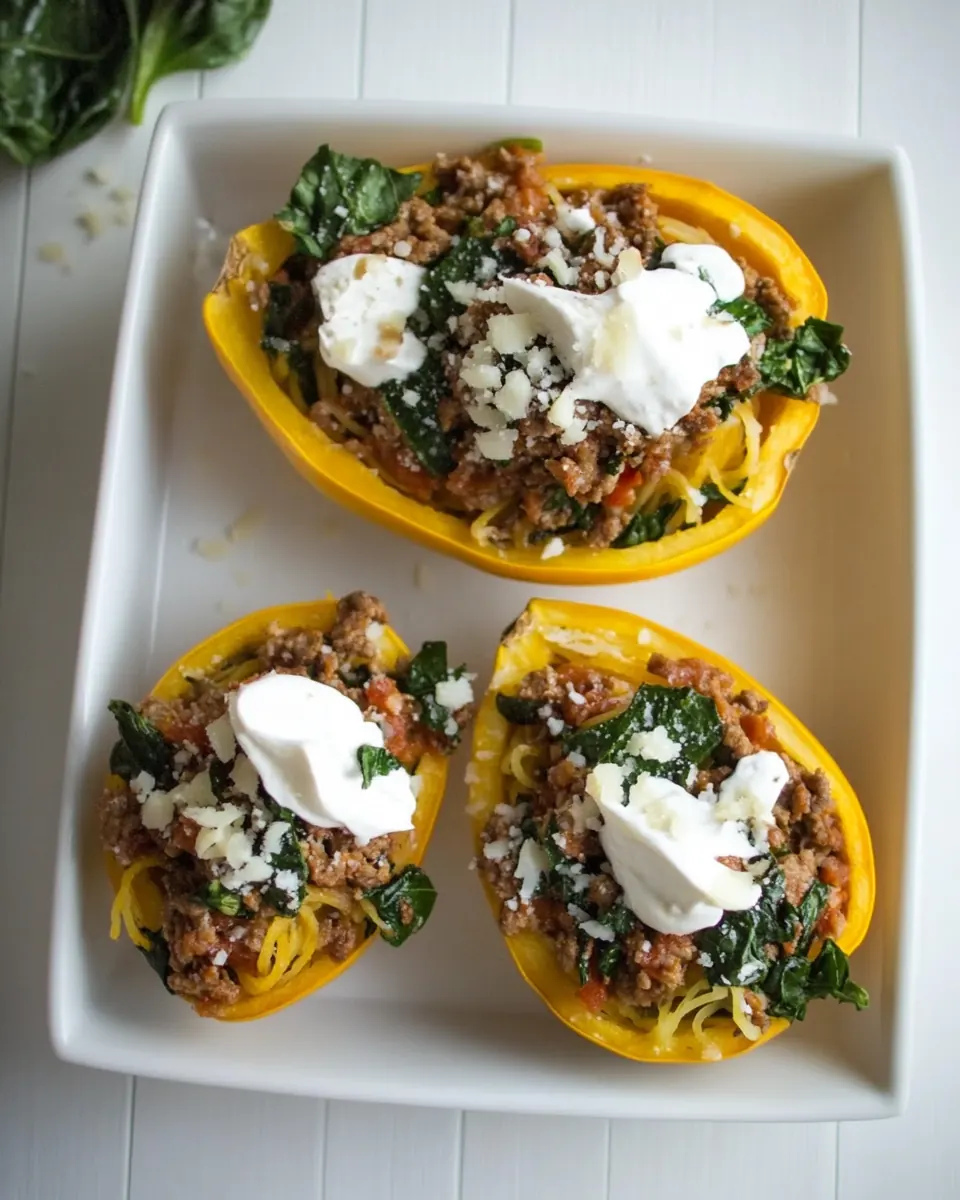
Spoon the spaghetti squash/kale back into the shells. Top with the remaining kale/mushroom mixture. Break the goat cheese into pieces on top.: Filling the shells creates an attractive layered look and the scattered goat cheese will melt into creamy pockets during baking. Press the filling gently so it nests in the shell but do not overpack, as the cheese and juices need space to warm and brown. If you press too firmly the shells may crack or become overly dense in texture. Arrange goat cheese pieces evenly so each serving gets a creamy hit.
Bake in the oven for about 15 minutes, until the kale is starting to get crispy and the goat cheese is softened and starting to brown.: In the oven the top should develop quiet, toasty notes and the goat cheese will soften into luxuriously creamy pockets with tiny browned edges. You will smell a toasty, herbal aroma as the oregano and red pepper flakes become more forward. Watch the boats in the final minutes to avoid burning the cheese. A frequent mistake is leaving them too long, which can dry out the filling; remove them when the cheese is just gently browned and the kale edges show crispness.
One boat is two servings.: This serving guide helps you portion the boats for a meal. Think about balance on the plate so each person gets both the creamy and crisp elements. If you need more portions, plan additional boats or pair with a simple side. A common mistake is underestimating appetite; for hearty eaters, one boat per person might feel light.