Add the 3/4 cup sugar, lemon zest and lavender to a high-powered blender or food process and pulse for about 30 seconds or until the sugar is very fine. Stir in the remaining sugar. The sugar will keep for a few months in a sealed container at room temperature. Add the raspberries to a bowl and sprinkle 2 tablespoons of the lemon sugar over the berries.: The aroma that blossoms when you blitz the sugar with lemon zest and dried lavender is immediate and uplifting, like sunlight in a jar. You want the sugar to be very fine so the citrus oils disperse evenly and the floral notes infuse without leaving gritty bits on the tongue. As you pulse, listen for the motor to change pitch, a sign that the mixture is breaking down. A common mistake is overprocessing into a paste, which concentrates the oils too much, so pulse in short bursts and scrape down the sides as needed. If you detect clumps after pulsing, give it a few more short pulses and stir gently with a spoon to check texture.
Add the juice of half a lemon and toss, breaking up some of the raspberries to help release their juices. Allow the berries to sit for 10-15 minutes before serving.: When you dust the raspberries with lemon sugar , they start to glisten as their juices lift, creating a bright syrup that will accent the toast. Use a gentle folding motion so you bruise some berries but still retain whole pieces for texture. The scent of citrus and berry together will become more pronounced as they sit. Watch out for overmixing which will make them too soupy, draining the fresh berry texture; you want a mix of intact and gently broken berries for contrast.
To make the whipped cream cheese, add the cream cheese and heavy cream to a mixing bowl.: Squeezing the lemon into the berry bowl adds a lively acidic note that awakens flavors and helps maceration. Toss to encourage a few berries to burst, releasing a syrupy liquid that carries both color and tartness. Letting some pieces break down gives you a sauce like element to spoon over finished slices. Avoid adding too much lemon juice or the berries can become overwhelmingly tart, taste as you go and adjust the balance with a pinch more sugar if needed.
Using an electric mixer, beat on high speed until soft peaks form, about 3-5 minutes. Beat in the honey and vanilla until just combined.: Sitting allows the raspberries to macerate, softening and producing a glossy syrup that melds with the lemon sugar . During this rest the aroma intensifies and the texture evolves to a jammy finish that complements the rich filling. Be mindful not to leave them too long at room temperature in very warm weather, as they can ferment or become overly soft. If you need to pause longer, cover and chill them briefly to preserve freshness.
Using a paring knife, carefully make an inch (or so) incision in the tops of each slice of bread to create a pocket. Use your finger to enlarge the inside of the pocket and create room for the cream cheese.: Combining softened cream cheese with chilled heavy cream in a bowl sets the stage for a light filling. The contrasting temperatures mean the cream whips into volume while the cream cheese loosens up, which helps achieve a smooth, aerated texture. If the cream cheese is too cold you'll get lumps, so let it sit until pliable, but not melted. A common pitfall is starting with everything too warm, which prevents the cream from whipping properly, so keep the cream chilled.
Stuff the insides of the pockets with the whipped cream cheese; do your best to carefully stuff the cream cheese inside. Alternately you can slice the bread in 1/2 inch slices and smear the cream cheese on, as if making a sandwich. I prefer to do it the way I have directed above, as it keeps all the cream cheese inside the bread!: As you whip, the mixture will transition from glossy and liquid to airy and billowy, and you should watch for soft peaks that hold shape briefly before folding back on themselves. The sound becomes lighter and the bowl appears fuller, signaling you are close. This texture traps air, making the filling feel luxurious inside the bread . Overbeating can make the mixture unstable and grainy, so stop once you see soft peaks and test with a spatula to ensure spreadable texture.
In a shallow, medium size bowl, whisk together the eggs, milk, vanilla, cinnamon and salt until combined. Dip the stuffed bread into the egg mixture, allowing each side to sit for 1-2 minutes in the egg mixture.: Folding in the honey and vanilla gently preserves those air pockets while adding nuanced sweetness and warmth. The scent will lift noticeably when the vanilla hits the whipped mixture, and the honey gives a rounded, floral sweetness that pairs well with lemon and berries. Stir only until uniform; vigorous mixing will deflate the whipped texture, resulting in a denser filling that does not yield the same pleasant contrast.
When ready to cook the French toast. Heat a large skillet or griddle over medium heat and coat generously with butter. When the skillet is hot, cook the French toast in batches (do not overcrowd) until golden and crisp, 3 to 4 minutes per side. Remove and serve immediately.: When you cut the pocket into each slice of bread , work slowly to preserve the crust so the piece holds together while frying. The incision is a tactile step, and you will feel the difference between crust and crumb as you hollow the center. Use your finger or the tip of the knife to enlarge the pocket gently, avoiding tearing through the bottom or sides. If you cut too deep you risk leaks, so err on the conservative side and test by pressing a small amount of filling into one pocket first.
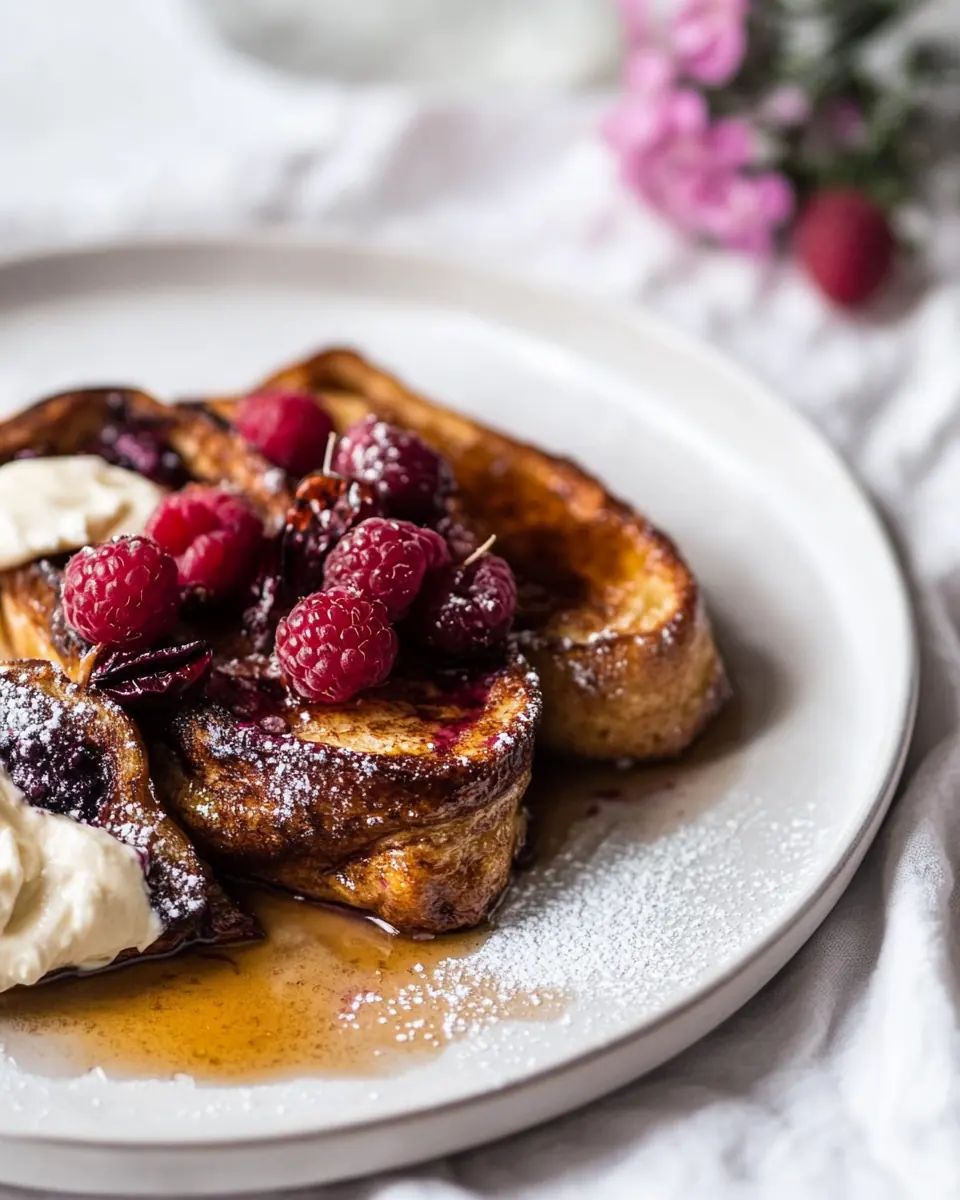
Sprinkle with lemon sugar and raspberries. DEVOUR! 🙂: As you spoon the whipped cream cheese into each pocket, the visual cue to watch for is a gently bulging top that still looks smooth, indicating an even distribution. The filling should be soft yet stable enough to stay inside during the soak and cook. If you overfill, the custard can displace the filling and cause seepage, so aim for a modest amount that leaves a little headspace. Wipe any stray filling from the crust to prevent burning during the sear.
Alternately you can slice the bread in 1/2 inch slices and smear the cream cheese on as if making a sandwich I prefer to do it the way I have directed above as it keeps all the cream cheese inside the bread: Choosing the pocket method yields a tidy presentation and protects the filling during soaking and cooking, while the sandwich method is quicker and more forgiving for busy mornings. If you opt for slices and smearing, press the halves together to seal somewhat, which helps retain filling during the soak. Be aware that smeared sandwiches may leak slightly when dipped, so handle gently when transferring to the custard.
In a shallow medium size bowl whisk together the eggs milk vanilla cinnamon and salt until combined: Whisking the custard until smooth ensures uniform color and flavor across all slices, and the aroma of vanilla and cinnamon will become evident as the mixture emulsifies. The custard should coat the back of a spoon lightly without being overly thick. A common error is under whisking which leaves streaks of egg white or yolk, resulting in uneven soaking and patchy browning, so whisk vigorously until homogeneous.
Dip the stuffed bread into the egg mixture allowing each side to sit for 1 to 2 minutes in the egg mixture: Allow the stuffed pieces to absorb the custard, but watch them closely so they do not become waterlogged. You want the center to gain flavor without collapsing. The gentle soak time allows the custard to cling to the outer crumb and seep just a bit into the pocket, creating a moist interior after cooking. Over soaking is the most common mistake here, which leads to a soggy texture, so adjust times based on the density of your bread .
When ready to cook the French toast heat a large skillet or griddle over medium heat and coat generously with butter: As the butter melts and begins to foam and smell nutty, that is your cue the pan is ready. A properly heated skillet promotes even browning and a crisp exterior while keeping the inside soft. The butter adds flavor and helps create the golden crust, so be generous but avoid burning it. If the butter smokes quickly, lower the heat slightly to prevent bitter flavors from developing.
When the skillet is hot cook the French toast in batches do not overcrowd until golden and crisp 3 to 4 minutes per side: As the slices hit the pan you should hear a soft sizzle, and after a few minutes the edges will turn a deep golden color indicating readiness to flip. Cooking in batches preserves pan temperature, preventing steaming which yields limp, pale toast instead of a crisp exterior. Flip once you see a deep golden crust and a slight resistance under your spatula. A common mistake is flipping too often which disrupts the browning process, so be patient and let each side develop color.
Remove and serve immediately: The final serving moment is when the contrast between the warm, creamy center and crisp exterior is at its peak, so plate promptly. Spoon the macerated raspberries and a dusting of lemon sugar over each slice to add shine and acidity. If you wait too long, the filling can cool and firm up, losing that luscious texture that makes this recipe special, so serve right away for the best experience.
Sprinkle with lemon sugar and raspberries: A finishing dust of the lemon infused sugar adds sparkling visual appeal and a citrusy pop with each bite, while the raspberries bring color and brightness. Spoon some of the syrupy juices over the plate to enhance moisture and create a pretty presentation. Be mindful of over saucing which can weigh down the toast, aim for a balanced amount that complements rather than drowns the slices.
DEVOUR: The reward is the immediate sensory payoff the warm filling and crisped crust mingle with tart, juicy raspberries and fragrant lemon sugar, making each forkful memorable. Enjoy the layered textures and flavors while hot, and watch how quickly the plate clears when you serve this to friends and family.