Butter or grease a 9×13-inch rectangular dish and set aside.: The initial preparation of the pan is about ensuring the dessert releases cleanly and slices well. You should feel the slight resistance when running a knife along the edge after chilling, which signals that the crust and layers have adhered. If you skip greasing, the edges can stick, making serving messy, so always give the pan a quick coat of butter or nonstick spray.
In the bowl of a food processor, chop the Oreo cookies until they are fine crumbs. Add the melted butter and pulse several times until the cookie crumb mixture is evenly combined.: When the crumbs smell intensely of baked vanilla and look uniformly sandy, they are ready. The sound shifts from loud chopping to a steady hum when the texture is right. This step matters because evenly coated crumbs bind into a solid crust, and if some pieces remain large you will get uneven texture. A common error is overprocessing to a paste, so stop once the crumbs stick together when pinched.
Press the cookie crumbs into the prepared dish and place them in the freezer while preparing the next layer.: As you press, you should hear a faint compacting sound and see the surface smooth into a flat, even bed. The crust will feel firm to the touch after chilling for a few minutes, which helps prevent the filling from seeping into the base. If you press too lightly the crust may crumble when cut, so use steady pressure to compact it well.
Beat cream cheese and powdered sugar until fluffy, 1-2 minutes. Add in half of the 16-ounce container of Cool Whip and beat until thoroughly combined.: The bowl will grow lighter as air is incorporated, and the aroma becomes tangy sweet. This texture gives the layer structure and balance. Watch for complete smoothness, scrape the sides, and stop when the mixture forms soft peaks. A typical mistake is starting with cold cream cheese , which results in lumps, so always soften first.
Spread the cream cheese layer over the chilled cookie crust and return the dish to the freezer.: As you spread, the surface should glide and set more firmly when returned to cold. This chilling step stabilizes the layer so the pudding does not blend into it. If the cream cheese layer is too warm it may sink into the crust, creating uneven separation, so keep it cool and work quickly.
In a large bowl, whisk both packages of pudding mix and 3 cups of milk until the pudding thickens. Spread the pudding layer over the cream cheese layer.: The pudding will transition from glossy and liquid to thick and satiny, with tiny ripples that hold their shape. Whisking evenly ensures a smooth, set layer that contrasts with the cream cheese. Under whisking can leave thin spots that run, so aim for full thickening while avoiding splashes that make a mess.
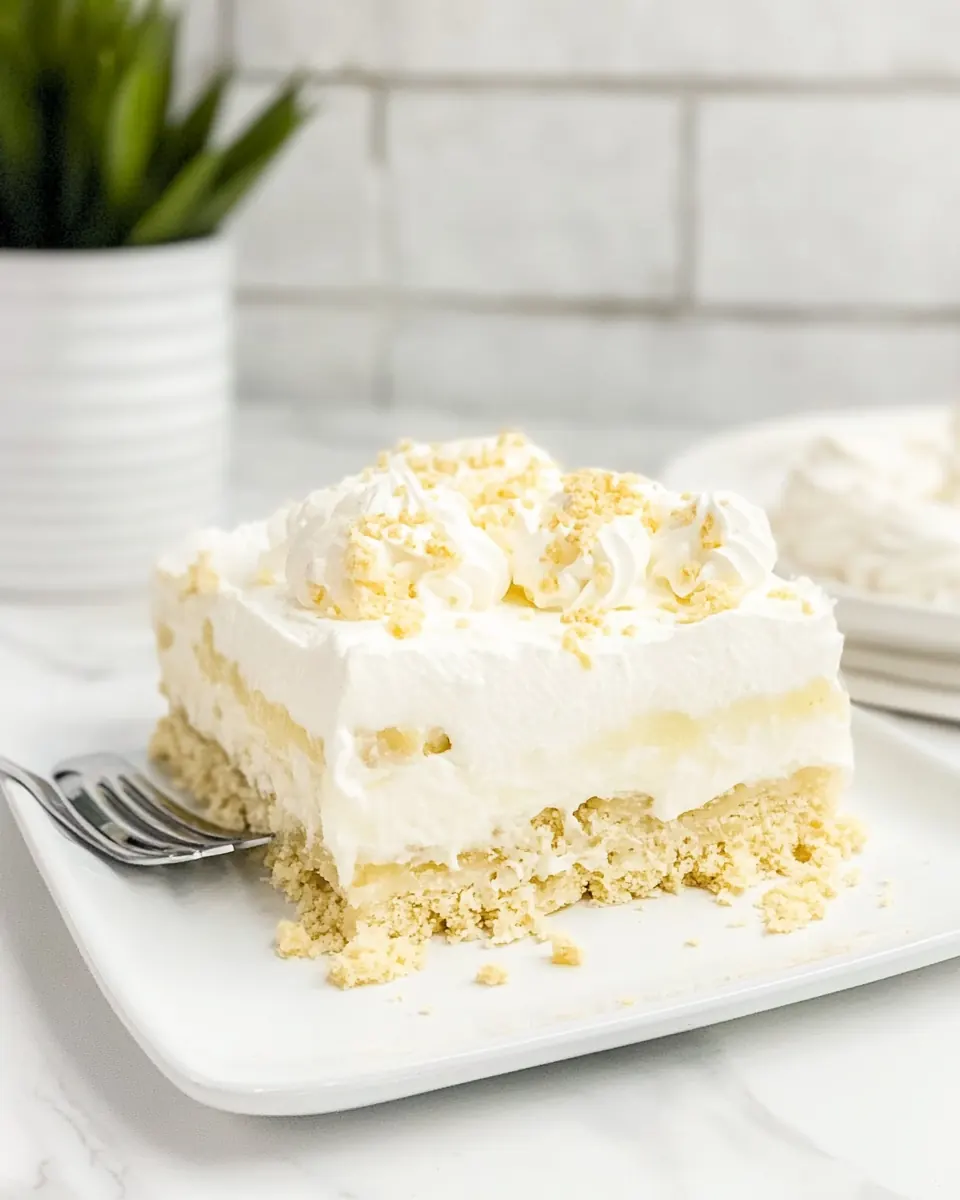
Top the white chocolate lasagna with the remaining Cool Whip.: Spoon the leftover whipped topping into soft peaks, then smooth it over the pudding, creating a billowy crown. This top layer softens the overall sweetness and adds visual lightness. If you press too hard you can mash the pudding layer, so use gentle, even strokes to keep the layers distinct.
Garnish with white chocolate curls. Refrigerate for at least 1 hour before cutting and serving to allow the layers to firm up.: The curls add a textured, elegant finish and a hint of extra white chocolate flavor. Scatter them lightly so they sit on the whipped top rather than sinking in. A common misstep is using warm hands or a warm kitchen when shaving curls, which causes them to melt and lose shape, so chill the chocolate slightly before making curls.
Refrigerate for at least 1 hour before cutting and serving to allow the layers to firm up: During chilling you will notice the pudding becomes more set and the layers knit together, producing clean slices. The refrigerator hum and cool air help the textures settle, and the visual cue is a firmer surface with slight condensation at the edges. If you are impatient and cut too soon, the layers may ooze, so wait the recommended hour or ideally longer for neater slices.