Preheat oven to 350 F. Line a 9×9" baking pan with foil and spray with cooking spray.: As the oven warms, you will notice a gentle heat building in the kitchen, a signal that the butter and filling will transform soon. Doing this first ensures even baking later, and lining the pan with foil makes it effortless to lift the bars out after chilling. A common mistake is not pressing the foil into the corners, which can cause uneven crust edges, so take a moment to smooth it down. You want the pan surface to be completely covered, and spraying prevents sticking, so the bars release cleanly when they are cooled.
Blender: Add cookies to a powerful blender and pulse a few times until they are a fine crumb. Add melted butter and pulse once or twice until incorporated. Press into the bottom of the prepared pan.: Add cookies to a powerful blender and pulse a few times until they are a fine crumb. Add melted butter and pulse once or twice until incorporated. Press into the bottom of the prepared pan. : The sound of the cookies breaking down into tiny crumbs is oddly satisfying, like soft rain on a tin roof, and the aroma of pecans will become more prominent. Once you add warm, melted butter , the mixture will take on a sandy, cohesive texture. Pressing the crumbs into the pan should feel firm under your palm, like compacted sand, to ensure structural integrity. If you press too lightly, you risk a crust that crumbles when slicing. One mistake I sometimes see is over pulsing so the crumbs become paste like; stop when they are sandy but still dry enough to press.
Food processor: Finely crush the cookies using the food processor. Add to melted butter and stir with a fork until sandy, then press into the bottom of the prepared pan.: Finely crush the cookies using the food processor. Add to melted butter and stir with a fork until sandy, then press into the bottom of the prepared pan. : If you choose the food processor, you will notice the crumbs fall into a uniform texture quickly, with the pecan scent intensifying. Stirring with a fork helps you avoid overworking the crumbs, keeping that pleasant sandy feel that compacts without becoming greasy. Firm pressing with the heel of your hand yields a more consistent base. Avoid pressing unevenly, especially around the edges, because gaps can let the filling seep through, causing inversion when cooling.
Be sure to press very well so they are totally compact. If there are any holes the bars will invert. Sprinkle crust with white chocolate chips.: When you press, run your fingers along the edges to compact them inward, ensuring no air pockets remain, because they can create weak spots in the final slice. The visual cue is a smooth, even surface that does not crumble under pressure. Sprinkling white chocolate chips across the crust provides small pockets of sweetness that will melt slightly when the filling is added, creating a lovely mosaic of flavor. A common slip up is skimping on pressure, so take the extra 30 seconds to firm everything up.
Add lemon juice, lemon zest, granulated sugar, flour, baking powder, and eggs to a blender and blend until smooth. Alternately, whisk together until mixture is smooth. Pour onto crust.: As you blend, the mixture becomes glossy and pale, and citrus aromas will lift and perfume the kitchen. The role of the flour and baking powder is to stabilize the custard so it sets properly, while the eggs provide silkiness and body. Pour gently so the filling distributes evenly across the crust. If you overblend and heat the mixture, it may incorporate too much air, causing the surface to crack during cooling. A smooth, lump free pour is what you want.
Bake for about 30-40 minutes, or until the edges are a light golden color. The top will have a dull white look to it. Cool completely.: As the bars bake, the edges will firm first and turn a light golden shade, while the center will set more slowly and retain a pale matte appearance. You may hear faint bubbling at the edges as moisture escapes, and the kitchen will fill with bright lemon notes. Cooling is crucial because it allows the filling to finish setting; slicing warm will yield a runny interior. A mistake to avoid is baking only until the surface looks done; check that the center gives just slightly to a gentle touch, indicating a custardy set.
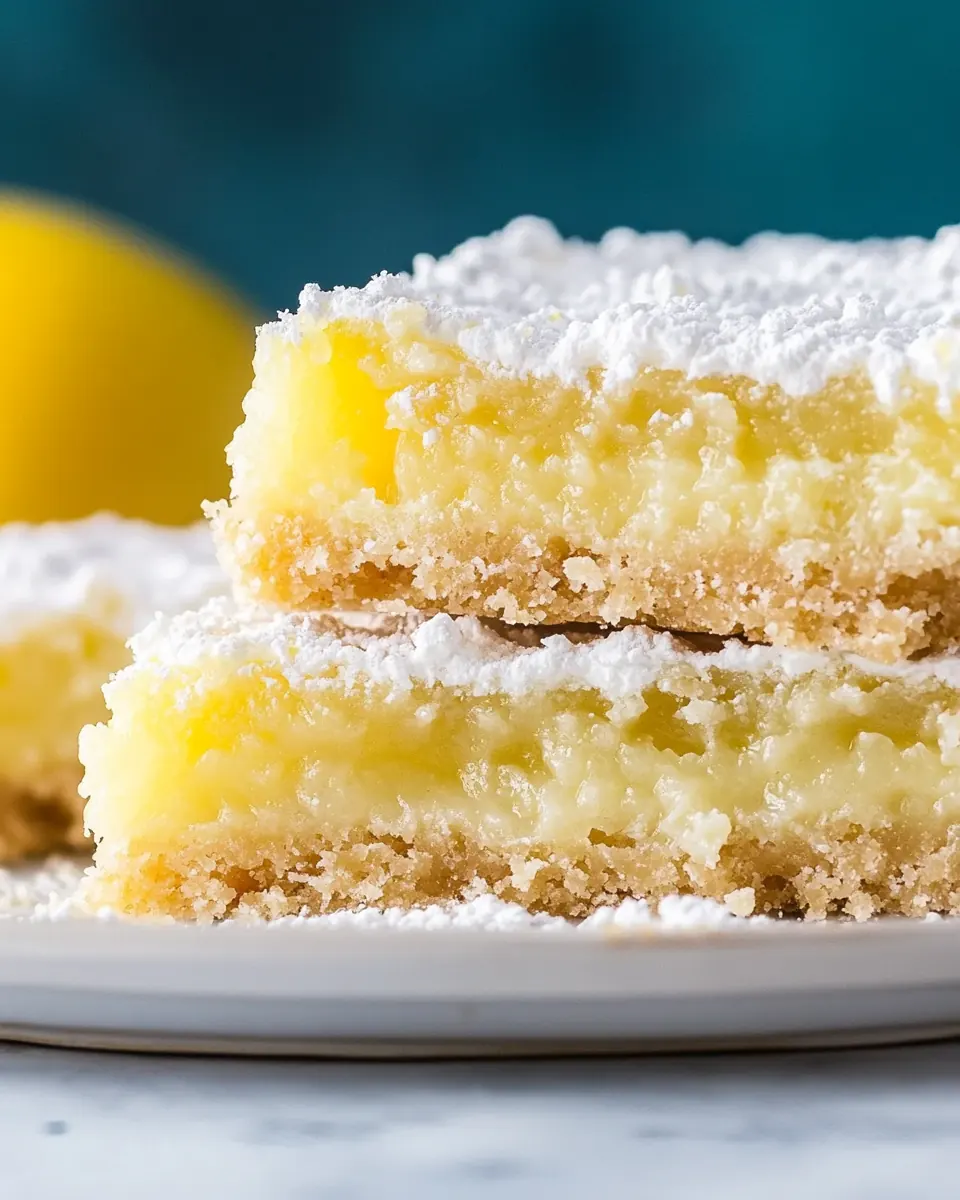
Slice into bars and dust with powdered sugar before serving.: When the chilled slab is ready, the satisfying sound of a clean knife through set custard is a tiny culinary triumph. Dusting with powdered sugar right before serving keeps the tops visually appealing and adds a soft sweetness to the first bite. Slice using a sharp knife wiped between cuts for neat squares. Cutting too soon or with a dull blade can lead to ragged edges, so patience and a careful hand will reward you with beautiful portions.