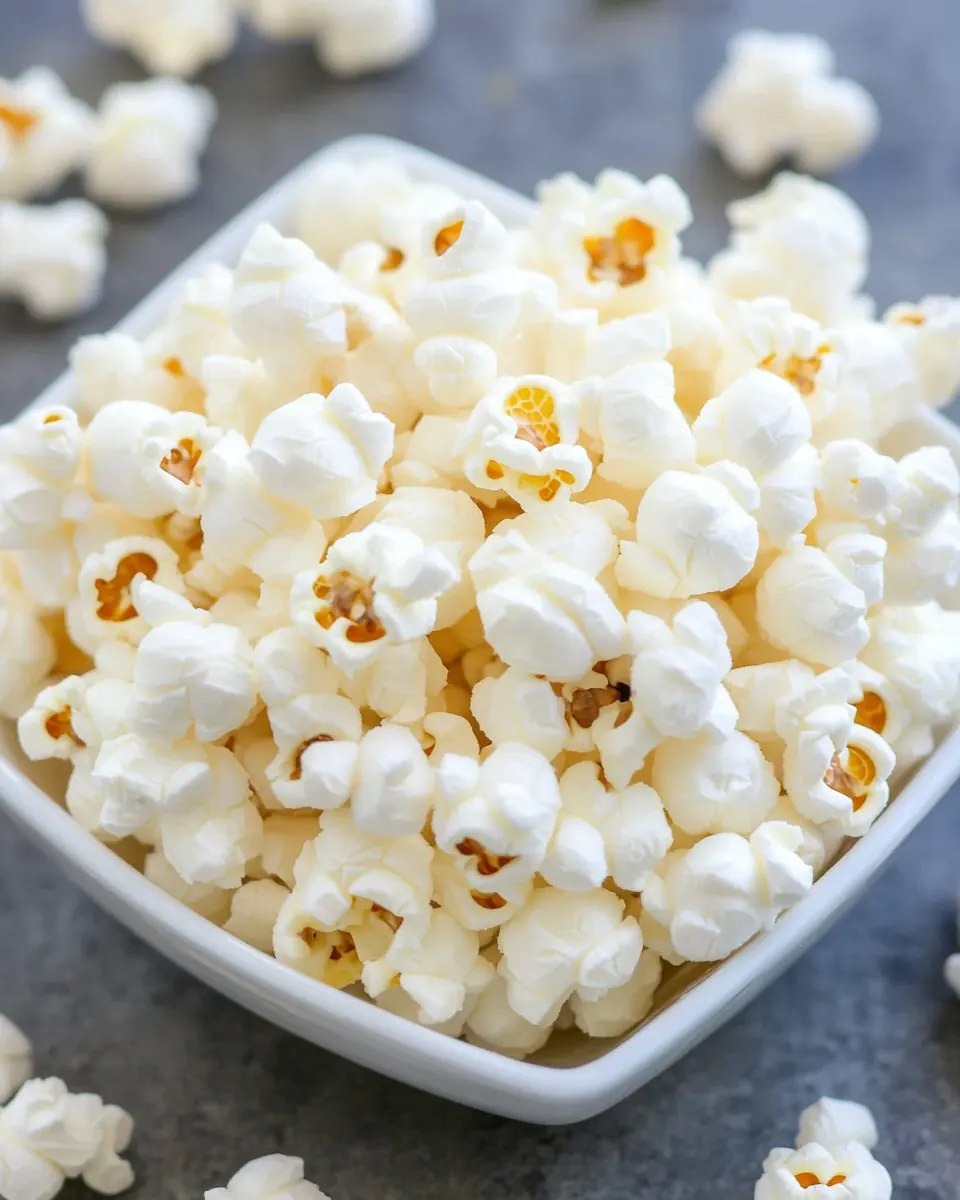
Pop popcorn and pour it into a large bowl, removing un-popped kernels.: The first sensory cue is the sudden pop and the cloud of warm, toasty aroma that fills the kitchen. As you pour the popped corn into a big bowl, listen for the lighter pieces rustling against each other, and pick through to remove any hard, un-popped kernels so nobody ends up with an unpleasant bite. This step matters because leftover kernels can be hazardous and will ruin the otherwise pleasant texture contrast. Common mistake to avoid is leaving the popcorn in the microwave too long which can lead to burned pieces, instead stop when pops slow to a few seconds apart. The visual should be a bowl full of bright, white and yellow popcorn, not browned or oily pieces.
Break vanilla bark into squares and place in a medium pot over low heat. Cook, stirring constantly with a rubber spatula, until melted. Remove from the heat.: As the bark warms, you will notice a gentle sweet scent of vanilla expanding in the room, signaling it is softening. Stirring constantly with a rubber spatula helps the pieces melt uniformly and prevents scorching along the pot edges. The reason low heat is crucial is because candy coating can seize or become grainy if overheated, and a patient melt produces a glossy, pourable finish. A typical pitfall is cranking the heat up to speed things along, which risks burning and a bitter aftertaste. Look for a smooth, lump free melted mixture before removing from heat.
Pour candy coating over popcorn and mix until coated.: You will feel the bark transform under the spatula from solid chunks into a velvety stream, and the surface will shine. The stirring motion should be steady and gentle, scraping the bottom to keep all pieces in motion and avoid hotspots. This technique yields an even texture that coats the popcorn without clumping. If you see any graininess, reduce the heat immediately and keep stirring; that graininess usually means it was exposed to too much direct heat. The sound is a quiet, smooth slosh rather than bubbling or spitting.
Add M&M’s and mix, then spread the popcorn onto a parchment paper–lined baking sheet. Let sit for 15 minutes, until hardened.: Once glossy and smooth, the coating will carry warmth without bubbling, and I take it off the burner to prevent continued cooking. Cooling slightly for a few moments makes it easier to pour without being overly runny, so the coating adheres to the popcorn rather than pooling at the bottom. This pause matters because temperature controls the coating thickness and final crunch. A common error is pouring when it is scorching hot, which can melt the candy pieces or make the coating too thin. Visually the coating should cling to the spatula in a ribbon, not run off immediately.
Pour candy coating over popcorn and mix until coated: When you pour, you will hear a soft patter as the warm coating lands on the popcorn, and the scent of vanilla will intensify warmly. Use a wide spatula to fold the mixture gently, ensuring the popcorn is evenly covered without crushing the pieces. Proper mixing ensures each bite has a balance of crisp corn and sweet shell, contributing to the overall texture. Avoid over mixing which can break popcorn into dust; instead use sweeping motions so the popcorn stays intact. Look for an even sheen across the popcorn surface as the visual cue it is well coated.
Add M&M’s and mix, then spread the popcorn onto a parchment paper–lined baking sheet: The colorful chips will pop visually against the white coating, and folding them in while the candy is still warm helps them stick without melting completely. Spread the mixture into a thin, even layer on parchment so air can circulate and the coating can set uniformly. The tactile feedback should be clusters that hold together slightly but are easy to break apart when set. A typical mistake is piling the popcorn too high which creates uneven setting and some pieces remain sticky while others harden; aim for a single even layer. Visually the M&M’s should be distributed across the surface, not clumped in one area.
Let sit for 15 minutes, until hardened: As it cools, you will hear the faint settling silence and feel the surface lose warmth, turning from tacky to crisp. This resting time allows the coating to fully set into a snap, so the popcorn keeps its crunch and the M&M’s stay intact. This step is important for texture and storage stability; skipping it will leave the batch sticky and harder to package. Avoid moving or pressing the popcorn during this time or you risk compromising the coating finish. When ready, the pieces will lift cleanly from the parchment and have a firm, dry exterior.