Preheat oven to 375 degrees. Line a 15-in. x 10-in. x 1-in. baking sheet with parchment paper or grease lightly.: You will feel the warm anticipation as the oven climbs toward 375 degrees , and the faint hum of the preheating element becomes a kitchen metronome. Preparing the pan first avoids frantic scrambling later, and parchment helps release thin cakes cleanly; if you skip it the edges can stick and tear. When greasing, use a thin, even coat so the batter does not pool in greasy spots. A common mistake is forgetting to check oven accuracy, so if your oven runs hot, your cake may overbrown at the edges before the center sets, making it look done while the middle remains underbaked.
In a small saucepan bring butter and water to a boil. Meanwhile, in a large bowl add flour and sugar and mix. Then add in eggs, sour cream, almond extract, baking soda and salt. Slowly pour in the boiling butter/water mixture. Stir until combined. Batter will be very thin.: When the butter melts into the water and reaches a lively boil, you will see a glossy surface and hear a steady simmering sound. That hot mixture is the secret to thinning the batter and contributing to a tender crumb. Bring it just to a boil, then remove from heat promptly; boiling too long can slightly change the fat behavior and affect the crumb. Avoid letting it brown, because browning would introduce a toasted note that shifts the cake away from delicate almond flavors.
Pour into prepared baking sheet. Bake for 18-22 minutes or until golden brown. Cool for about 10 minutes. You still want your cake a little warm when you add the frosting so that it spreads well.: As you whisk the all-purpose flour and white sugar , the dry ingredients should look evenly distributed with no visible streaks of sugar. This dry mixing reduces clumps and ensures a more uniform batter once wet components arrive. A common slip here is over-sifting then compressing the mixture, which can make the cake denser. Take a moment to break up any lumps, while noticing the subtle grainy texture that signals well blended dry ingredients.
For the frosting: In a large saucepan, combine butter and milk. Bring to a boil. Remove from the heat, and then stir in the powdered sugar and almond extract. Stir until smooth and all combined. Spread the warm frosting immediately over warm cake (it will thicken up fast so work quickly). Let frosting set up then cut into squares and serve.: Once combined, these ingredients transform the dry base into a cohesive batter. The eggs and sour cream add moisture and tang, the almond extract lends aroma, and the baking soda teams with the acid in the sour cream to provide lift. Stir until you no longer see dry pockets, but avoid overmixing which can develop too much gluten and toughen the crumb. A typical misstep is adding cold eggs straight from the fridge; they can lower batter temperature and affect how it bakes, so I often let them sit briefly at room temperature.
Slowly pour in the boiling butter/water mixture.: When that steaming liquid hits the dry and wet mixture, you will immediately notice the batter becoming thin and glossy. Pouring slowly prevents hot spots and ensures uniform hydration. Use a spatula to fold gently until combined, watching for a smooth, pourable texture; it should be noticeably thinner than traditional cake batter. Be careful not to splash hot liquid, which can scald and create tiny lumps. If you end up with uneven texture, a few gentle folds will correct it without overworking the batter.
Stir until combined. Batter will be very thin.: As you stir, observe a silky sheen and a texture that runs easily from your spoon, this is normal and desirable. The thinness helps the cake produce a tender crumb and even baking. Resist the urge to add extra flour to thicken, which would result in a drier, denser cake. If the batter seems oddly grainy instead of smooth, it may indicate under-mixing of the powdered sugar later or lumps from cold butter in the frosting; correct by gentle, patient mixing.
Pour into prepared baking sheet.: When you pour the batter, it should spread quickly and evenly, settling into a glossy, wet surface across the pan. If it pools unevenly, give the pan a gentle shake or use a spatula to coax it level; even thickness ensures consistent baking and prevents thin edges from overbrowning. A frequent error is pouring into a warped pan which causes uneven thickness, so pick a straight, sturdy sheet for best results.
Bake for 18-22 minutes or until golden brown.: During baking you will see the surface shift from shiny to set and take on a gentle golden tone; edges may pull back slightly from the pan. The internal aroma should become richer and the kitchen will fill with almond scented warmth. Use a toothpick in the center if unsure, it should come out with a few moist crumbs but not raw batter. Overbaking will dry the cake, so aim toward the lower end of time if your oven runs hot; underbaking leaves the center too fragile and may cause the frosting to sink excessively.
Cool for about 10 minutes.: The cake needs a short rest to firm up so it can accept the warm frosting without crumbling. You will notice steam lifting from the pan and a softer, yieldy texture that becomes slightly more stable as it cools. Ten minutes keeps it warm enough for the glaze to sink in a bit, which I prefer for an integrated finish. Waiting too long results in a frosting that sits on top rather than melding into the crumb.
You still want your cake a little warm when you add the frosting so that it spreads well.: When the cake is gently warm to the touch, the frosting will soften and seep into the top layer creating a bonded surface with glossy ripples. If the cake is too cool, the frosting will set on top and not meld; if it is too hot, the frosting can loosen and run off the edges. Aim for a comfortable warmth with no heat that burns your finger when testing, and spread promptly because the frosting thickens fast.
For the frosting: In a large saucepan, combine butter and milk. Bring to a boil. : The bubbling butter and milk meld into a smooth, steaming base for the frosting; you will see it foam slightly and emit a comforting, sweet dairy scent. Bring it just to a boil then remove from heat to avoid scorching. The heat helps dissolve the powdered sugar thoroughly when stirred in. A common error is overheating, which can cause separation and a grainy texture, so watch carefully.
Remove from the heat, and then stir in the powdered sugar and almond extract.: Off the heat, add the powdered sugar gradually while stirring for a satin smooth glaze. The smell of almond extract will bloom as it blends in, and the frosting will thicken as it cools slightly. If lumps form, persistent stirring or a quick whisk will smooth them out; do not add extra liquid unless needed, because the frosting sets quickly and should be spread while warm.
Stir until smooth and all combined.: A well mixed frosting will be glossy and pourable, with no visible granules of sugar. This texture ensures it spreads easily and creates that classic thin, shiny top. If the frosting becomes too stiff before spreading, a small splash of milk warmed briefly will restore the right consistency, but add sparingly so it does not become runny.
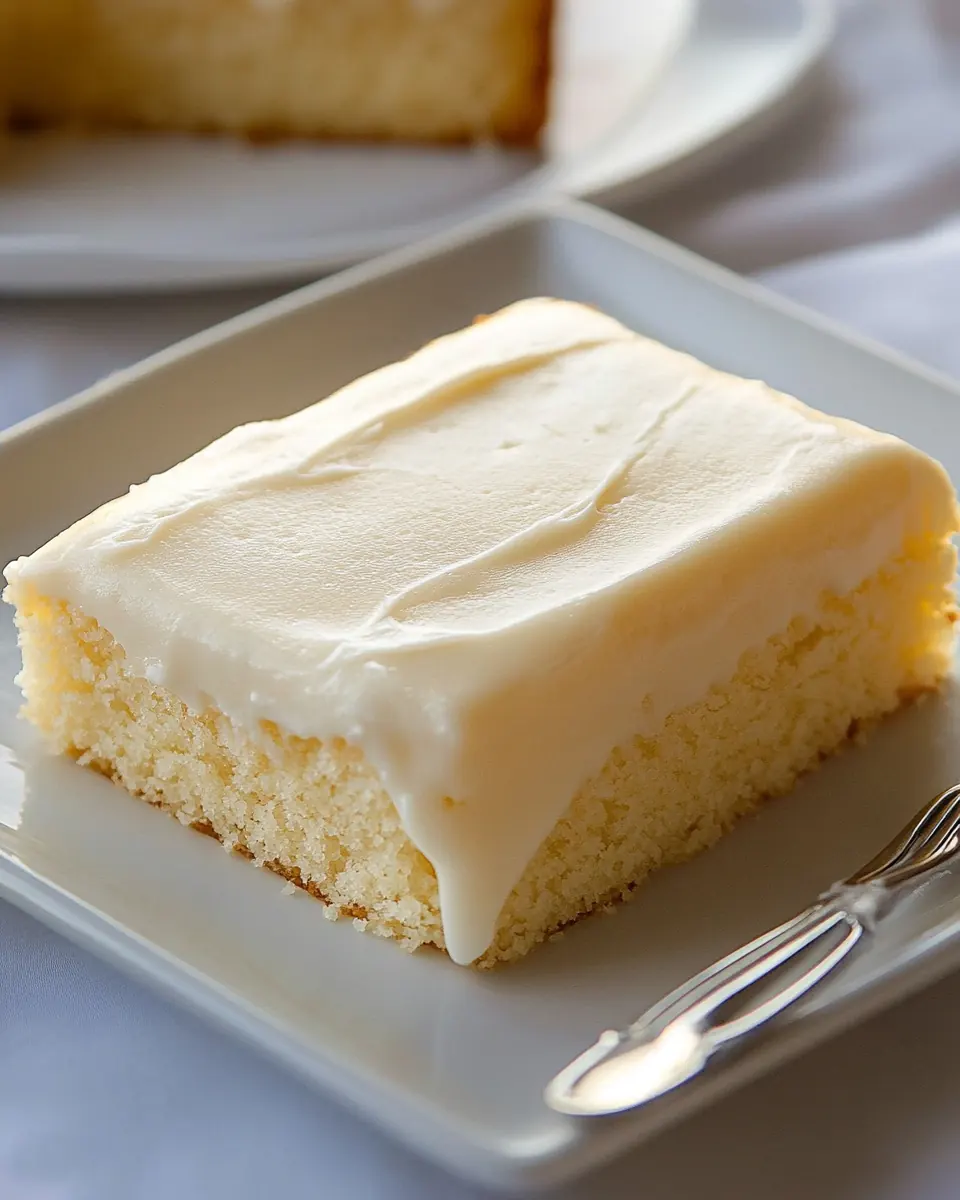
Spread the warm frosting immediately over warm cake (it will thicken up fast so work quickly).: When you pour the frosting, it should ripple and settle into the slightly warm cake surface, creating areas of soaked top and slightly set edges. Use a spatula to encourage even coverage, moving swiftly as the glaze firms in minutes. If you wait, the glazing action is lost and the topping becomes a dull coating instead of a glossy, slightly absorbed finish. Work confidently to capture that ideal window of warmth.
Let frosting set up then cut into squares and serve.: Once the glaze has cooled and gained body, the cake will be easy to slice into neat squares. You may see a thin sheen on each piece and smell the almond note as you cut, which signals it is ready. Serve at room temperature for best texture. Cutting too soon can smear the frosting, while cutting much later can make the surface slightly tacky depending on humidity, so time your presentation for when guests arrive.