Preheat oven to 425 degrees F.: You should notice the oven warming up steadily, and a reliable hot oven is key so the scones rise quickly, creating a crisp exterior. The initial blast of heat sets the structure, sealing the edges while the interior stays tender. A common mistake is not allowing the oven to reach full temperature, which causes dense, flat scones, so wait until the thermostat indicates readiness and use an oven thermometer if yours is unreliable.
In a large bowl pour entire bag of Scone Mix. Using a pastry cutter blend in the cold butter until the mixture turns into tiny pea-sized pieces.: At this stage you will feel the dry mix give way to a grainy texture speckled with cold butter . The sound is faint, a soft shifting as the cutter presses through. Those pea sized bits are crucial because they melt during baking and create steam that puffs the scones. Avoid overgrinding the butter , which would result in a greasy, dense crumb rather than a flaky one.
Pour in water and almond extract and stir till a soft dough forms.: As you combine the liquids, you'll hear a slight scrape as the dough pulls together and see a cohesive, slightly tacky mass. The scent of almond extract will float up briefly, complementing the oats. Stir gently until the dough holds, because over mixing can develop gluten and make the scones tough. If the dough feels too dry, add a teaspoon of water at a time, and if too wet, dust with a little scone mix to reach the right consistency.
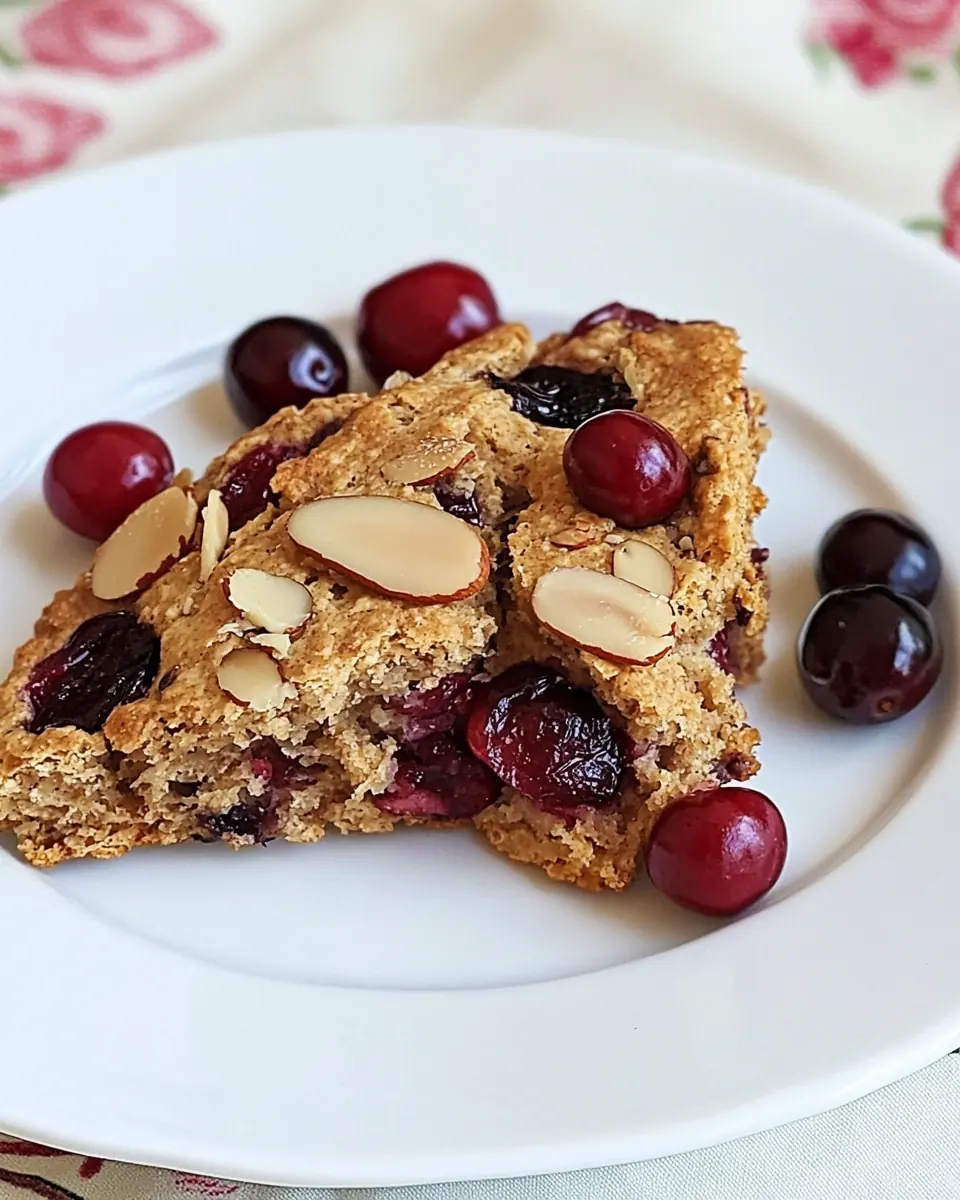
Fold in almonds and cherries.: Folding is a gentle action that evenly distributes the sliced almonds and halved cherries without breaking them down. You should see pockets of red fruit and flecks of almond throughout the dough. The cherries will release a little juice if handled roughly, so be delicate to maintain their shape. A common error is vigorously mixing here, which bruises the fruit and can make the dough too wet.
Divide dough in half, then turn out onto a floured surface. Shape dough into two 6" discs and place on a greased baking sheet (or use a silicone baking mat). Cut each disc into 6 wedges.: When you turn the dough out, feel for a smooth, slightly tacky surface that holds together. Shaping into discs creates even baking and those six wedges allow for uniform heat exposure. The visual cue is a clean edge and minimal sticking. If the dough becomes sticky while shaping, chill it briefly rather than adding too much flour, which would dry the scones out. Also, press gently to avoid compressing the dough too much.
Bake for 15 minutes till it turns a light golden brown.: During baking you will notice the tops crack and edges become firm, with a rich, toasty aroma taking over the kitchen. The sound is quiet, but the visual cue of light golden brown signifies caramelized sugars and proper crust formation. Underbaking results in a doughy center, while overbaking dries them out, so start checking near the 12 minute mark if your oven runs hot. Rotate the pan halfway through if your oven has hot spots.
Remove from oven and let cool slightly before enjoying.: As they cool, steam escapes and the crumb firms up, which makes slicing and handling easier. You will feel residual warmth and smell the mingling of oats, almonds, and cherry sugars. Resist the urge to cut immediately, because the structure needs a few minutes to settle. A common misstep is serving too hot, which yields a gummy interior; letting them rest ensures the right texture.