Preheat oven to 350 degrees F and spray a 9-inch non-stick removable bottom tart pan with non-stick spray.: Warm air fills the kitchen as the oven comes to temperature, and preheating to 350 degrees F ensures the crust starts baking immediately and evenly, creating a tender edge and slight golden color. Use a removable bottom tart pan so the presentation is clean when you release the tart. A common mistake is skipping the spray, which can cause the crust to stick, making it difficult to remove the tart intact. You should hear the faint click of the oven thermostat as it reaches temp, and the heat should feel steady before you put the crust in. If your oven runs hot or cold, use an oven thermometer to confirm the true temperature, because even small variances can change baking time and the final texture of the crust.
In the bowl of your electric mixer cream the butter and sugar until light and fluffy.: As you cream the butter and sugar , the mixture will lighten in color and become aerated, carrying tiny air pockets that help produce a shortbread like crumb. Listen for a gentle whirring and watch for the change from glossy butter to pale, whipped texture. The reason we cream is to incorporate air for tenderness and to ensure even distribution of sugar. A common error here is under creaming, which leaves the crust dense, or over creaming, which can make it too soft. Scrape the bowl occasionally to ensure everything mixes evenly.
Add the flour and salt and beat until the dough just comes together.: Once you add the flour and salt , the texture will shift from creamy to crumbly and then to a cohesive dough. You want it to barely come together so the crust stays tender rather than tough. The sound will change to a quieter thud as the dry ingredients absorb the fat. Overworking at this stage can develop gluten and make the crust chewy, so stop mixing when you see the dough cling together.
When making this crust the dough will first look very crumbly but just keep mixing until you see it come together in the bowl. This takes around 3 minutes.: Keep a close eye on texture because this transitional stage can be confusing. The dough often looks dry for a moment, then suddenly binds as the butter warms and hydrates the flour. This step matters because a correctly bound dough will press smoothly into the pan and bake with an even structure. A typical mistake is abandoning the mixer too soon and ending up with an uneven crust; if that happens, press the crumbs firmly into the pan to help them adhere.
Press crust into the bottom of your greased pan and bake for about 20 minutes, or until lightly browned.: As you press the crust into the pan, feel for an even thickness and gently press up the sides if you like a small edge. When baking, watch for a faint golden rim and a set surface; the smell will shift from raw flour to a warm, toasty note. This bake firms the base so it holds the filling. A common problem is uneven pressing which causes thin spots; take an extra minute to smooth the dough before baking for uniform results.
Remove from oven and place on a wire rack to cool while you make the filling.: Cooling on a wire rack lets air circulate under the tart and prevents condensation that can make the crust soggy. You will notice steam dissipating and the tart losing some of its heat. Letting the shell cool is crucial because adding hot filling can melt the crust and alter texture. Resist the urge to hurry this step, since rushing can compromise the final set and appearance.
In a bowl of a food processor add lemon slices, sugar, and butter.: Putting the Meyer lemons , sugar , and cubed butter into the food processor combines flavor and fat right from the start, leading to a smooth, integrated filling. As you pulse, the citrus aroma will become stronger and the butter will begin to break down. This technique creates an emulsion that carries the lemon flavor throughout the filling. A pitfall is overfilling the processor; work in batches if necessary to ensure an even texture.
Process together until completely smooth. Scraping down the sides when needed.: When the mixture becomes silky and uniform, stop processing and scrape down the sides to incorporate any hidden bits. The sound will shift from choppy to a steady puree, and the scent will be rich and bright. Smoothness matters because it prevents grainy or chunky spots in the custard, giving you a glossy finish. Avoid running the processor too long without scraping, as that can trap chunks on the bowl walls and create uneven texture.
Add in eggs, cornstarch, and kosher salt and process until combined and smooth.: Adding the eggs , cornstarch , and kosher salt builds structure and stabilizes the filling. Process until the mixture is homogenous and slightly thickened; the color will be pale and the surface glossy. This step ensures the filling sets properly in the oven and has that delicate jiggle when done. A common mistake is under mixing, which leaves streaks or pockets of uncooked egg, so process until smooth and uniform.
Carefully pour the lemon mixture into the crust. Be careful to not fill the crust over the top or it will not remove correctly.: As you pour, watch how the filling settles into the shell and avoids overfilling the rim. The filling should come close to the edge but not overflow. The visual cue is a smooth, level surface within the border of the crust. Overfilling can spill during baking and prevent clean removal from the pan, so leave a small gap for expansion.
Add tart to a baking sheet and bake for about 35 minutes until the filling is set and the center of the tart is just slightly jiggly. The top should also be a light golden color.: Placing the tart on a baking sheet helps catch any spills and makes handling easier. As the tart bakes, you will notice the surface gaining a pale gold hue and the center holding a faint wobble when you gently shake the pan. This is the sign of perfect set, where the edges are firm and the center will finish as it cools. A common misstep is overbaking, which leaves the filling dry and rubbery, so check for the slight jiggle rather than a hard set.
Let the tart completely cool before popping it out of the tart mold.: Cooling fully allows the custard to firm up and makes release safer and cleaner. You may feel a faint give initially, then the tart will slowly stabilize. Rushing this step can cause the tart to break apart, so be patient. Using a removable bottom pan helps, but only after the tart is cool will it slide out in one piece.
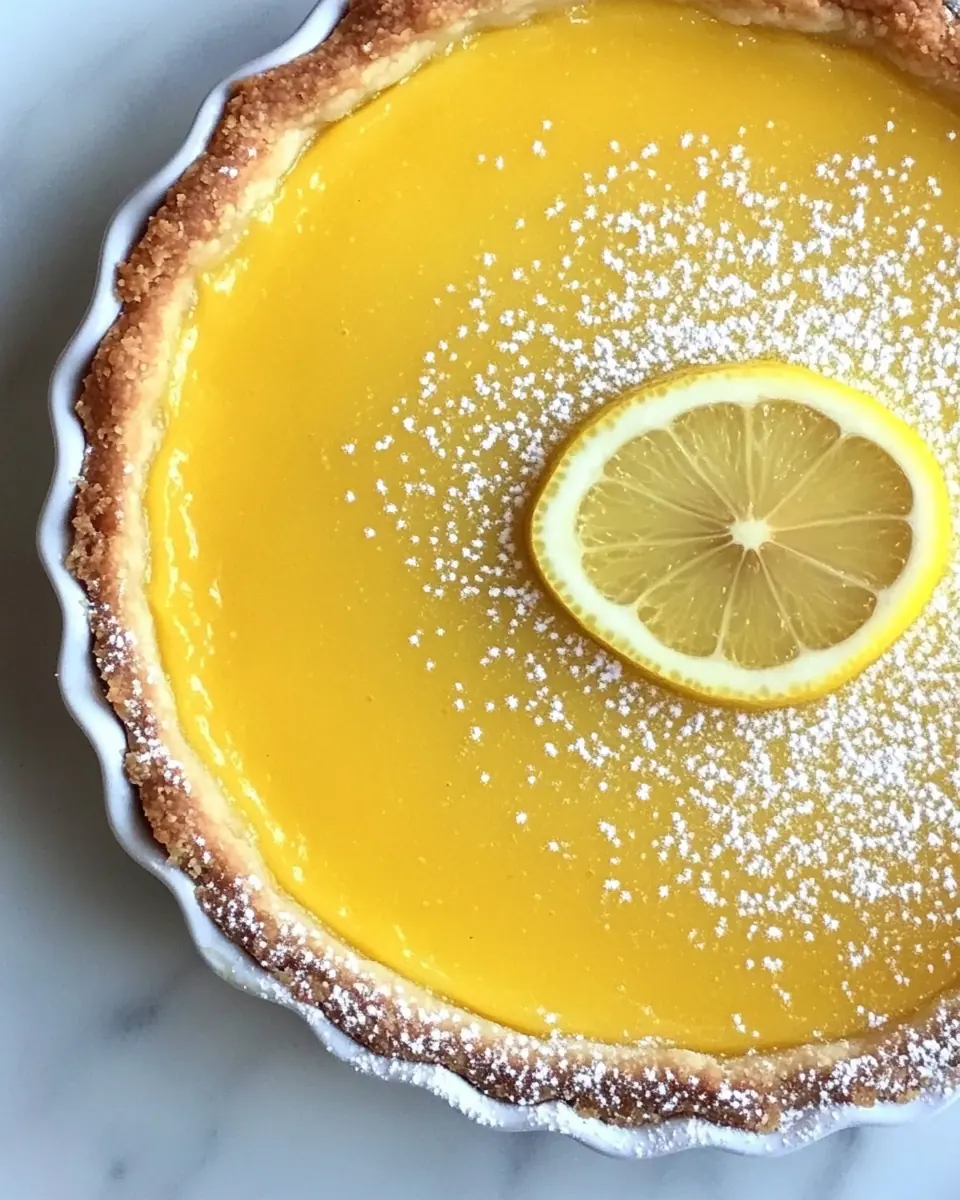
Serve room temperature lightly sprinkled with powdered sugar.: Serving at room temperature reveals the texture and flavor most clearly; the powdered sugar provides a soft visual contrast and a touch of extra sweetness. The aroma will be gentle and inviting, and each slice will show clean lines between crust and filling. Avoid serving straight from the fridge, which can mute the citrus perfume and stiffen the custard.