Preheat the oven to 400 degrees F.: The room will fill with a warm hush as the oven climbs, and this steady, intense dry heat is what creates caramelized edges on the beets . You should feel the oven become reliably hot, which ensures even roasting. If the oven is underheated, the beets may steam instead of achieving those lightly charred tips, so wait until it reaches temperature. A common mistake is placing the baking sheet on the top rack where browning can become uneven; center the pans for best results.
Toss the beets together with the olive oil and a good pinch of both salt + pepper. Spread the beets out in an even layer on two baking sheets. Roast for 30-35 minutes or until lightly charred and tender. Allow to cool before adding to the salad.: You will notice the oil shimmer and the raw beet smell sweeten as they roast; the aroma should deepen to an almost nutty scent. Visual cues are key, look for edges to darken and an overall tender bite when pierced with a fork. This method concentrates natural sugars and produces a silky interior. Avoid overcrowding the pan, otherwise the beets will steam and lose that caramelized surface. A typical misstep is removing them too early; under roasted beets remain firm and will throw off the salad's texture balance.
Meanwhile, line another baking sheet with parchment paper. Add the pecans to the baking sheet and toss with the maple syrup, cayenne and a pinch of salt. Bake (at 400 degrees F.) for 15-25 minutes, stirring 2-3 times throughout cooking until the pecans are toasted and golden. Remove from the oven and spread the pecans in one layer. Allow to cool.: As the pecans bake, the kitchen will fill with the warm, toasty scent of nuts and the maple will begin to caramelize, creating sticky, shiny surfaces. You want a nut that is crisp to the bite with a sweet, slightly spicy coating. Stirring periodically promotes even browning and prevents one side from becoming too dark. A common problem is leaving them unattended, which can result in burnt syrup that tastes bitter. Once they cool they will crisp up more, so resist the urge to test them while hot and soft.
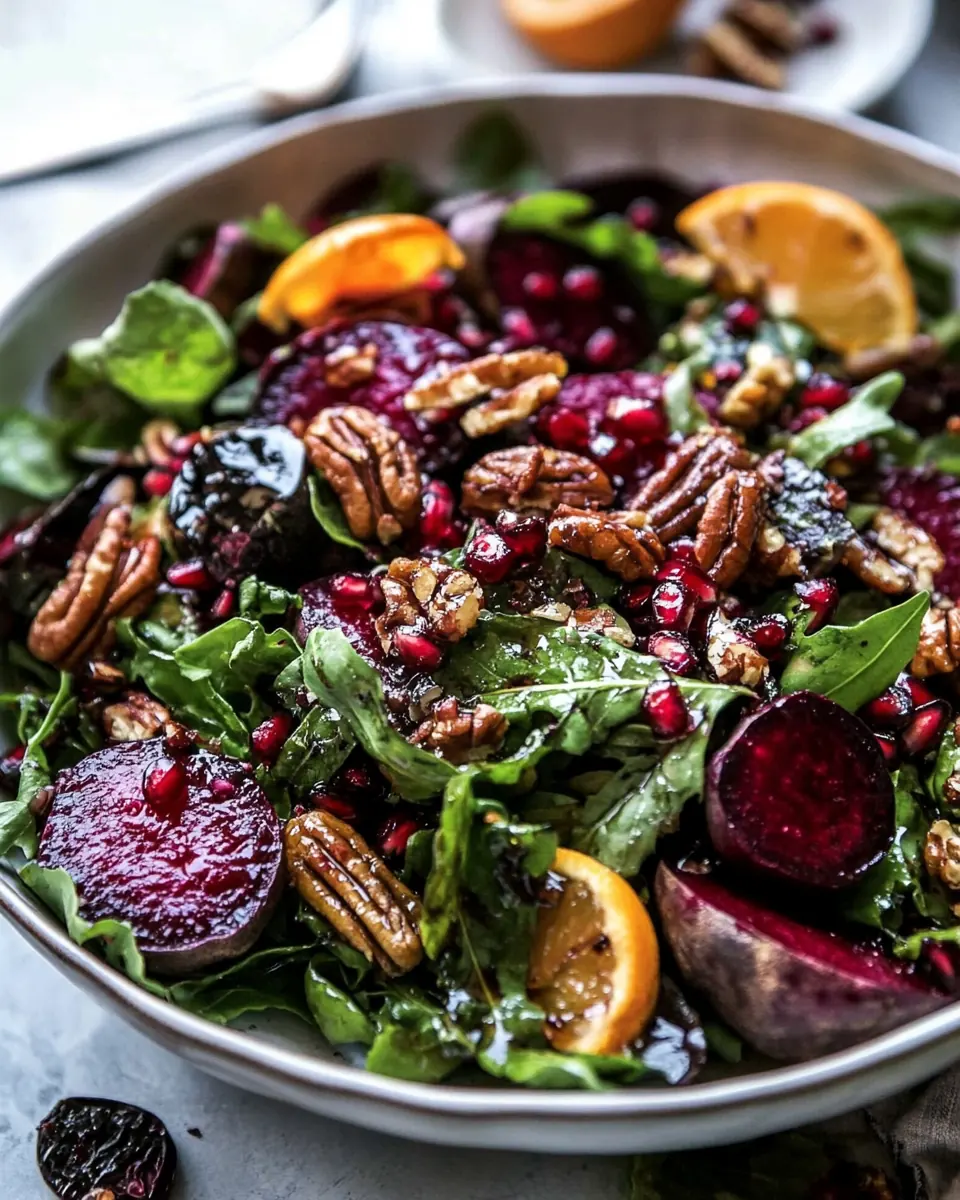
Add the greens to a large bowl. Add the pomegranate arils, beets, pecans and gorgonzola cheese. Give the salad a gentle toss.: Start with crisp, dry greens so they retain lift; when you add the jewel like pomegranate arils they will glisten against the leaves. The contrast between the warm roasted beets and the cool tangy crumbled gorgonzola cheese creates layers of flavor. Toss gently to avoid bruising the greens and crushing the arils, using a folding motion so everything mixes without turning limp. A frequent error is over tossing which breaks the delicate arils and makes the greens soggy.
To make the dressing, combine the olive oil, balsamic vinegar, fig preserves, orange zest + juice and a pinch of salt + pepper in a bowl or glass jar. Drizzle the dressing over the salad or serve alongside the salad. Enjoy!: When you whisk the dressing, you will see it emulsify into a glossy, slightly viscous sauce that clings to the leaves and toppings. The citrus and balsamic should be bright and aromatic, and the fig preserves add body and a gentle fruitiness. Taste and adjust seasoning carefully because the gorgonzola cheese can contribute significant salt. One mistake is over saturating the salad with dressing; add a little at a time until the salad is lightly coated, not drenched.