Easter Mini Eggs Cookie Cake
Easter Mini Eggs Cookie Cake is the sort of dessert that turns a casual get together into a celebration without any fuss. The first time I made this, I was juggling a dozen little tasks while the kids painted eggs in the next room, and the warm smell of baking butter and brown sugar pulled everyone to the kitchen like a magnet. It felt cozy and a little chaotic, and that messy warmth is exactly why this recipe lives in my spring rotation.
I remember asking myself whether I should make cupcakes or a cookie tray, and then I landed on something better, an oversized cookie with frosting and crunchy candy on top. Slicing into a thick, chewy round and seeing the colorful mini chocolate eggs peek through made everyone grin. It is playful, and you get that satisfying contrast of soft interior and crisp edge in every bite. Over the years I have tweaked the frosting colors and the placement of the eggs until it feels right for a holiday table, but the heart of the recipe remains simple and joyful.
Recipe Snapshot
55 mins
30 mins
25 mins
Medium
250 kcal
American
Gluten-Free, Low FODMAP
Desserts
8 inch springform pan, Mixing bowl, Electric mixer, Silicone spatula, Cooling rack, Piping bags or zip top bags
Why This Easter Mini Eggs Cookie Cake Hits Different
1. Celebration friendly and crowd pleasing
I love that Easter Mini Eggs Cookie Cake scales emotionally better than many desserts. You get the dramatic presence of a cake with the ease of a giant cookie, so serving sixteen slices feels casual, not fussy. I often bring this to family brunches, because guests can grab a slice without a fork, and the colorful topping always starts conversations.
2. Texture play that keeps you coming back
What draws me back to this recipe is the texture contrast. The base combines tender, buttery crumbs with pockets of melty chocolate chips, while the edges crisp just enough to give a pleasant bite. Tucking chewy candy and chips into the dough means every slice delivers a slightly different combination of crisp, soft, and crunchy, and that variety is addictive.
3. Kid friendly and interactive
I’ve made this with little helpers more times than I can count, and it is forgiving for tiny hands. Separating frosting into colors and piping dots is a perfect task for kids, and they take immense pride placing matching colored mini chocolate eggs on each frosting dot. It becomes part recipe, part activity, and that hands on element turns baking into memory making.
4. Versatile and forgiving
The method is straightforward, so you can adapt without risking failure. If your dough feels slightly sticky, you can refrigerate briefly and it still bakes into a lovely cake. The frosting colors can be dialed up or down depending on how playful you want the finished cake to be. I like to say it is forgiving enough for weeknight bakers yet polished enough for holiday hosting.
5. Visual payoff with minimal effort
Finally, the aesthetics are a big reason I adore this recipe. A few colored frosting dots and matching eggs instantly create a festive centerpiece. You get a beautiful, festive look without fussy piping techniques, and that quick decorative flourish often makes the dessert feel special at the table.
Shopping List for Easter Mini Eggs Cookie Cake
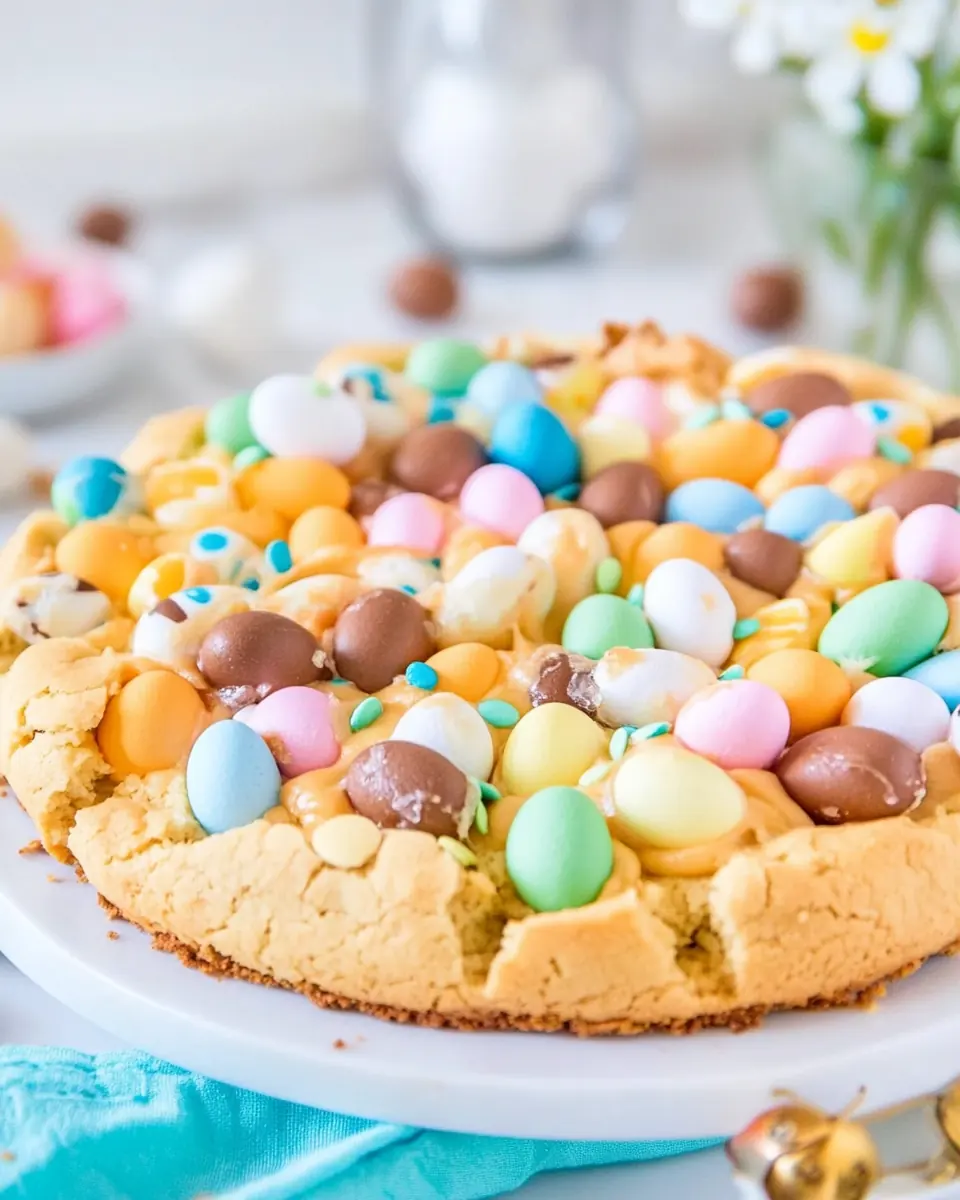
These ingredients are chosen to create a balance of tender cookie crumb, sweet frosting, and playful crunch. The key players are the fats and sugars to build structure and flavor, the dry ingredients for texture and rise, and the chocolate elements for pockets of gooeyness and color. Together they deliver a dessert that is both comforting and whimsical.
- 12 tablespoons butter unsalted, softened: Softened adds creamy richness and helps create a tender, spreadable cookie dough when creamed with sugars; provides flavor and structure through fat content. Works to incorporate air for lift and improves mouthfeel in the baked cookie cake.
- 1 cup brown sugar: Brown sugar adds deep molasses sweetness and moisture, contributing chewiness and a slightly caramel flavor to the dough. Helps with browning during baking and balances the sweeter white sugar for complexity.
- 1/4 cups sugar: Granulated sugar provides sweetness and helps with creaming to incorporate air for a lighter texture; it also contributes to crisp edges. Balances moisture from brown sugar to achieve the desired cookie cake consistency.
- 2 large eggs 1 egg + 1 egg yolk: Beaten eggs and extra yolk supply moisture, fat, and protein to bind ingredients, enrich flavor, and tenderize the dough; the extra yolk increases richness and chewiness. Aid in structure and browning by aiding coagulation of proteins during baking.
- 2 teaspoons vanilla: Vanilla adds warm aromatic notes and enhances overall flavor, rounding out the sweetness and chocolate components. Small quantity intensifies flavor perception without altering texture.
- 1 3/4 cup flour: All-purpose flour supplies the bulk and structure through gluten development; it sets the cookie cake when proteins coagulate and starches gelatinize. Proper measurement ensures balance between tenderness and stability.
- 1 teaspoon cornstarch: Cornstarch tenderizes by inhibiting gluten formation, producing a softer, more delicate crumb and slightly cakier texture in the cookie cake. Helps create a pillowy bite and enhances spread control during baking.
- 1 teaspoon baking soda: Baking soda acts as a leavening agent creating lift and lightness by producing carbon dioxide when reacting with acids and heat. Also promotes spread and browning for a pleasing texture and color.
- 1/4 teaspoons salt: Salt enhances and balances sweetness, strengthens gluten structure slightly, and amplifies other flavors in the dough. Even in small amounts, it prevents flat, dull tasting baked goods.
- 3/4 cup chocolate chips: Chocolate chips provide pockets of melted chocolate throughout the cookie cake, adding rich flavor and texture contrast. They create gooey, decadent bites and complement the mini eggs and frosting.
- 3/4 cup mini chocolate eggs Plus extra for decorating: Mini chocolate eggs add colorful crunch and chocolate flavor distributed through the cake; extra pieces for decorating lend a festive appearance. Their candy shell offers textural contrast to the soft cookie and frosting.
- 1 cup butter softened, unsalted: Softened butter for frosting creates a smooth, creamy base when beaten with powdered sugar, contributing richness and spreadability. Unsalted butter allows precise control of overall saltiness in the frosting.
- 4 cups powdered sugar: Powdered sugar sweetens and thickens the frosting, providing a silky, smooth texture when combined with butter. It stabilizes the icing, allowing it to hold shape for spreading and piping.
- 1 teaspoon vanilla extract: Vanilla extract flavors the frosting with warm, aromatic notes that enhance the sweet components and chocolate elements. Small addition deepens overall taste without affecting texture.
- food coloring: Food coloring provides visual customization for the frosting or decorations, enabling pastel or vibrant hues appropriate for an Easter theme. Small amounts create festive appearance without altering flavor or texture.
Recipe Steps for Easter Mini Eggs Cookie Cake
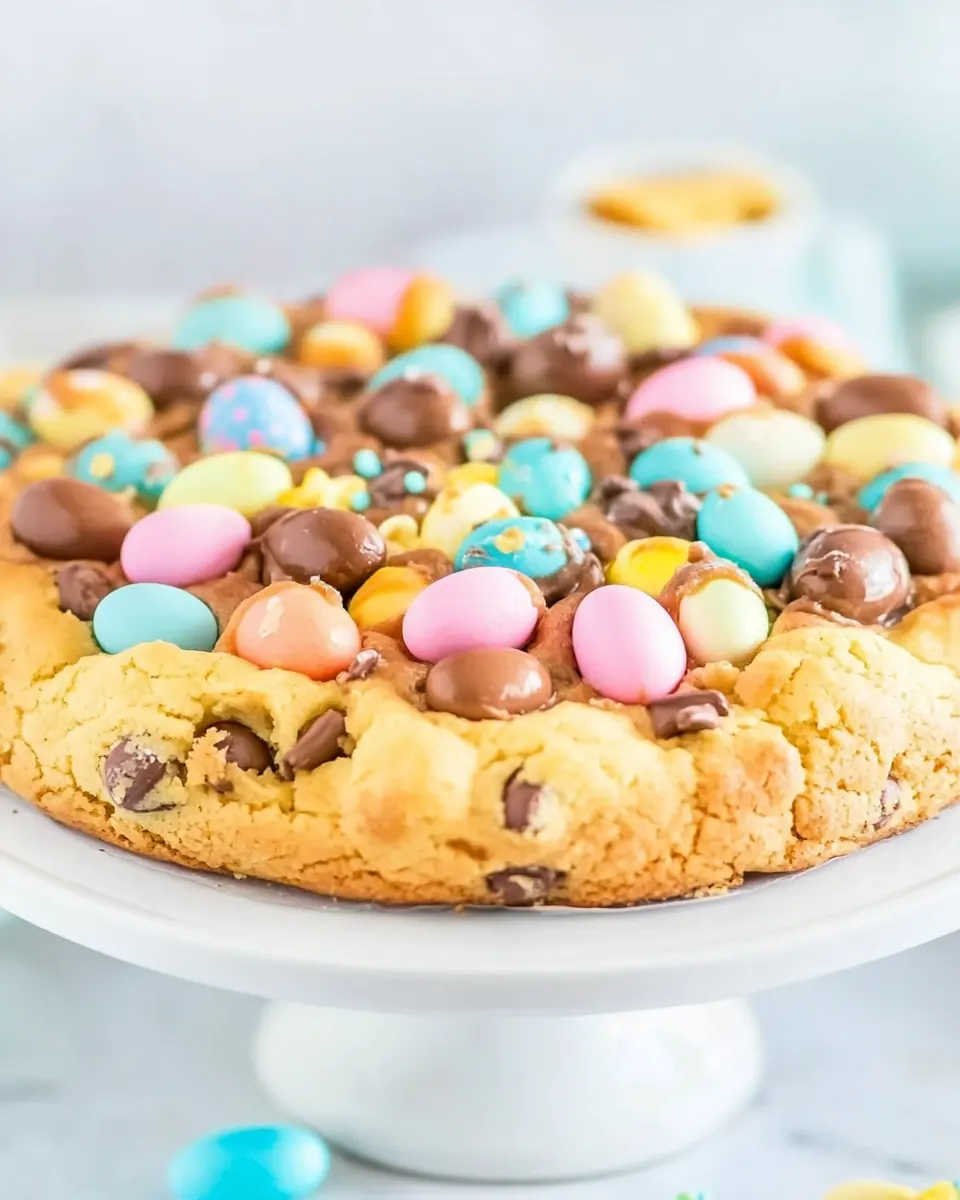
This cookie cake is approachable but rewards attention. I like to set out my ingredients first, then move through the steps with a timer. The directions that follow expand on the original notes, giving sensory cues, troubleshooting tips, and the reasons behind each choice so you can bake with confidence.
- Preheat oven to 350 degrees. Spray an 8-inch springform pan with nonstick spray. See notes.: You will notice a warm, slightly sweet aroma as the oven reaches temperature, which helps set the edges once the dough goes in. Preheating is essential so the cookie cake begins baking immediately, producing that pleasing contrast of a golden rim and tender center. A common mistake is placing the cake in a cool oven, which changes spread and texture, so wait until the thermometer reads steady heat. Spray an 8 inch springform pan with nonstick spray to ensure easy release, and if you prefer, line a regular pan with parchment for safer removal.
- In a large mixing bowl cream butter, brown sugar, and white sugar until light and creamy.: At this stage you should see the mixture lighten in color and take on a fluffy, aerated texture, which traps tiny air pockets that contribute to tenderness. The sound of the mixer will change from heavy to a steady hum as the sugars incorporate. Proper creaming ensures even rise and prevents dense spots in the cake. If you skip thorough creaming, the texture may be uneven, so scrape the bowl sides periodically and mix until the mixture looks pale and slightly ribbon like.
- Separate one of the eggs. Add one egg, one egg yolk, and vanilla to the butter mixture. Mix until well combined and discard the extra egg white.: The yolk adds extra richness while the single white keeps the batter balanced. You should see the batter become smoother and glossier after adding these, with a fragrant lift from the vanilla . One mistake is adding a cold egg directly from the fridge, which can cause the butter to seize and look curdled; bringing eggs to room temperature helps them blend seamlessly. Discard the extra egg white or save it for another use to keep proportions correct for texture.
- In a separate bowl mix together the flour, cornstarch, baking soda and salt until combined. Add these dry ingredients to the wet ingredients and mix until combined.: Whisking these dry ingredients until uniform ensures consistent rise and avoids pockets of cornstarch or soda. You should notice a faint flour dust cloud and an even distribution of the lighter cornstarch. This step matters because it controls structure, ensuring the cake is tender yet stable. A typical error is adding the dry mix without sifting or whisking, which can cause uneven texture or bites with too much leavening in one spot.
- With a silicone spatula, add the chocolate chips and mini chocolate eggs to the dough. Gently fold into the dough until combined.: When combined, the batter should be cohesive but not overworked, with no visible streaks of flour. Mix just until you see a uniform dough, because excessive mixing develops gluten, leading to a tougher bite rather than the desired tender crumb. Stop mixing as soon as the last speck of flour disappears to preserve a soft texture; overmixing is the most common misstep here.
- Spread cookie dough into the springform pan. Bake for 20-25 minutes until golden brown.: Folding by hand should show pockets of glossy chocolate chips and colorful mini chocolate eggs in the dough, giving a pleasing marbled effect. The gentle motion prevents crushing the eggs and bleeding their color into the dough. A loud scraping sound means you are overworking the dough, so keep the folds light. If you press too hard, you may break the candy shells and lose some of the visual appeal.
- Gently run a short knife around the edge of the pan. Release the springform pan and allow the cake to cool on a cooling rack.: As it bakes you will smell the deepening notes of caramelized sugars and butter, and the top will shift from pale to a warm golden brown. The center will set but remain slightly soft to the touch, while edges become firmer and slightly crisp. Underbaking will leave the middle overly gooey, and overbaking will dry the cake, so check for a gentle wobble at around twenty minutes and aim for even browning. If using a glass pan, reduce time by a few minutes as it conducts heat differently.
- In a large bowl combine the butter, vanilla and powdered sugar with an electric mixer until light and fluffy.: After removing from the oven, the aroma will intensify, and steam will rise from the surface. Running a knife around the edge prevents the cake from sticking as it cools and keeps the top intact. Doing this while too hot can cause the structure to sink slightly, so let it rest for a brief minute if the cake is still very fragile. A common oversight is forcing the release, which can tear the cake.
- Separate the frosting into four bowls. Add a few drops of food coloring to three of the bowls, mixing to make one pink, one blue and one yellow. You should have one color of frosting for each color of mini chocolate eggs.: Cooling on a rack allows air to circulate under the cake, preventing soggy bottoms and helping the interior set gently. You will notice the cake firm up as it cools and the chocolate pockets settle into place. Allowing it to cool fully before frosting avoids melting the buttercream, which preserves your colored piping. Rushing this step leads to a smeared frosting surface and a less attractive finish.
- Place each color of frosting into a piping bag or into a strong zip-top bag. Snip the corner from each bag with scissors.: The frosting should become pale and airy, with a smooth, spreadable consistency and a faint vanilla scent. The sound of the mixer will change as the powdered sugar is beaten in and the texture shifts from gritty to satin smooth. This aeration creates a stable frosting that holds color well. If the frosting seems too thin, add more powdered sugar cautiously; if too stiff, a few drops of milk or cream can help, but avoid thinning too much which will affect piping.
- Pipe dots of the frosting in alternating colors around the top of the cake. Top each dot of frosting with the same colored chocolate egg. Slice and enjoy!: Portioning the frosting allows you to create distinct hues that match the mini chocolate eggs . Use gel food coloring for brighter shades without altering texture, stirring until each bowl has an even tone. If you mix too much color at once, you cannot easily lighten it, so add color gradually. Make sure to keep one bowl uncolored to preserve a neutral shade if desired.
- Add a few drops of food coloring to three of the bowls, mixing to make one pink, one blue and one yellow: The colored frostings should look vibrant and hold peaks when stirred, which indicates the right consistency for piping. Matching the frosting to the candy colors creates a polished look, and the colors will pop against the warm cookie base. Over coloring can make the frosting taste slightly bitter, so use concentrated gel sparingly for the best balance.
- Place each color of frosting into a piping bag or into a strong zip top bag: Filling bags should feel smooth and even, without air pockets that cause sputtering when piping. Snip a small corner for controlled dots, and practice a couple of test dots on parchment to check flow. If the frosting clogs or spits, the tip may be too small or the frosting too thick; adjust accordingly. Using bags prevents messy spreading and ensures neat, consistent dots on the cake.
- Pipe dots of the frosting in alternating colors around the top of the cake: The piped dots provide a playful sequin like border and offer visual rhythm across the top. Place dots evenly by eye, aiming for consistent size, and the colors will create an appealing pattern. A shaky hand can lead to uneven dots, so brace your arms on the counter if necessary to steady your placement.
- Top each dot of frosting with the same colored chocolate egg: Press each mini chocolate egg gently into its corresponding frosting dot so it sits securely and aligns color harmoniously. The contrast of smooth frosting and crunchy candy creates a delightful texture and a festive presentation. If the egg sinks, the frosting may be too soft; allow the dot to set briefly before placing the candy. Once decorated, slice and enjoy, watching for the satisfying combination of warm cookie, cool frosting and crunchy egg in every bite.
Expert Tips about Easter Mini Eggs Cookie Cake
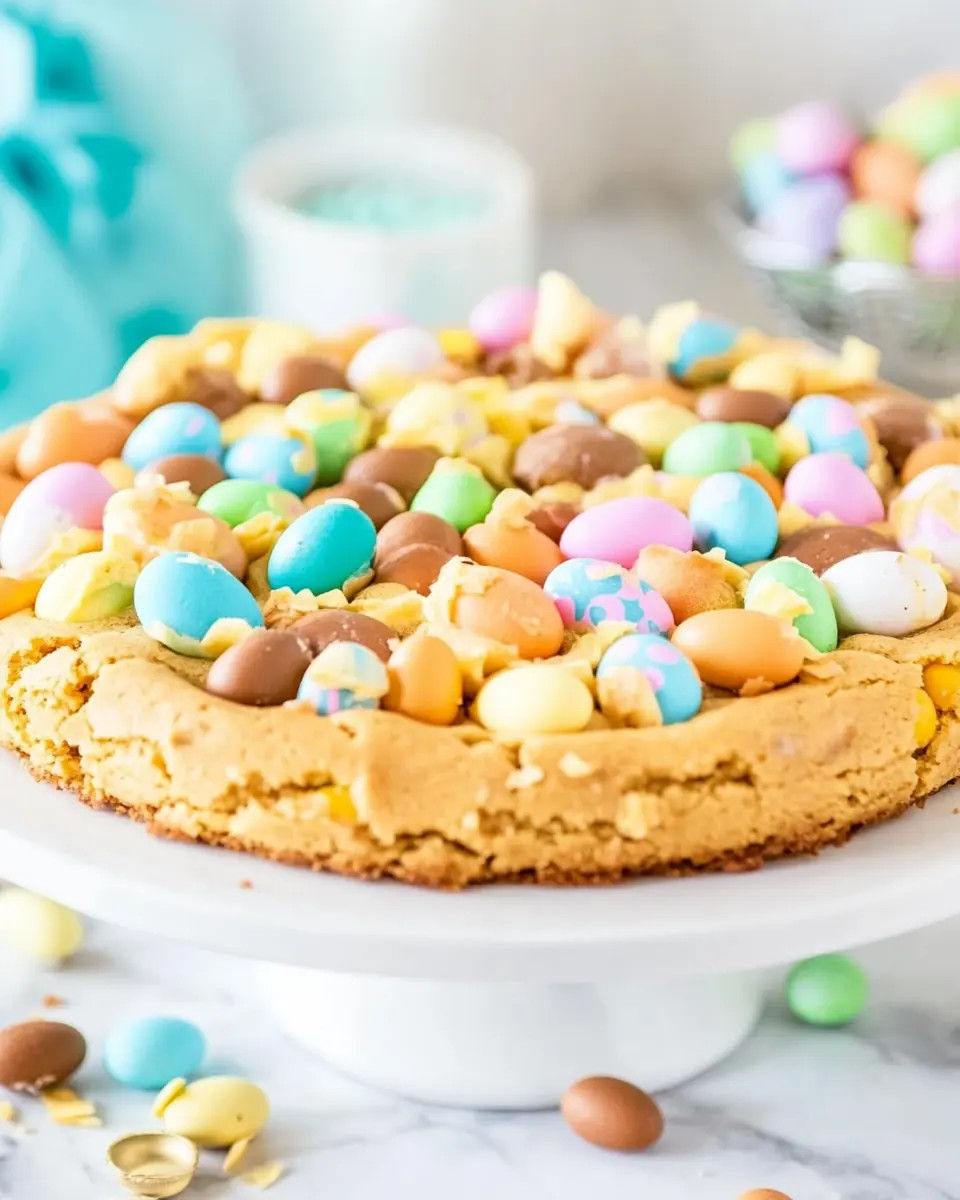
This recipe rewards a few small attentions more than heavy handed technique. Below are practical tips I use every time, expanded into actionable guidance to help you get consistent, beautiful results. Each tip opens with a strong phrase to draw your eye to the key idea.
- Room temperature ingredients matter Make sure your butter and eggs are at room temperature so they blend smoothly. Cold butter creates lumps and prevents proper creaming, which affects texture. If your kitchen is cold, place butter near a warm stove for a few minutes but never melt it. Room temperature eggs incorporate more easily and help the batter become silky, which improves the cake like crumb.
- Gentle folding preserves candies When you add the mini chocolate eggs and chocolate chips, fold with a silicone spatula using wide, slow turns. This avoids breaking the candy shells and keeps the pieces distributed. Over mixing at this stage creates a tougher crumb because of gluten development, so fold just until you see even distribution.
- Check doneness by feel Instead of relying solely on time, look for a golden edge and a slightly soft center that springs back when lightly pressed. The center will continue to set as it cools, so a slight wobble is desirable. If your oven runs hot, check a few minutes early to avoid overbaking and a dry result.
- Use gel food coloring Gel colors provide vibrant shades without thinning your frosting. Add a little at a time until you reach the hue you want. Liquid colors can water down frosting and affect piping hold, while gel keeps the frosting thick and pipeable.
- Pipe steady dots with a practice run Before piping on the cake, test each bag on parchment to check flow and dot size. If the dot spreads too much, the frosting is too soft; if it sits with a peak, it is perfect for placing the eggs. Practice ensures uniform decoration and reduces nervous adjustments at the final step.
Accompaniments for Easter Mini Eggs Cookie Cake
This cookie cake shines with simple accompaniments that complement its sweet, buttery profile. I like to serve it with contrasting textures and light beverages so the dessert remains the star. Below are ideas for occasions, pairings, and storage written as a practical list so you can choose what fits your event.
- Serve with simple coffee The bitter notes of brewed coffee cut through the sweetness and highlight the chocolate. For brunch occasions, offer both regular and decaf so guests can choose. A strong coffee accentuates the caramelized edges of the cookie cake and refreshes the palate between bites.
- Offer milk or milk alternatives Classic whole milk or a cold oat milk pairs beautifully, especially for kids. The creaminess complements the cookie texture and balances the sugary frosting. Keep chilled glasses available so each slice feels indulgent yet approachable.
- Bring it to a spring brunch This recipe is ideal for holiday tables and communal brunches where people graze. Present slices on a wide platter for guests to help themselves, and coordinate the colored frosting with other table decor for a cohesive look. It works well alongside fruit platters and light egg dishes.
- Storage for leftovers Store slices in an airtight container at room temperature for up to two days, or refrigerate for up to five days. If refrigerated, allow slices to come to room temperature before serving for the best texture. For longer storage, freeze individual slices wrapped tightly for up to three months and thaw overnight in the refrigerator.
- Seasonal pairings For spring gatherings, add fresh berries or a simple fruit salad to balance the indulgence. The brightness of berries complements the chocolate and butter, and their acidity refreshes the palate between rich bites. This combo makes the dessert feel lighter and more balanced for daytime events.
FAQ
Conclusion
This Easter Mini Eggs Cookie Cake stands out because it combines a rich, buttery cookie base with colorful frosting and crunchy candy to create a dessert that looks festive and tastes familiar. It invites playful decorating and makes for an approachable centerpiece that suits family brunches or seasonal gatherings. Give it a try the next time you want a cheerful, shareable dessert that is easy to assemble and always earns compliments. I hope it becomes one of your go to holiday treats, bringing bright flavors and happy faces to your table.
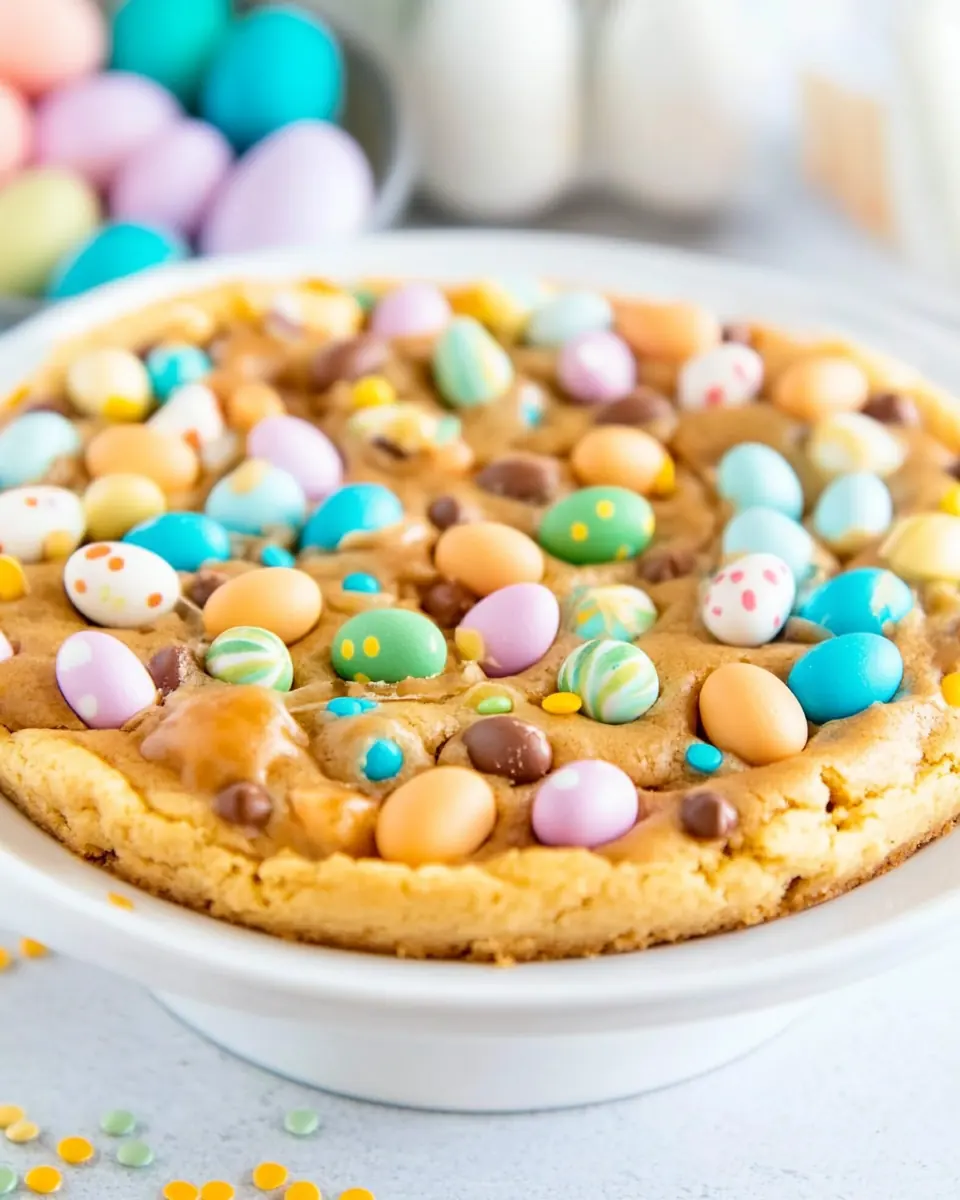
Easter Mini Eggs Cookie Cake
Ingredients
Equipment
Method
- Preheat oven to 350 degrees. Spray an 8-inch springform pan with nonstick spray. See notes.: You will notice a warm, slightly sweet aroma as the oven reaches temperature, which helps set the edges once the dough goes in. Preheating is essential so the cookie cake begins baking immediately, producing that pleasing contrast of a golden rim and tender center. A common mistake is placing the cake in a cool oven, which changes spread and texture, so wait until the thermometer reads steady heat. Spray an 8 inch springform pan with nonstick spray to ensure easy release, and if you prefer, line a regular pan with parchment for safer removal.
- In a large mixing bowl cream butter, brown sugar, and white sugar until light and creamy.: At this stage you should see the mixture lighten in color and take on a fluffy, aerated texture, which traps tiny air pockets that contribute to tenderness. The sound of the mixer will change from heavy to a steady hum as the sugars incorporate. Proper creaming ensures even rise and prevents dense spots in the cake. If you skip thorough creaming, the texture may be uneven, so scrape the bowl sides periodically and mix until the mixture looks pale and slightly ribbon like.
- Separate one of the eggs. Add one egg, one egg yolk, and vanilla to the butter mixture. Mix until well combined and discard the extra egg white.: The yolk adds extra richness while the single white keeps the batter balanced. You should see the batter become smoother and glossier after adding these, with a fragrant lift from the vanilla . One mistake is adding a cold egg directly from the fridge, which can cause the butter to seize and look curdled; bringing eggs to room temperature helps them blend seamlessly. Discard the extra egg white or save it for another use to keep proportions correct for texture.
- In a separate bowl mix together the flour, cornstarch, baking soda and salt until combined. Add these dry ingredients to the wet ingredients and mix until combined.: Whisking these dry ingredients until uniform ensures consistent rise and avoids pockets of cornstarch or soda. You should notice a faint flour dust cloud and an even distribution of the lighter cornstarch. This step matters because it controls structure, ensuring the cake is tender yet stable. A typical error is adding the dry mix without sifting or whisking, which can cause uneven texture or bites with too much leavening in one spot.
- With a silicone spatula, add the chocolate chips and mini chocolate eggs to the dough. Gently fold into the dough until combined.: When combined, the batter should be cohesive but not overworked, with no visible streaks of flour. Mix just until you see a uniform dough, because excessive mixing develops gluten, leading to a tougher bite rather than the desired tender crumb. Stop mixing as soon as the last speck of flour disappears to preserve a soft texture; overmixing is the most common misstep here.
- Spread cookie dough into the springform pan. Bake for 20-25 minutes until golden brown.: Folding by hand should show pockets of glossy chocolate chips and colorful mini chocolate eggs in the dough, giving a pleasing marbled effect. The gentle motion prevents crushing the eggs and bleeding their color into the dough. A loud scraping sound means you are overworking the dough, so keep the folds light. If you press too hard, you may break the candy shells and lose some of the visual appeal.
- Gently run a short knife around the edge of the pan. Release the springform pan and allow the cake to cool on a cooling rack.: As it bakes you will smell the deepening notes of caramelized sugars and butter, and the top will shift from pale to a warm golden brown. The center will set but remain slightly soft to the touch, while edges become firmer and slightly crisp. Underbaking will leave the middle overly gooey, and overbaking will dry the cake, so check for a gentle wobble at around twenty minutes and aim for even browning. If using a glass pan, reduce time by a few minutes as it conducts heat differently.
- In a large bowl combine the butter, vanilla and powdered sugar with an electric mixer until light and fluffy.: After removing from the oven, the aroma will intensify, and steam will rise from the surface. Running a knife around the edge prevents the cake from sticking as it cools and keeps the top intact. Doing this while too hot can cause the structure to sink slightly, so let it rest for a brief minute if the cake is still very fragile. A common oversight is forcing the release, which can tear the cake.
- Separate the frosting into four bowls. Add a few drops of food coloring to three of the bowls, mixing to make one pink, one blue and one yellow. You should have one color of frosting for each color of mini chocolate eggs.: Cooling on a rack allows air to circulate under the cake, preventing soggy bottoms and helping the interior set gently. You will notice the cake firm up as it cools and the chocolate pockets settle into place. Allowing it to cool fully before frosting avoids melting the buttercream, which preserves your colored piping. Rushing this step leads to a smeared frosting surface and a less attractive finish.
- Place each color of frosting into a piping bag or into a strong zip-top bag. Snip the corner from each bag with scissors.: The frosting should become pale and airy, with a smooth, spreadable consistency and a faint vanilla scent. The sound of the mixer will change as the powdered sugar is beaten in and the texture shifts from gritty to satin smooth. This aeration creates a stable frosting that holds color well. If the frosting seems too thin, add more powdered sugar cautiously; if too stiff, a few drops of milk or cream can help, but avoid thinning too much which will affect piping.
- Pipe dots of the frosting in alternating colors around the top of the cake. Top each dot of frosting with the same colored chocolate egg. Slice and enjoy!: Portioning the frosting allows you to create distinct hues that match the mini chocolate eggs . Use gel food coloring for brighter shades without altering texture, stirring until each bowl has an even tone. If you mix too much color at once, you cannot easily lighten it, so add color gradually. Make sure to keep one bowl uncolored to preserve a neutral shade if desired.
- Add a few drops of food coloring to three of the bowls, mixing to make one pink, one blue and one yellow: The colored frostings should look vibrant and hold peaks when stirred, which indicates the right consistency for piping. Matching the frosting to the candy colors creates a polished look, and the colors will pop against the warm cookie base. Over coloring can make the frosting taste slightly bitter, so use concentrated gel sparingly for the best balance.
- Place each color of frosting into a piping bag or into a strong zip top bag: Filling bags should feel smooth and even, without air pockets that cause sputtering when piping. Snip a small corner for controlled dots, and practice a couple of test dots on parchment to check flow. If the frosting clogs or spits, the tip may be too small or the frosting too thick; adjust accordingly. Using bags prevents messy spreading and ensures neat, consistent dots on the cake.
- Pipe dots of the frosting in alternating colors around the top of the cake: The piped dots provide a playful sequin like border and offer visual rhythm across the top. Place dots evenly by eye, aiming for consistent size, and the colors will create an appealing pattern. A shaky hand can lead to uneven dots, so brace your arms on the counter if necessary to steady your placement.
- Top each dot of frosting with the same colored chocolate egg: Press each mini chocolate egg gently into its corresponding frosting dot so it sits securely and aligns color harmoniously. The contrast of smooth frosting and crunchy candy creates a delightful texture and a festive presentation. If the egg sinks, the frosting may be too soft; allow the dot to set briefly before placing the candy. Once decorated, slice and enjoy, watching for the satisfying combination of warm cookie, cool frosting and crunchy egg in every bite.
Notes
- Room temperature ingredients matter Make sure your butter and eggs are at room temperature so they blend smoothly. Cold butter creates lumps and prevents proper creaming, which affects texture. If your kitchen is cold, place butter near a warm stove for a few minutes but never melt it. Room temperature eggs incorporate more easily and help the batter become silky, which improves the cake like crumb.
- Gentle folding preserves candies When you add the mini chocolate eggs and chocolate chips, fold with a silicone spatula using wide, slow turns. This avoids breaking the candy shells and keeps the pieces distributed. Over mixing at this stage creates a tougher crumb because of gluten development, so fold just until you see even distribution.
- Check doneness by feel Instead of relying solely on time, look for a golden edge and a slightly soft center that springs back when lightly pressed. The center will continue to set as it cools, so a slight wobble is desirable. If your oven runs hot, check a few minutes early to avoid overbaking and a dry result.
- Use gel food coloring Gel colors provide vibrant shades without thinning your frosting. Add a little at a time until you reach the hue you want. Liquid colors can water down frosting and affect piping hold, while gel keeps the frosting thick and pipeable.
- Pipe steady dots with a practice run Before piping on the cake, test each bag on parchment to check flow and dot size. If the dot spreads too much, the frosting is too soft; if it sits with a peak, it is perfect for placing the eggs. Practice ensures uniform decoration and reduces nervous adjustments at the final step.