Creamy Chicken Tortellini Soup
Creamy Chicken Tortellini Soup is one of those bowls I reach for when I need comfort and speed without losing depth of flavor.
There was a rainy evening a few years back when I had a bag of refrigerated tortellini and a rotisserie chicken in the fridge, and I wanted something that felt cozy but still fed a crowd. I tossed together a few pantry staples, simmered them gently, and the result was a soup that tasted like it had been simmering all afternoon, even though it came together in under an hour. That night we sat around the table, trading stories as the steam curled up from bowls, and I realized this simple combo of creamy broth, tender tortellini, and shredded chicken belonged in the regular rotation.
Over time I tweaked the balance of butter to broth, adjusted the herbs, and learned to cook the tortellini separately so it keeps a perfect bite in leftovers. I also discovered that adding a little freshly shredded sharp Cheddar cheese at the end gives the soup a silky richness that melts into the broth without getting grainy. If you have a busy weeknight or want to bring something effortless to a potluck, this recipe answers the call.
Recipe Snapshot
30 mins
20 mins
10 mins
Easy
350 kcal
Italian
Gluten-Free, Low FODMAP
Soups
Large pot
The Appeal of This Creamy Chicken Tortellini Soup
Comfort food that is actually quick
I love how Creamy Chicken Tortellini Soup manages to feel indulgent while being an easy weeknight solution. The texture of the creamy broth with tender tortellini makes each spoonful satisfying, and it comes together fast because much of the heavy lifting uses simple techniques I already do at home.
Flavor from familiar building blocks
This recipe shines because it layers flavors. The sautéed mirepoix of onion, carrot, celery, and red pepper builds a savory backbone, while dried herbs and a hint of cayenne give depth and lift. I like that you can taste each ingredient, yet they come together into a harmonious bowl.
Flexible and forgiving
I appreciate how forgiving this dish is. Use whatever milk you have, a store bought rotisserie chicken, and the tortellini you like. The soup tolerates small swaps without losing its soul, which makes it reliable when I’m juggling errands and dinner prep.
Textural contrast
The contrast between the pillowy tortellini and the velvety broth is what keeps me coming back. Tossing the cooked pasta into bowls instead of cooking it in the pot prevents it from soaking up too much liquid, so you get tender pasta and a luscious soup every time.
Great for sharing and leftovers
I often make a double batch because it reheats well with a splash of extra broth. It’s crowd friendly for casual gatherings and still elegant enough for guests, and the simple garnish of fresh herbs finishes it beautifully.
Ingredients You’ll Need for Creamy Chicken Tortellini Soup
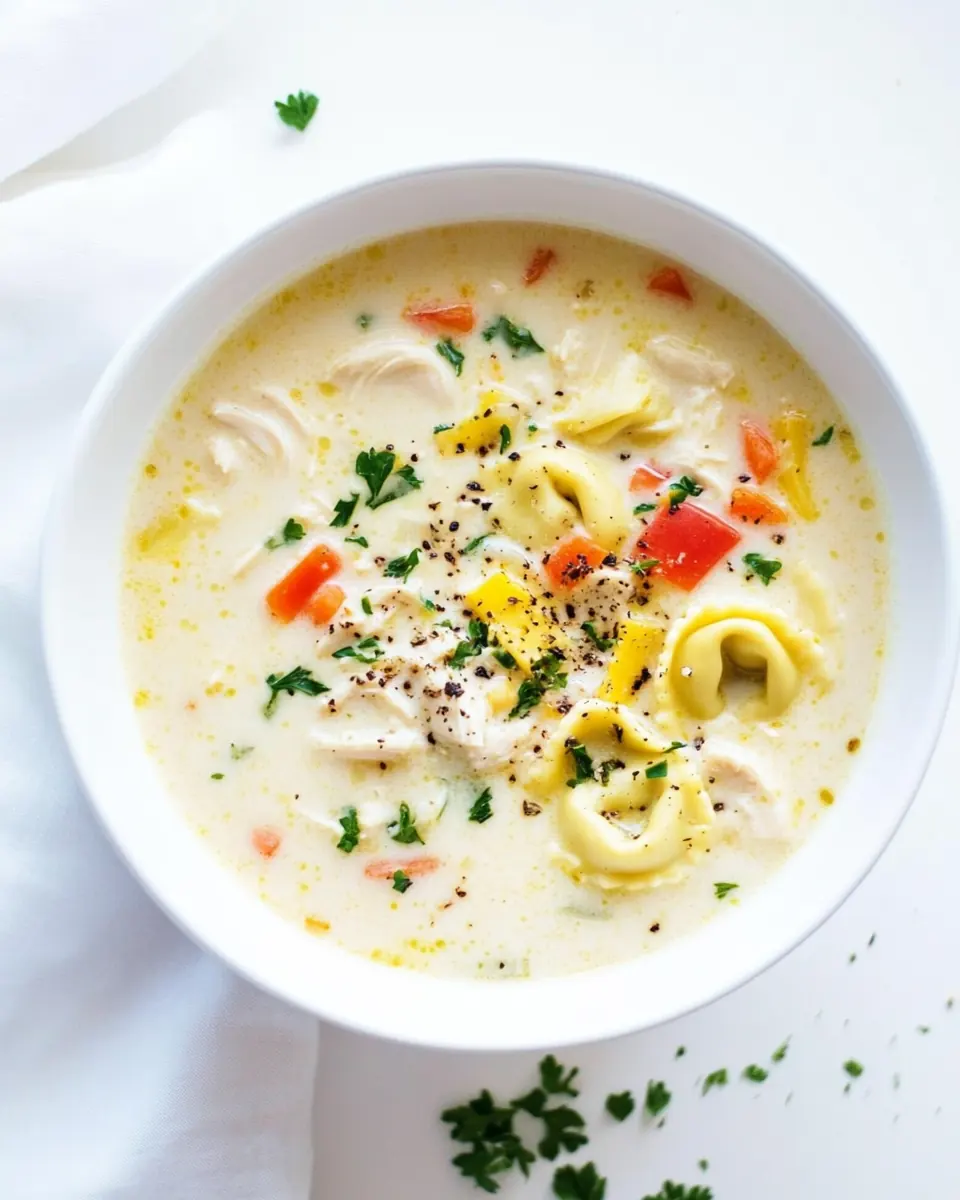
These ingredients work together to build a rich, layered soup. The aromatics form the base, the flour and butter create a silky roux that thickens the broth, and the milk and Cheddar cheese add creamy body. The chicken and tortellini provide substance, while frozen corn and fresh herbs brighten each spoonful.
- 1 tablespoon olive oil: Use to gently sauté aromatics and vegetables at the start of cooking, providing a mild fruity base and preventing sticking; contributes subtle richness without overpowering other flavors.
- 5 tablespoons unsalted butter divided: Divide between steps to add creamy richness and help form a silky roux; contributes a mellow dairy flavor and helps coat the tortellini and chicken for a luxurious mouthfeel.
- 1 small yellow onion diced, 1 cup: Provide sweet onion flavor and moisture when diced and softened; release natural sugars during sweating to build the soup's savory backbone and add textural contrast.
- 1 large carrot diced, 3/4 cup: Add earthy sweetness and body when diced and cooked until tender; contribute natural sugars that deepen the broth and balance savory and creamy elements.
- 1 to 2 stalks celery diced, 3/4 cup: Offer a crisp, aromatic base when diced and softened; contribute slight bitterness and vegetal notes that complement the carrot and onion.
- 1 red pepper diced: Introduce bright, sweet pepper flavor and color when diced; add a mild crunchy texture and fresh notes that lift the heavier creamy components.
- 1 1/2 teaspoons finely minced garlic 2 cloves: Provide pungent, aromatic depth when finely minced and added early; bloom in fat to release garlic's savory, slightly sweet umami character throughout the soup.
- 1/3 cup flour: Use to thicken the soup when cooked with butter into a roux; creates body and a smooth, velvety texture that helps the cream and cheese integrate.
- 3/4 teaspoon dried thyme: Contribute warm, slightly floral herb notes when added with other dried herbs; enhance the soup's savory profile and complement chicken and cheese flavors.
- 3/4 teaspoon dried oregano: Add earthy, slightly minty Mediterranean flavor when stirred into the base; deepen herbaceous complexity and pair well with tomatoes, cheese, and poultry.
- 1 1/2 teaspoons Italian seasoning: Provide a robust Italian herb blend that layers savory, aromatic notes; bolster the overall seasoning profile and harmonize with oregano and thyme.
- 1/16 teaspoon ground cayenne pepper (optional): Offer a sharp, warming heat in a very small amount if desired; add a subtle spicy lift without overwhelming the soup's creamy character.
- Salt and pepper: Season to taste with salt and freshly ground pepper to enhance and balance all flavors; use gradually to avoid over-salting once broth and cheese are added.
- 1 1/2 cups chicken broth: Add concentrated savory liquid to build soup base and boost umami; use to control overall saltiness and deepen the broth's chicken flavor.
- 3 cups milk 1%, 2% or whole; whole will be creamiest and is what I typically use: Provide the primary creamy liquid body and mild dairy flavor; choose fat content based on desired richness, with higher-fat milk producing a silkier soup.
- 1 cup frozen corn: Contribute sweet, crunchy bursts and natural starchiness when added from frozen; enhance texture and provide a pop of summery flavor in each spoonful.
- 1 1/2 cups shredded rotisserie chicken: Supply tender cooked poultry protein and savory flavor; shredded rotisserie chicken adds convenience and a rich, roasted chicken taste to the soup.
- 1 cup freshly shredded sharp Cheddar cheese: Melt into the hot soup to add sharp, tangy creaminess and help thicken the broth; shredded sharp Cheddar contributes depth and a slightly salty finish.
- 1 (9-ounce) bag refrigerated tortellini see note 1: Provide filled pasta that adds comforting, chewy texture and substantial body; cook directly in the soup so tortellini absorb flavors while releasing starch to thicken.
- fresh thyme and/or 3 tablespoons finely minced fresh parsley (optional): Garnish with fresh herbs or minced parsley to add bright, herbaceous contrast; sprinkle at the end to lift flavors and provide color and freshness.
Making This Creamy Chicken Tortellini Soup
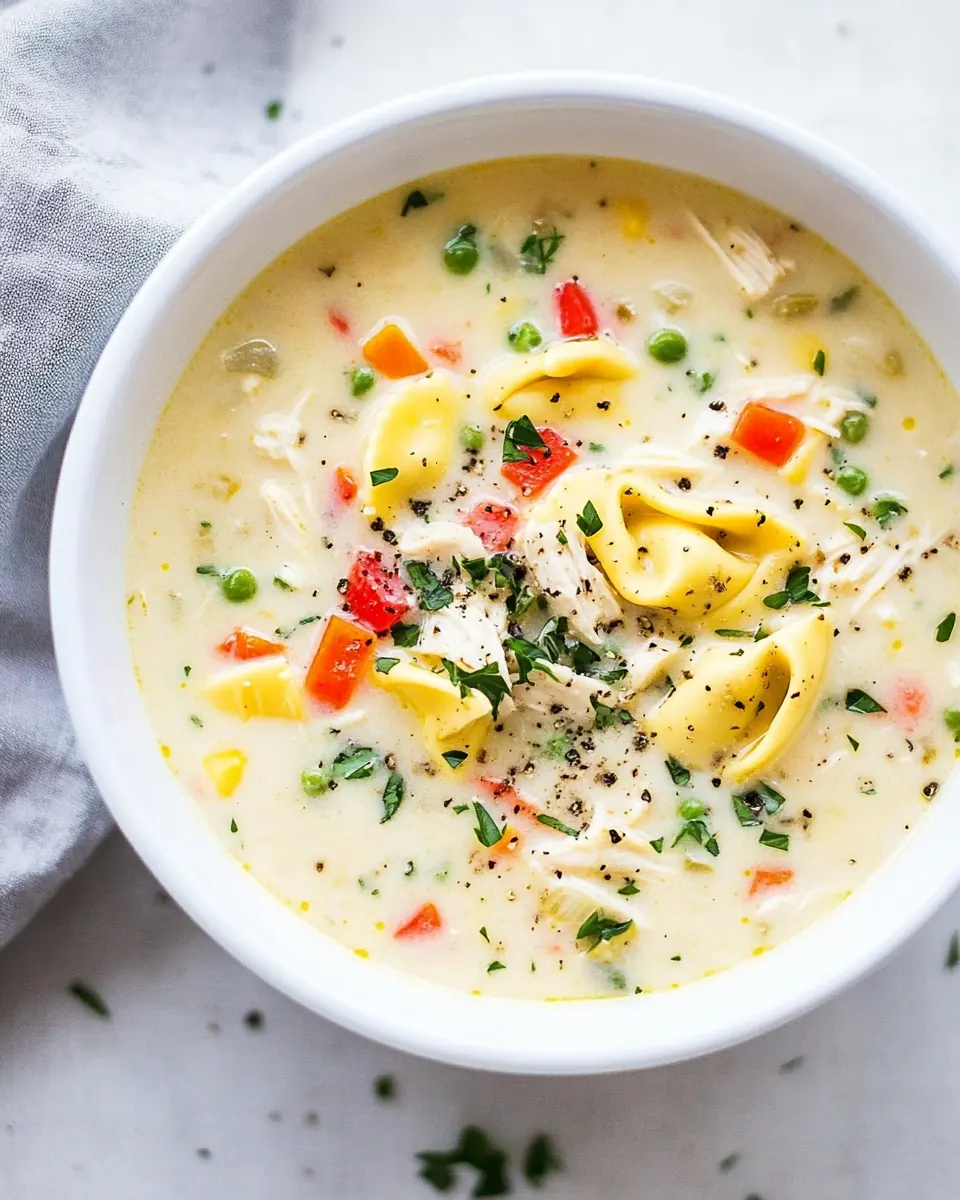
I like to walk through this recipe as a series of sensory checkpoints so you know exactly when the soup is on track. The process is straightforward but paying attention to visual cues and aromas makes a huge difference. Below I expand each step so you can hear the sizzle, smell the herbs, and avoid the common pitfalls.
- In a large pot over medium heat, melt 1 tablespoon of the butter and add the olive oil. Add diced onion, carrots, celery, and bell pepper and sauté 7–9 minutes. Add garlic and sauté 30 seconds more.: The pan will start with a gentle shimmer from the olive oil , and as the butter melts you'll hear a soft hiss when the vegetables hit the surface. After a few minutes the onion will become translucent and the edges of the carrot and red pepper will take on a faint golden color, releasing sweet, savory aromas. Stir intermittently so everything cooks evenly and the vegetables soften without browning too quickly. You want the veggies tender and aromatic, not charred, because their softened sugars build the base flavor of the soup. A common mistake is cranking the heat too high which causes the vegetables to burn on the edges, leading to bitterness. If that happens, lower the heat and add a splash of broth to scrape up fond and balance the taste.
- In a separate pot, cook tortellini according to package directions (see note 2). Drain and set aside. (Salt the pasta water once boiling; I add in 1 teaspoon salt to every 4 cups of water.): The water should be at a lively boil before you add the tortellini , which helps the pasta cook evenly and prevents sticking. After the pasta goes in you'll notice the water foam and the scent of fresh pasta; stir gently so the pockets don't clump. Cook just until al dente so the tortellini holds a tender bite when added to the soup later. Drain promptly and toss with a tiny drizzle of oil or leave plain, then set aside in a warm bowl. Overcooking is the usual issue here, which leads to mushy pasta once it sits in the soup. Time the pasta so it's ready to go when you serve, or refrigerate separately for leftovers and rewarm with broth.
- Add the seasonings to the pot with the veggies—dried thyme, dried oregano, Italian seasoning, and cayenne pepper (if using). Season to taste with salt and pepper. (I add 1 teaspoon salt and 1/2 teaspoon pepper, but add to preference.) Stir seasonings for 30 seconds.: When you sprinkle in the dried thyme , oregano , and Italian seasoning , the pan will release an herbaceous perfume as the spice oils warm and bloom. Stirring for a short moment lets the herbs become fragrant without drying out. Tasting at this stage is key because these seasonings form the aromatic profile of the final soup. Too much salt early can’t easily be undone, so season incrementally and adjust later. A common misstep is skipping this step, which results in under seasoned broth that feels flat; taking the extra 30 seconds to toast the herbs lifts the overall flavor noticeably.
- Increase heat to medium-high. Push veggies to the sides of the pot and add the remaining 4 tablespoon butter to the center and stir until melted. Once melted, sprinkle in the flour. Briskly mix to incorporate the flour and stir for 1 minute to cook off the raw flour. Gradually whisk in 1 cup of chicken broth until it starts to thicken (1 minute); then add the remaining chicken broth. Whisk until it thickens (2–3 minutes), then gradually add the milk, stirring constantly. Slightly reduce the heat and cook, continuing to stir, until mixture begins to gently boil and thicken, another 2–5 minutes.: You will see the butter foam and then calm as it melts fully, and placing it in the center creates a hot pocket for the flour to sizzle briefly. The flour should hit the butter and make small bubbling noises, releasing a toasted, nutty scent as you briskly incorporate it. Stirring for about a minute cooks off the raw flour taste, which is important so the final broth remains smooth and not pasty. The heat should be controlled so the roux develops without browning too darkly. A slip here is not cooking the flour long enough, which leaves a chalky aftertaste, or overheating, which can create a bitter, dark roux. Aim for a pale golden paste before moving on.
- Reduce heat to medium low. Add the frozen corn and chicken. Stir to warm through. (If the soup has thickened too much, add some additional chicken stock; I usually add 1/2 cup to 1 cup extra).: As you whisk in the first cup of chicken broth , the roux will loosen and a glossy sauce forms, sounding like a light bubbling as starch wakes up. Adding the rest of the broth and then the milk slowly prevents lumps and builds a velvety texture. The mixture will move from translucent to opaque, and you should see it coat the back of a spoon. Keep the heat moderate; too high will scald the milk or break the emulsion, creating a grainy texture. If the soup is too thick after simmering, thin it with extra broth. A typical error is pouring all the liquid in quickly, which can create lumps, so patience while whisking pays off.
- Remove pot from heat and add the cheese. Stir to melt. Season soup to taste with any additional salt and pepper. Add parsley (if using). Serve, adding tortellini to individual bowls. Garnish with fresh thyme and serve with crusty bread if desired.: When the corn hits the warm broth it will release a sweet, toasty fragrance as it defrosts, and the shredded chicken will gently heat, giving off savory notes that mingle with the milk and herbs. Stirring ensures even temperature and prevents pockets of cold. Check the thickness; the soup should flow but still feel substantial. If it clings too much to the spoon, loosen with reserved chicken broth . A common misstep is overcooking the corn so it loses its snap, so add it just long enough to warm through.
- Remove pot from heat and add the cheese. Stir to melt. Season soup to taste with any additional salt and pepper. Add parsley (if using). Serve, adding tortellini to individual bowls. Garnish with fresh thyme and serve with crusty bread if desired.: Off the heat, folding in the shredded Cheddar cheese yields a glossy, slightly thickened finish as it melts gently into the warm broth. The residual heat is enough to incorporate the cheese without causing it to separate, giving a creamy mouthfeel and a sharp, savory lift. Taste and adjust seasoning with salt and pepper , then add chopped parsley or sprigs of thyme for freshness. Spoon the hot soup into bowls and place a portion of cooked tortellini into each one so the pasta stays tender and not soggy. Avoid boiling after adding the cheese, as repeated boiling can make the dairy break and become grainy. Serve promptly for the best texture and flavor.
Recipe Notes about Creamy Chicken Tortellini Soup
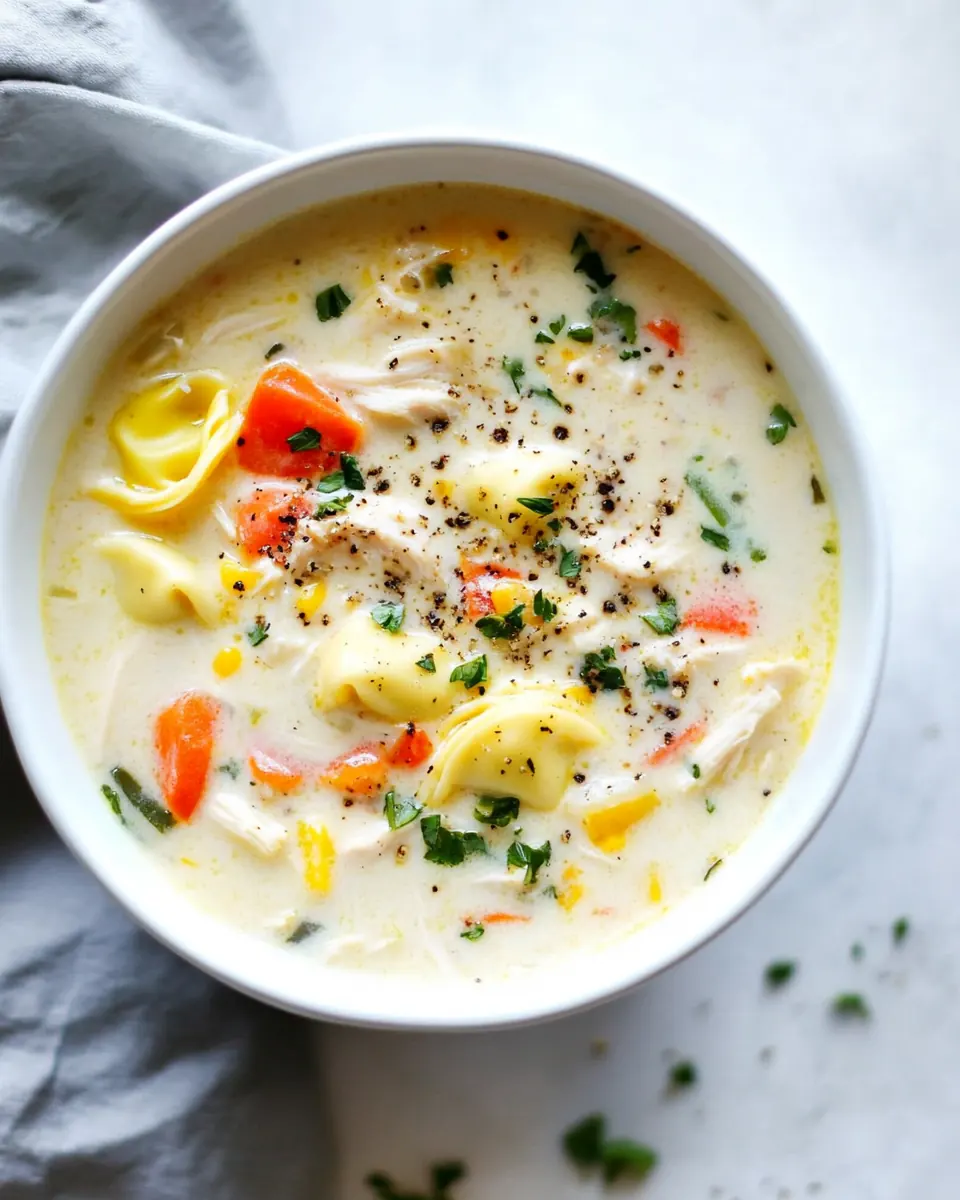
This recipe has a few simple tricks that reliably elevate the final bowl. Below are practical, expanded notes drawn from how I cook this soup regularly. Each tip highlights one technique or choice that makes a measurable difference.
- Choose quality tortellini, good refrigerated or fresh tortellini will give a superior texture and flavor; avoid dried varieties here if you want that pillowy bite.
- Cook pasta separately, keeping the tortellini separate prevents it from soaking up broth and becoming mushy in leftovers, which preserves texture when reheating.
- Use whole milk for creaminess, whole milk provides the creamiest mouthfeel without being overly heavy, but you can use lower fat milk if you prefer a lighter bowl.
- Shred chicken finely, small shreds distribute evenly and let you taste chicken in every spoonful, rather than getting large chunks that dominate the bowl.
- Add cheese off the heat, stirring in the shredded Cheddar cheese after removing the pot from heat avoids separation and keeps the soup silky.
- Adjust thickness with broth, if the soup tightens too much as it cools, thin it with warmed chicken broth so the flavor remains intact while adjusting consistency.
Serving Options for Creamy Chicken Tortellini Soup
This soup adapts to many occasions and seasons. It’s hearty enough for dinner, yet approachable for a casual lunch or a Ramadan iftar when you need something nourishing and restorative. Below are serving ideas, pairings, and storage notes to help you present and preserve the soup.
- Family dinner, serve bowls with extra grated Cheddar cheese and a sprinkle of fresh parsley so everyone can customize their portion.
- Casual gathering, keep the soup warm in a covered pot and offer crusty bread for dipping, plus a bowl of reserved cooked tortellini so guests can add pasta to their bowls as desired.
- Lunch, pack soup in microwave safe containers with the tortellini stored separately to maintain pasta texture; reheat gently with a splash of broth.
- Ramadan or nourishing meal, present the soup with fresh herbs and lemon wedges on the side for brightness, and pair with a light salad or dates to break the fast.
- Seasonal pairings, in winter this offers warming comfort, pair with roasted vegetables or a simple green salad to balance richness.
- Storage tips, refrigerate in airtight containers for up to three days; because the tortellini absorbs liquid, store it separately if you want to preserve texture for leftovers.
FAQ
Conclusion
What makes this recipe special is how quickly everyday ingredients transform into a velvety, comforting bowl that still tastes layered and thoughtful. The combination of sautéed vegetables, a simple roux, creamy milk, and shredded rotisserie chicken results in a soup that feels indulgent without a lot of fuss. Try it when you need an easy weeknight dinner or a dish to share with friends; it’s flexible, forgiving, and reliably crowd pleasing. Bring extra bowls and fresh herbs, and enjoy the warm, homey satisfaction this soup delivers.
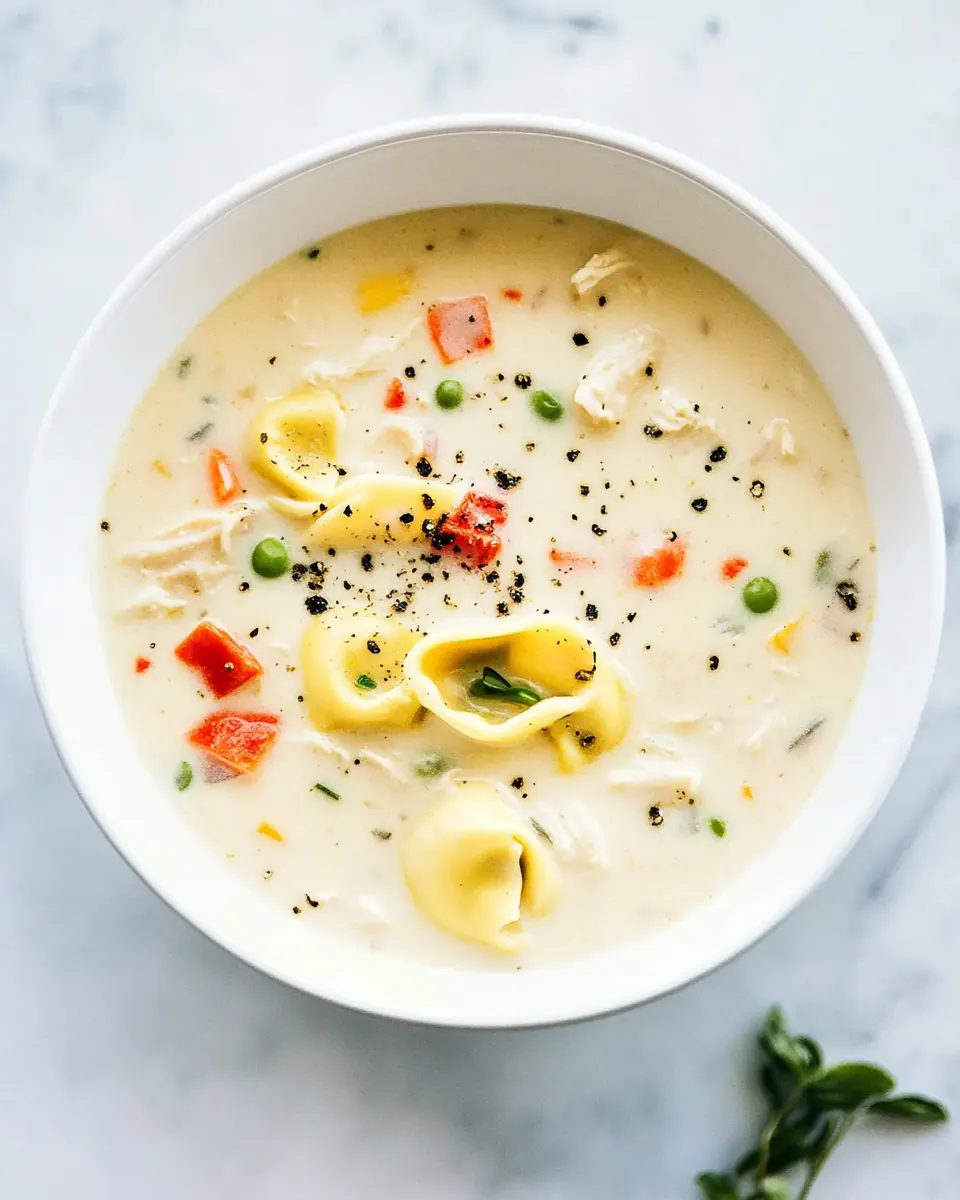
Creamy Chicken Tortellini Soup
Ingredients
Equipment
Method
- In a large pot over medium heat, melt 1 tablespoon of the butter and add the olive oil. Add diced onion, carrots, celery, and bell pepper and sauté 7–9 minutes. Add garlic and sauté 30 seconds more.: The pan will start with a gentle shimmer from the olive oil , and as the butter melts you'll hear a soft hiss when the vegetables hit the surface. After a few minutes the onion will become translucent and the edges of the carrot and red pepper will take on a faint golden color, releasing sweet, savory aromas. Stir intermittently so everything cooks evenly and the vegetables soften without browning too quickly. You want the veggies tender and aromatic, not charred, because their softened sugars build the base flavor of the soup. A common mistake is cranking the heat too high which causes the vegetables to burn on the edges, leading to bitterness. If that happens, lower the heat and add a splash of broth to scrape up fond and balance the taste.
- In a separate pot, cook tortellini according to package directions (see note 2). Drain and set aside. (Salt the pasta water once boiling; I add in 1 teaspoon salt to every 4 cups of water.): The water should be at a lively boil before you add the tortellini , which helps the pasta cook evenly and prevents sticking. After the pasta goes in you'll notice the water foam and the scent of fresh pasta; stir gently so the pockets don't clump. Cook just until al dente so the tortellini holds a tender bite when added to the soup later. Drain promptly and toss with a tiny drizzle of oil or leave plain, then set aside in a warm bowl. Overcooking is the usual issue here, which leads to mushy pasta once it sits in the soup. Time the pasta so it's ready to go when you serve, or refrigerate separately for leftovers and rewarm with broth.
- Add the seasonings to the pot with the veggies—dried thyme, dried oregano, Italian seasoning, and cayenne pepper (if using). Season to taste with salt and pepper. (I add 1 teaspoon salt and 1/2 teaspoon pepper, but add to preference.) Stir seasonings for 30 seconds.: When you sprinkle in the dried thyme , oregano , and Italian seasoning , the pan will release an herbaceous perfume as the spice oils warm and bloom. Stirring for a short moment lets the herbs become fragrant without drying out. Tasting at this stage is key because these seasonings form the aromatic profile of the final soup. Too much salt early can’t easily be undone, so season incrementally and adjust later. A common misstep is skipping this step, which results in under seasoned broth that feels flat; taking the extra 30 seconds to toast the herbs lifts the overall flavor noticeably.
- Increase heat to medium-high. Push veggies to the sides of the pot and add the remaining 4 tablespoon butter to the center and stir until melted. Once melted, sprinkle in the flour. Briskly mix to incorporate the flour and stir for 1 minute to cook off the raw flour. Gradually whisk in 1 cup of chicken broth until it starts to thicken (1 minute); then add the remaining chicken broth. Whisk until it thickens (2–3 minutes), then gradually add the milk, stirring constantly. Slightly reduce the heat and cook, continuing to stir, until mixture begins to gently boil and thicken, another 2–5 minutes.: You will see the butter foam and then calm as it melts fully, and placing it in the center creates a hot pocket for the flour to sizzle briefly. The flour should hit the butter and make small bubbling noises, releasing a toasted, nutty scent as you briskly incorporate it. Stirring for about a minute cooks off the raw flour taste, which is important so the final broth remains smooth and not pasty. The heat should be controlled so the roux develops without browning too darkly. A slip here is not cooking the flour long enough, which leaves a chalky aftertaste, or overheating, which can create a bitter, dark roux. Aim for a pale golden paste before moving on.
- Reduce heat to medium low. Add the frozen corn and chicken. Stir to warm through. (If the soup has thickened too much, add some additional chicken stock; I usually add 1/2 cup to 1 cup extra).: As you whisk in the first cup of chicken broth , the roux will loosen and a glossy sauce forms, sounding like a light bubbling as starch wakes up. Adding the rest of the broth and then the milk slowly prevents lumps and builds a velvety texture. The mixture will move from translucent to opaque, and you should see it coat the back of a spoon. Keep the heat moderate; too high will scald the milk or break the emulsion, creating a grainy texture. If the soup is too thick after simmering, thin it with extra broth. A typical error is pouring all the liquid in quickly, which can create lumps, so patience while whisking pays off.
- Remove pot from heat and add the cheese. Stir to melt. Season soup to taste with any additional salt and pepper. Add parsley (if using). Serve, adding tortellini to individual bowls. Garnish with fresh thyme and serve with crusty bread if desired.: When the corn hits the warm broth it will release a sweet, toasty fragrance as it defrosts, and the shredded chicken will gently heat, giving off savory notes that mingle with the milk and herbs. Stirring ensures even temperature and prevents pockets of cold. Check the thickness; the soup should flow but still feel substantial. If it clings too much to the spoon, loosen with reserved chicken broth . A common misstep is overcooking the corn so it loses its snap, so add it just long enough to warm through.
- Remove pot from heat and add the cheese. Stir to melt. Season soup to taste with any additional salt and pepper. Add parsley (if using). Serve, adding tortellini to individual bowls. Garnish with fresh thyme and serve with crusty bread if desired.: Off the heat, folding in the shredded Cheddar cheese yields a glossy, slightly thickened finish as it melts gently into the warm broth. The residual heat is enough to incorporate the cheese without causing it to separate, giving a creamy mouthfeel and a sharp, savory lift. Taste and adjust seasoning with salt and pepper , then add chopped parsley or sprigs of thyme for freshness. Spoon the hot soup into bowls and place a portion of cooked tortellini into each one so the pasta stays tender and not soggy. Avoid boiling after adding the cheese, as repeated boiling can make the dairy break and become grainy. Serve promptly for the best texture and flavor.
Notes
- Choose quality tortellini, good refrigerated or fresh tortellini will give a superior texture and flavor; avoid dried varieties here if you want that pillowy bite.
- Cook pasta separately, keeping the tortellini separate prevents it from soaking up broth and becoming mushy in leftovers, which preserves texture when reheating.
- Use whole milk for creaminess, whole milk provides the creamiest mouthfeel without being overly heavy, but you can use lower fat milk if you prefer a lighter bowl.
- Shred chicken finely, small shreds distribute evenly and let you taste chicken in every spoonful, rather than getting large chunks that dominate the bowl.
- Add cheese off the heat, stirring in the shredded Cheddar cheese after removing the pot from heat avoids separation and keeps the soup silky.
- Adjust thickness with broth, if the soup tightens too much as it cools, thin it with warmed chicken broth so the flavor remains intact while adjusting consistency.