Cheesy Chicken Casserole
Cheesy Chicken Casserole has been one of those recipes I reach for when the week has been long and the family needs something warm and comforting on the table. I first made it on a snowy evening, carrying a steaming 9×13 dish out of the oven while the house smelled like bubbling cheese and buttered cracker crumbs. The moment my kids sat down and dug in, their faces softened in that blissful way that tells you a recipe has landed right where it should.
That night taught me two things, both simple and stubborn. First, a handful of humble pantry staples can come together to make something surprisingly satisfying. Second, there is real comfort in a casserole that travels easily from fridge to oven, feeding hungry mouths and easing the dinner scramble. Over the years I tweaked the balance of cheeses and the cracker topping until the flavors and textures lined up just so, and now it feels like a recipe that knows how to hug you back.
Recipe Snapshot
45 mins
15 mins
30 mins
Medium
450 kcal
American
Gluten-Free, Low FODMAP
Dinner
6 quart saucepot, Mixing Bowls, 9×13 inch Baking Dish, Rotary Cheese Grater, Chef Knives, Cutting Board
The Appeal of This Cheesy Chicken Casserole
It is comfort food that truly comforts
I love how Cheesy Chicken Casserole fills the kitchen with a warm, savory aroma that signals home. The mix of cheddar cheese and mozzarella cheese melts into a silken, slightly stringy blanket that keeps every forkful indulgent without being heavy. When I serve it, I notice how people slow down to savor the first bite, which is the truest compliment a weeknight dish can earn.
It is forgiving and flexible
I often have leftover cooked chicken on hand, and this casserole welcomes it. You can use a whole rotisserie bird or pulled pieces from the fridge, and the pudding like filling absorbs the savory notes from the cream soup and sour cream. That makes it one of my go to recipes when time is tight but I still want something that tastes thoughtfully prepared.
Textural play keeps it interesting
The contrast between the creamy interior and the buttery, crunchy cracker topping is why I make this repeatedly. The cracker crumbs mixed with melted butter and poppy seeds brown in the oven and add a nutty, toasted finish. That crisp top gives you a satisfying crack with every scoop, which is a small detail that lifts the whole experience.
It travels and stores beautifully
I appreciate a casserole that behaves well beyond the oven. Cheesy Chicken Casserole can be assembled in advance and baked when you are ready, or frozen for a future weeknight rescue. The flavors actually meld and marry when it sits a day, which means leftovers are often more flavorful. For meal planning, that reliability is worth its weight in convenience.
It is crowd friendly
Whether I am feeding family for dinner or bringing something to a potluck, this casserole scales easily. The formula works for a full 9×13 dish, and the ingredients are pantry staples most people already have. That accessibility is one of the main reasons this dish has become a rotating favorite in my house.
Essential Ingredients for Cheesy Chicken Casserole
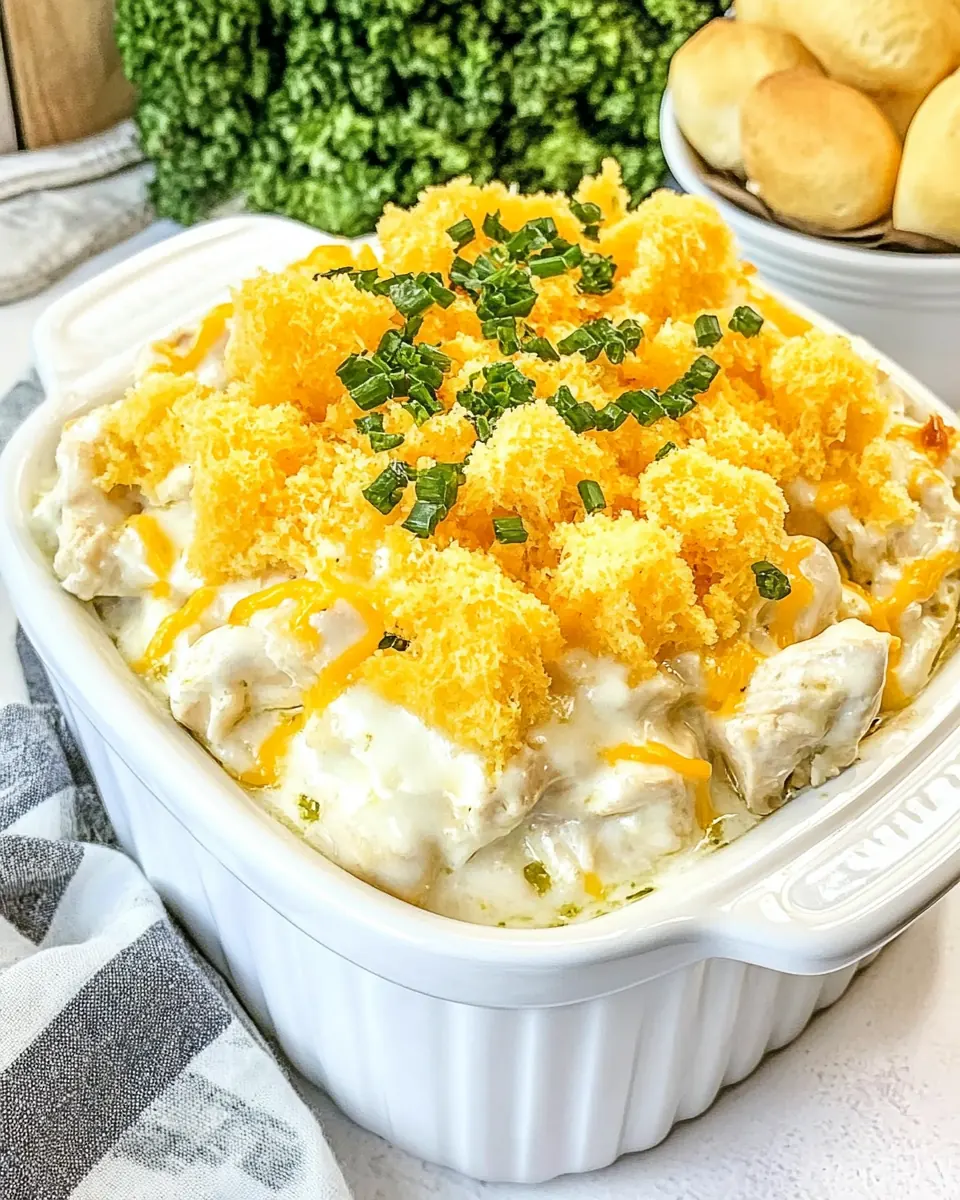
These ingredients are meant to work in concert to deliver creamy, savory comfort. The showstoppers are the cooked chicken and the twin cheeses, which provide hearty flavor and silky texture. The cream soups and sour cream create a lush, cohesive filling that coats the egg noodles, while the cracker and butter topping gives a toasty contrast. Each item plays a clear role, which is why simple, quality choices make a big difference.
- 1 whole rotisserie chicken: Shred and pick apart to provide tender, cooked chicken meat that forms the primary protein and flavor base for the casserole; toss with seasonings for even distribution and to absorb creamy sauce.
- 1 (16-oz) bag wide egg noodles: Boil until al dente to supply a hearty starchy backbone that soaks up sauce and binds the casserole together; drain well to prevent a soggy final dish.
- 3 cups sour cream: Fold into the mixture to lend tangy creaminess and body, helping create a rich, velvety sauce that contrasts the savory cheeses and keeps the casserole moist.
- 2 (10.5-oz) cans unsalted cream of chicken soup: Stir in to contribute concentrated savory chicken flavor and creaminess, thickening the filling and amplifying the casserole’s comfort-food character when mixed with dairy.
- 8 oz shredded cheddar cheese: Sprinkle and layer to add sharp, salty, melty cheesiness that deepens savory flavor and provides a golden, flavorful topping or internal pockets of taste when baked.
- 8 oz shredded mozzarella cheese: Add for mild, stretchy melt and a smooth milky texture that complements the sharper cheddar and helps create an even, gooey cheese matrix throughout the casserole.
- 1/2 tsp onion powder, or to taste: Season lightly to impart a gentle savory onion note that enhances overall depth without adding moisture; start with the suggested amount and adjust to taste before baking.
- 1/2 tsp garlic powder, or to taste: Season gently to contribute aromatic garlicky warmth that rounds out the savory profile; adjust quantity to balance against other seasonings and cheeses.
- salt and pepper, to taste: Season as needed to balance and enhance all flavors; use salt to amplify taste and pepper to introduce subtle heat and complexity throughout the dish.
- 1 sleeve club crackers, crushed: Crumble and mix for a crunchy, buttery topping that provides texture contrast once baked, helping create a crisp golden crust over the creamy interior.
- 1/4 cup butter, melted: Drizzle over cracker topping to bind crumbs and promote browning, adding rich buttery flavor while ensuring the crust becomes crisp and golden in the oven.
- 2 tbsp poppy seed: Sprinkle into the crumb mix to introduce a subtle nutty sweetness and tiny crunch that complements the buttery crackers and adds a distinctive finishing touch.
Making Cheesy Chicken Casserole
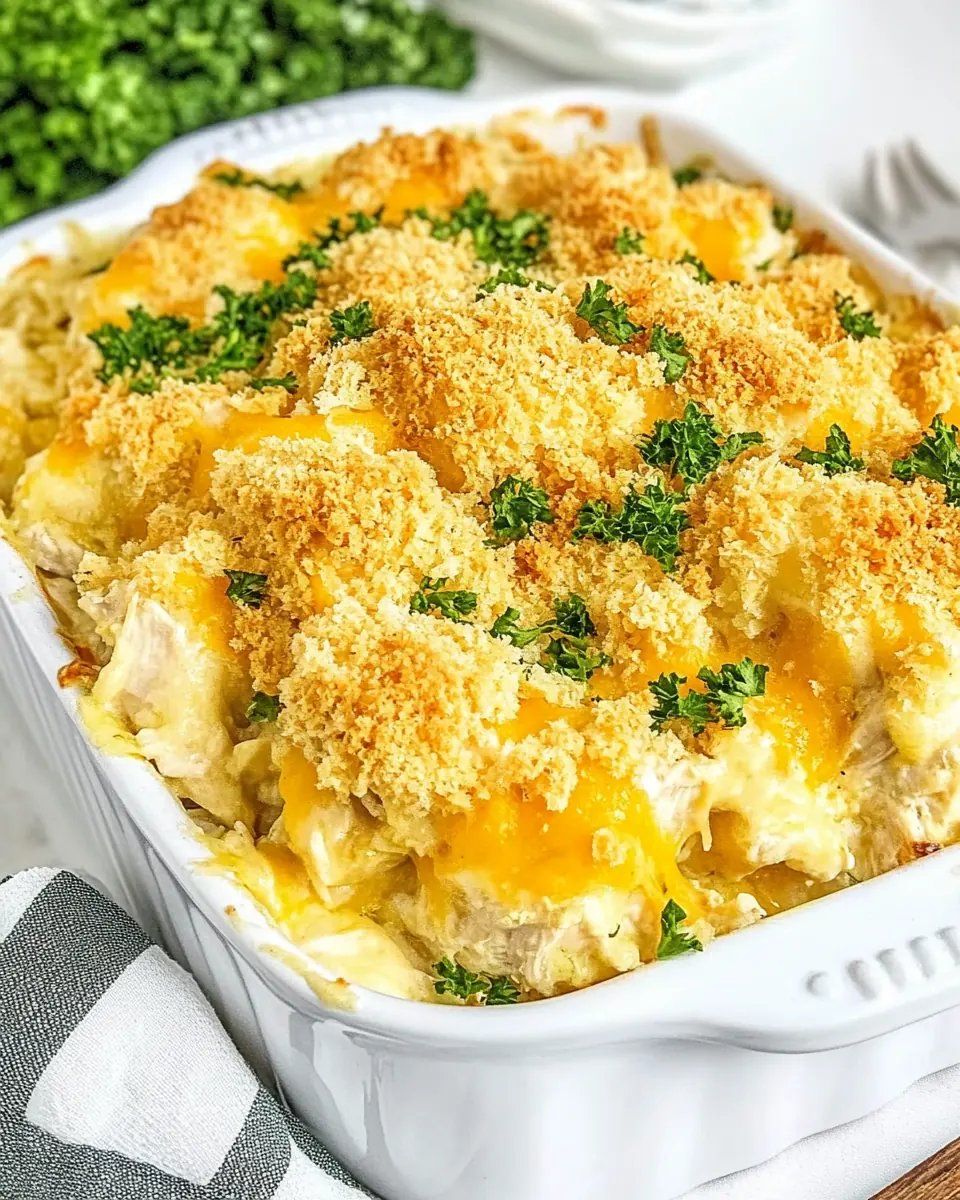
These directions will take you from pantry staples to a bubbling, golden casserole that slices cleanly and serves easily. Read through once to get a sense of the flow, and have your tools and ingredients assembled so the process feels calm. The oven does most of the work, while careful layering and seasoning ensure every bite is balanced.
- Preheat oven to 350ºF. Spray a 9×13-inch baking dish with nonstick cooking spray. Set aside.: The room fills with a gentle warmth and the oven's steady hum assures you it is ready, which is important for even baking. I like to place the empty baking dish on the counter so it's within reach, and spraying it prevents sticking, preserving the crunchy topping's release. If you skip preheating, the casserole may bake unevenly and the topping might not brown properly, so always wait until the oven reaches temperature. A common mistake is using too low a heat which yields a pale, soft crust instead of a golden, crisp finish. Ensure your oven rack sits in the center so heat circulates evenly around the dish. Visually, you want the oven to feel consistently hot, and tactilely the dish should feel room temperature when filled to avoid thermal shock with glass bakeware.
- Bring a large pot of water to a boil over medium-high heat. Add egg noodles and cook according to the package instructions for al dente. Drain and set aside.: You will hear the water roar then calm slightly as the noodles tumble and release steam, and the kitchen will smell faintly of starchy pasta. Cooking to al dente preserves toothsome texture so the noodles do not break down in the oven. Drain in a colander and shake gently to remove excess water so the filling stays creamy, not watery. A frequent error is overcooking the noodles which makes the casserole mushy, so start checking a minute or two before package timing. Rinsing is optional, but if you rinse briefly under warm water it stops cooking and removes surface starch that can glue the noodles together.
- Remove the meat from the chicken, discard skin, and chop meat.: When you pull meat from the rotisserie, it should be warm and fragrant with seasoned juices, and the texture will be tender. Chop the meat into uniform pieces to distribute protein throughout the casserole, which helps every forkful have a balanced ratio of noodle to chicken. If the chicken is very cold, bring it closer to room temperature so it blends smoothly into the filling. A common misstep is leaving large chunks which yield uneven bites, so aim for bite sized pieces. Smell and taste a small piece to check seasoning, since store bought birds can vary in salt level, and adjust the mixture accordingly.
- In a large bowl, mix together chicken, cooked noodles, sour cream, cream of chicken soup, onion powder, garlic powder, cheddar cheese, and mozzarella cheese. Season with salt and black pepper.: As you stir, you will see the sauce coat the noodles and meat in a glossy, creamy sheen, and the cheese starts to string into ribbons. This blending step matters because it ensures even seasoning and prevents dry pockets; I use a large bowl so folding is easy and nothing spills. Taste as you go because the canned soup and rotisserie bird may already be salted. A frequent mistake is under mixing which leaves clumps of soup or cheese, so fold gently until everything looks cohesive. The texture should be uniformly creamy and not runny, so if it seems too loose double check your noodle drain and the proportion of sour cream.
- Pour the chicken mixture into the prepared dish.: The filling should spread into the dish in a thick, glossy layer that sits slightly mounded. Use an offset spatula or the back of a large spoon to level it, which helps the topping sit evenly. Visual cues to watch for are uniform distribution of chicken and noodles, with no large dry spots. If you notice soggy areas, pace the pouring and press gently to settle the filling. One common error is overfilling the dish, so leave a little room at the top for bubbling as it heats.
- In a small bowl, mix together cracker crumbs, melted butter, and poppy seeds; sprinkle over the top of the casserole.: The cracker crumbs will absorb the warm melted butter and form a paste like mixture you can scatter. As you sprinkle, you will see the topping clump slightly and then level out, creating an even layer that will toast in the oven. This topping is crucial for textural contrast, so be sure it covers the surface uniformly. A common mistake is adding too much butter, which can leave the topping greasy; aim for a crumbly, lightly moistened texture. Press down gently so the crumbs adhere to the filling, which helps them toast rather than slide off.
- Bake uncovered for 25 to 30 minutes or until bubbly.: The first sign will be the sauce at the edges starting to shimmer, followed by gentle bubbling across the surface and eventual browning of the cracker topping. The kitchen will fill with a toasted, cheesy aroma and you may hear tiny pops as steam escapes. Baking uncovered encourages the topping to brown and the sauce to thicken, resulting in a cohesive scoopable casserole. Avoid underbaking which leaves the center cool and loose, and also avoid overbaking which can dry the filling. If the topping browns too quickly, tent a sheet of foil loosely to prevent burning. Let the casserole sit 5 to 10 minutes after removing it from the oven so it firms up and slices cleanly.
Helpful Notes about Cheesy Chicken Casserole
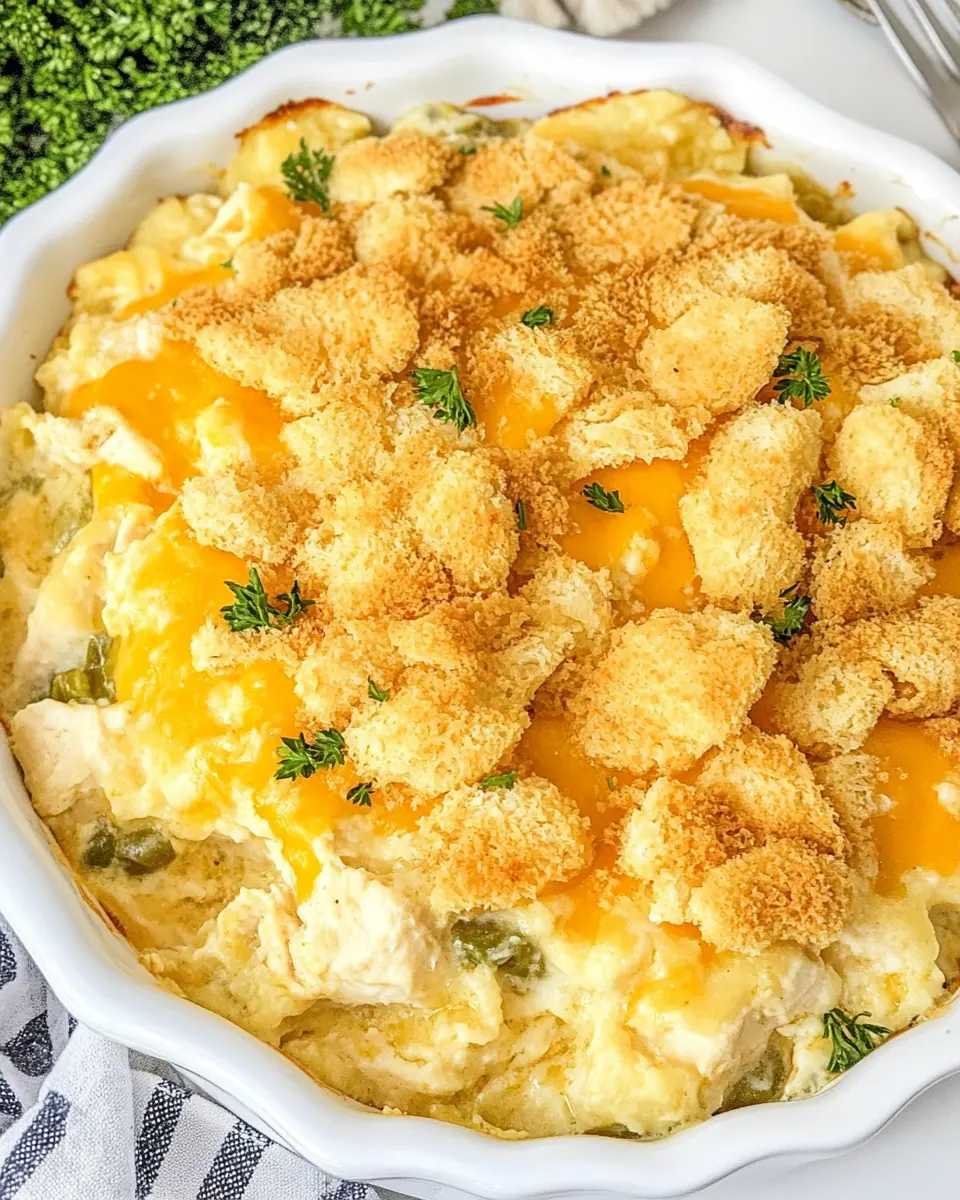
This section expands on practical pointers I rely on when making Cheesy Chicken Casserole. These notes focus on timing, texture, and small adjustments that produce a reliably delicious result every time.
- Use room temperature dairy: Let the sour cream and shredded cheeses sit out for a short time so they incorporate smoothly and avoid clumping in the filling.
- Drain noodles well: Excess water from the egg noodles will thin the sauce, so after draining, give them a gentle shake in the colander to remove surface moisture.
- Check seasoning before baking: Taste a small spoonful of the mixed filling and adjust salt and pepper, because once it bakes the flavors concentrate and you cannot reduce salt.
- Evenly distribute chicken: Break the chicken into consistent pieces so every serving has protein throughout, avoiding large pockets of meat or none at all.
- Swap soups carefully: If you choose a different cream soup, be mindful of salt and adjust the seasoning to keep the balance harmonious.
- Freeze for meal prep: Cover tightly with plastic wrap and foil, then freeze for up to three months; thaw overnight in the fridge before baking for best results.
Great Combinations for Cheesy Chicken Casserole
Cheesy Chicken Casserole is rich and comforting, so it pairs best with lighter, fresh sides and simple salads to balance the meal. For occasions from casual weeknights to family gatherings, these serving suggestions help you present a thoughtful plate. Below are ideas for side dishes, serving styles, storage tips, and seasonal pairings to suit different needs.
- Light green salad: A crisp salad with a tangy vinaigrette cuts through the richness, offering refreshing contrast and a bright palate cleanser.
- Steamed green vegetables: Broccoli or green beans provide a textural and color contrast, and their slight bitterness balances the casserole’s creamy mouthfeel.
- Cranberry chutney or quick pickle: A small spoon of something tart adds acidity and brightness, especially welcome if serving at a holiday table.
- Weeknight dinner: Serve family style straight from the baking dish for easy cleanup and a cozy, communal meal that everyone can dig into.
- Meal prep and storage: Refrigerate leftovers in an airtight container for up to four days, or freeze portions for up to three months; reheat covered at a moderate temperature to retain moisture.
- Occasion pairings: For casual potlucks or gatherings, bring it in a disposable foil pan; for a Sunday supper, plate with fresh herbs and a citrus squeeze for brightness.
- Seasonal notes: In winter, this casserole feels like a warm, comforting anchor; in spring, lighten the sides with citrusy salads and steamed asparagus for balance.
FAQ
Conclusion
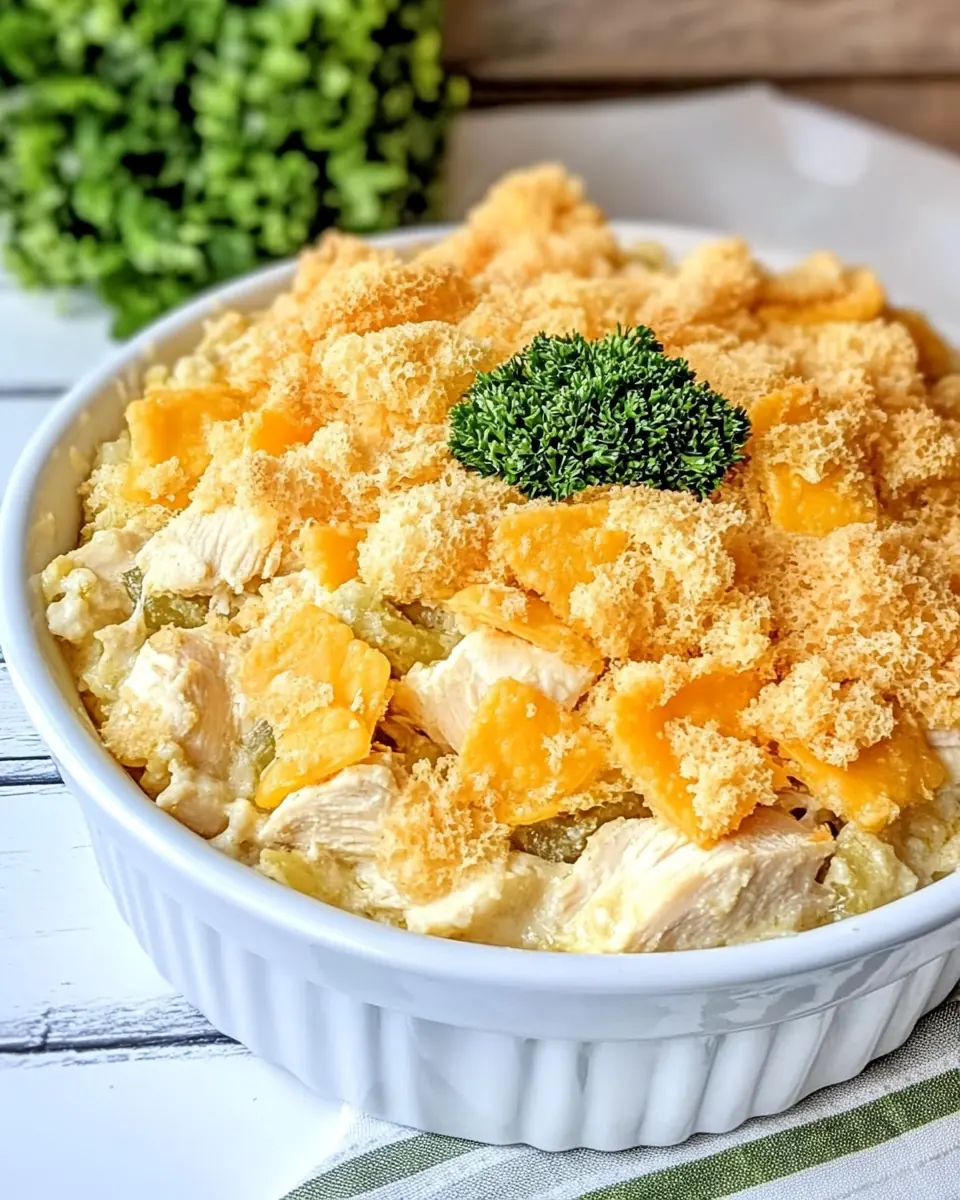
Cheesy Chicken Casserole stands out because it combines creamy, melty cheeses with tender chicken and a toasty cracker topping for a balanced, comforting meal. Give it a try on a busy weeknight or when you need a dish that travels well to a potluck, because it is forgiving, crowd pleasing, and stores beautifully. Once you assemble it, the oven does the heavy lifting and you are left with a warm, satisfying meal that feels lovingly prepared. I hope it becomes one of those go to recipes you return to again and again.
Cheesy Chicken Casserole
Ingredients
Equipment
Method
- Preheat oven to 350ºF. Spray a 9×13-inch baking dish with nonstick cooking spray. Set aside.: The room fills with a gentle warmth and the oven's steady hum assures you it is ready, which is important for even baking. I like to place the empty baking dish on the counter so it's within reach, and spraying it prevents sticking, preserving the crunchy topping's release. If you skip preheating, the casserole may bake unevenly and the topping might not brown properly, so always wait until the oven reaches temperature. A common mistake is using too low a heat which yields a pale, soft crust instead of a golden, crisp finish. Ensure your oven rack sits in the center so heat circulates evenly around the dish. Visually, you want the oven to feel consistently hot, and tactilely the dish should feel room temperature when filled to avoid thermal shock with glass bakeware.
- Bring a large pot of water to a boil over medium-high heat. Add egg noodles and cook according to the package instructions for al dente. Drain and set aside.: You will hear the water roar then calm slightly as the noodles tumble and release steam, and the kitchen will smell faintly of starchy pasta. Cooking to al dente preserves toothsome texture so the noodles do not break down in the oven. Drain in a colander and shake gently to remove excess water so the filling stays creamy, not watery. A frequent error is overcooking the noodles which makes the casserole mushy, so start checking a minute or two before package timing. Rinsing is optional, but if you rinse briefly under warm water it stops cooking and removes surface starch that can glue the noodles together.
- Remove the meat from the chicken, discard skin, and chop meat.: When you pull meat from the rotisserie, it should be warm and fragrant with seasoned juices, and the texture will be tender. Chop the meat into uniform pieces to distribute protein throughout the casserole, which helps every forkful have a balanced ratio of noodle to chicken. If the chicken is very cold, bring it closer to room temperature so it blends smoothly into the filling. A common misstep is leaving large chunks which yield uneven bites, so aim for bite sized pieces. Smell and taste a small piece to check seasoning, since store bought birds can vary in salt level, and adjust the mixture accordingly.
- In a large bowl, mix together chicken, cooked noodles, sour cream, cream of chicken soup, onion powder, garlic powder, cheddar cheese, and mozzarella cheese. Season with salt and black pepper.: As you stir, you will see the sauce coat the noodles and meat in a glossy, creamy sheen, and the cheese starts to string into ribbons. This blending step matters because it ensures even seasoning and prevents dry pockets; I use a large bowl so folding is easy and nothing spills. Taste as you go because the canned soup and rotisserie bird may already be salted. A frequent mistake is under mixing which leaves clumps of soup or cheese, so fold gently until everything looks cohesive. The texture should be uniformly creamy and not runny, so if it seems too loose double check your noodle drain and the proportion of sour cream.
- Pour the chicken mixture into the prepared dish.: The filling should spread into the dish in a thick, glossy layer that sits slightly mounded. Use an offset spatula or the back of a large spoon to level it, which helps the topping sit evenly. Visual cues to watch for are uniform distribution of chicken and noodles, with no large dry spots. If you notice soggy areas, pace the pouring and press gently to settle the filling. One common error is overfilling the dish, so leave a little room at the top for bubbling as it heats.
- In a small bowl, mix together cracker crumbs, melted butter, and poppy seeds; sprinkle over the top of the casserole.: The cracker crumbs will absorb the warm melted butter and form a paste like mixture you can scatter. As you sprinkle, you will see the topping clump slightly and then level out, creating an even layer that will toast in the oven. This topping is crucial for textural contrast, so be sure it covers the surface uniformly. A common mistake is adding too much butter, which can leave the topping greasy; aim for a crumbly, lightly moistened texture. Press down gently so the crumbs adhere to the filling, which helps them toast rather than slide off.
- Bake uncovered for 25 to 30 minutes or until bubbly.: The first sign will be the sauce at the edges starting to shimmer, followed by gentle bubbling across the surface and eventual browning of the cracker topping. The kitchen will fill with a toasted, cheesy aroma and you may hear tiny pops as steam escapes. Baking uncovered encourages the topping to brown and the sauce to thicken, resulting in a cohesive scoopable casserole. Avoid underbaking which leaves the center cool and loose, and also avoid overbaking which can dry the filling. If the topping browns too quickly, tent a sheet of foil loosely to prevent burning. Let the casserole sit 5 to 10 minutes after removing it from the oven so it firms up and slices cleanly.
Notes
- Use room temperature dairy: Let the sour cream and shredded cheeses sit out for a short time so they incorporate smoothly and avoid clumping in the filling.
- Drain noodles well: Excess water from the egg noodles will thin the sauce, so after draining, give them a gentle shake in the colander to remove surface moisture.
- Check seasoning before baking: Taste a small spoonful of the mixed filling and adjust salt and pepper, because once it bakes the flavors concentrate and you cannot reduce salt.
- Evenly distribute chicken: Break the chicken into consistent pieces so every serving has protein throughout, avoiding large pockets of meat or none at all.
- Swap soups carefully: If you choose a different cream soup, be mindful of salt and adjust the seasoning to keep the balance harmonious.
- Freeze for meal prep: Cover tightly with plastic wrap and foil, then freeze for up to three months; thaw overnight in the fridge before baking for best results.